 Skip to content
Pittsburgh public transport: Ultimate 3-Step Guide
Your Ultimate Guide to Getting Around the Steel City
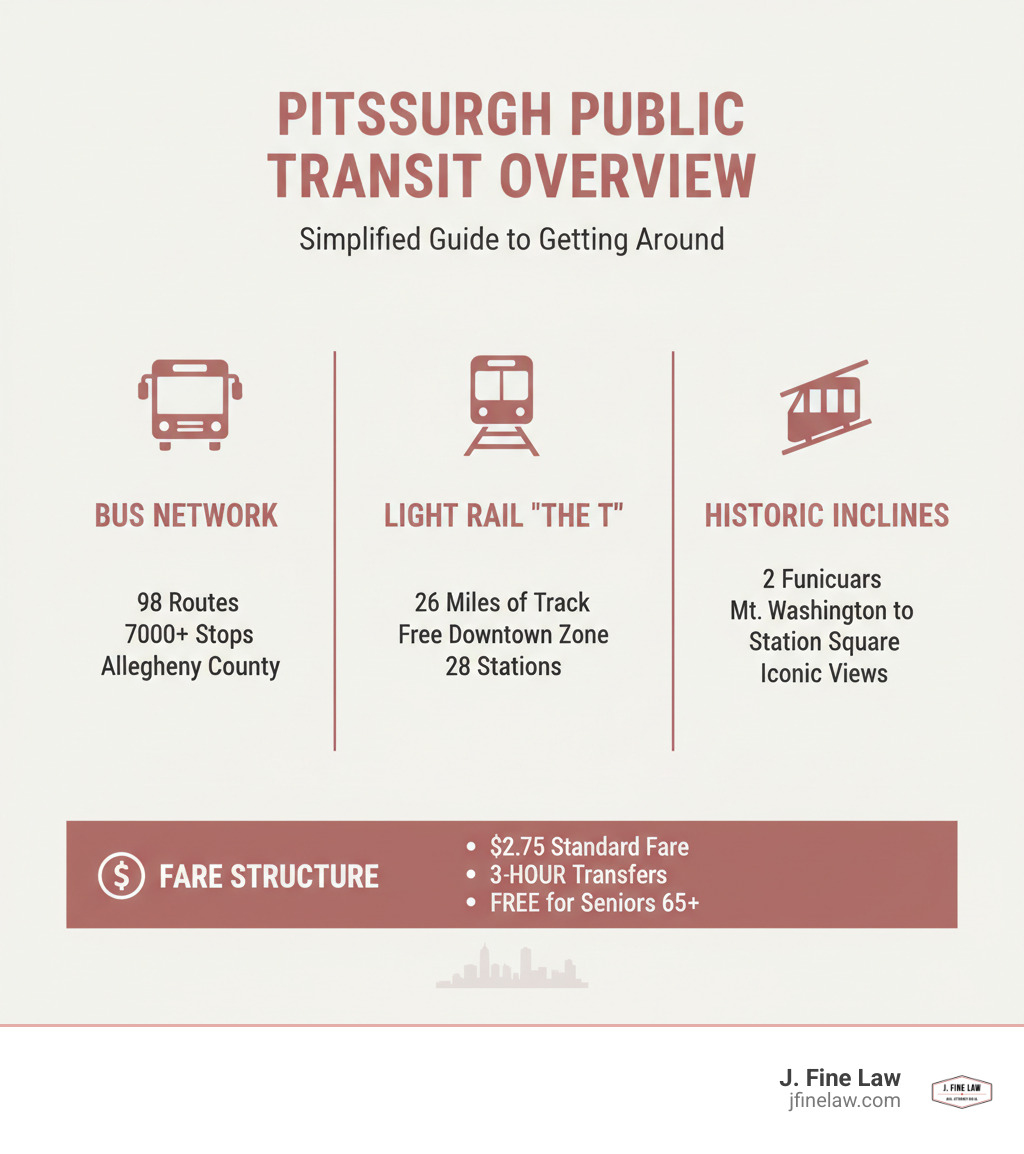
Pittsburgh public transport is operated by Pittsburgh Regional Transit (PRT), providing bus, light rail, and incline services throughout Allegheny County. The system serves hundreds of thousands of riders daily with over 700 buses, a 26-mile light rail network called “The T”, and two historic inclines.
Quick Facts About Pittsburgh Public Transport:
| Service Type | Coverage | Key Features |
|---|---|---|
| Buses | 500+ square miles, 7,000+ stops | 98 routes across Allegheny County |
| Light Rail (“The T”) | 26 miles, 27 stations | Free fare zone Downtown/North Shore |
| Inclines | 2 funiculars | Connects Mt. Washington to Station Square |
| Standard Fare | $2.75 per ride | Includes 3-hour free transfers |
| Operating Hours | 365 days/year | Most services 5 AM – midnight |
Whether you’re commuting, traveling to the airport on the 28X Airport Flyer, or riding the iconic Monongahela Incline for breathtaking city views, PRT offers many ways to steer Pittsburgh without a car. The system includes digital payment options, real-time tracking, and accessibility features on all vehicles.
As Jason Fine, a Pennsylvania personal injury attorney with over 25 years of experience, I’ve helped many clients steer the complexities of Pittsburgh public transport accidents. My team at J. Fine Law understands the unique challenges riders face and is dedicated to securing fair compensation for injuries sustained on buses, light rail, or at transit stops.
A Deep Dive into the Pittsburgh Public Transport Network
Pittsburgh public transport includes a comprehensive network of buses, light rail, and historic inclines that stretch across the region. Let’s break down each component to help you get around.
Understanding Your Ride: Buses, The “T”, and Inclines
The Bus Network: The System’s Backbone
The bus network is the core of Pittsburgh public transport, with over 700 buses serving more than 7,000 stops on 98 routes. Covering over 500 square miles in Allegheny County, the system is designed with Downtown Pittsburgh as its central hub, as 84% of routes pass through the area. Service also extends into neighboring counties, providing important regional connections. Eligible University of Pittsburgh students and staff receive a major perk: fare-free travel on all PRT services within Allegheny County.

The “T” Light Rail: A Fast Track Through the City
Known locally as “The T,” this 26-mile light rail system is the fastest way to travel between the South Hills, Downtown, and the North Shore. It operates on surface tracks in the suburbs and as a subway beneath downtown streets. A key feature is the free fare zone between Downtown and the North Shore, perfect for reaching stadiums and attractions without paying a fare. The system’s Red and Blue lines are clearly marked to guide you.
Pittsburgh’s Famous Inclines: A Ride with a View
The historic Monongahela and Duquesne Inclines are more than just tourist attractions. These funiculars are a functional part of Pittsburgh public transport, connecting Mt. Washington with Station Square for daily commuters. They run frequently from early morning until late at night and are also free for eligible University of Pittsburgh members.
Fares and Passes: How to Pay on Pittsburgh Public Transport
PRT’s fare system is designed for simplicity and convenience.
What It Costs to Ride
The standard fare is $2.75. Using a reusable ConnectCard smart card gives you a three-hour window of free transfers. Paying with cash is also $2.75 but requires exact change and does not include free transfers. For maximum convenience, the Ready2Ride app lets you buy and use digital tickets on your smartphone.
Who Rides for Free or at a Discount
PRT offers several discounts: Seniors 65 and older ride completely free on all services. Children between 6 and 11 pay a reduced fare ($1.35 cash or $1.25 with a ConnectCard), and up to three children under 6 ride free with a paying adult. Reduced fares are also available for people with disabilities and Medicare users.
Even with a straightforward system, accidents can happen. If you or a loved one has been injured while using Pittsburgh public transport, it’s important to understand your rights. You can learn more about bus accident injury claims and the steps to take after an incident.
Trip Planning and Real-Time Tracking
Modern tools make navigating Pittsburgh public transport easier than ever.

The Apps and Tools You Need
Two apps are essential for riders. The Ready2Ride app handles mobile ticketing, while the Transit app is best for route planning and real-time arrivals.
PRT’s website also offers powerful planning tools. The star is the PRT’s TrueTime tool, which provides up-to-the-minute arrival predictions and shows current vehicle capacity. For planning during peak hours, the Room2Ride feature uses historical data to estimate how crowded a bus might be. For service changes, check the Rider Alerts and Active Detours sections on the PRT website.
Special Services and Accessibility
PRT provides services and features designed to make transit accessible to everyone.
Convenient Services for All Riders
- Free Fare T Zone: Ride the light rail for free between Downtown Pittsburgh and North Shore stations.
- 28X Airport Flyer: This route offers affordable, direct service to Pittsburgh International Airport.
- Park and Ride: Over 60 free lots allow you to park your car and connect to a bus or light rail into the city.
Accessibility for Everyone
PRT is committed to accessibility. The ACCESS paratransit service provides door-to-door transport for elderly and disabled passengers who cannot use fixed-route services. All buses, light-rail vehicles, and the Monongahela Incline are equipped with wheelchair ramps or lifts, and all vehicles have priority seating for those who need it.
Despite safety measures, accidents can be caused by driver actions. If you’ve been affected by potential negligence, you can learn more about bus driver negligence and your legal options.
The Future of Pittsburgh Public Transport and How to Get Involved
Pittsburgh public transport is constantly evolving to meet the region’s needs.
Looking Ahead
Previously the Port Authority, the agency rebranded to Pittsburgh Regional Transit in 2022 to better reflect its regional scope. While the system faces ongoing funding challenges, it is also moving forward with major improvements like the University Line BRT project, which will create faster, more reliable bus service in a key corridor. PRT is also undertaking significant light-rail upgrades to ensure long-term reliability.

Your Voice Matters
The public can help shape transit’s future by supporting advocacy groups like Pittsburghers for Public Transit or by providing direct feedback to the agency. Beyond advocacy, everyday courtesy helps create a better experience for all riders. PRT also works with neighboring transit authorities to ensure the entire Southwestern Pennsylvania region stays connected.
The future of Pittsburgh public transport depends on smart planning and community engagement. Whether you’re a daily rider or an occasional user, you have a stake in keeping this system strong and accessible.
What to Do After a Public Transit Accident
While we expect safe travel on Pittsburgh public transport, accidents can occur. When they do, knowing what to do is critical for protecting your health and legal rights.
The Special Responsibility of Public Transit
Transit agencies like PRT are “common carriers,” which holds them to a higher legal standard of safety than regular drivers. This duty covers everything from vehicle maintenance and driver training to ensuring passengers can board and exit safely. If an accident happens, this heightened responsibility is a key factor in determining fault.
Transit accidents can be complex, potentially involving the driver, the transit agency’s maintenance practices, or even a third-party driver who caused a collision. Untangling this requires specialized legal knowledge.
Immediate Steps to Take After an Accident
If you are involved in an accident on Pittsburgh public transport, prioritize your safety and take these steps:
- Get medical help immediately. Some injuries have delayed symptoms, and a medical record is crucial for any future claim.
- Document everything. If it’s safe, note the date, time, location, route number, and vehicle ID. Take photos of the scene, damage, and any visible injuries.
- Get witness information. If there were other passengers who saw what happened, ask for their contact information.
- Report the incident. Make sure an official report is filed with the transit operator and PRT.
- Be careful with statements. Politely decline to give a recorded statement to insurance or agency representatives until you have spoken with an attorney.
Understanding Your Path Forward
You may be entitled to compensation for medical bills, lost wages, and pain and suffering. At J. Fine Law, we have over 25 years of experience with mass transit accident law. Our 98% success rate and over $50 million recovered for clients demonstrate our commitment to getting results. We respond rapidly to help you steer the legal system while you focus on healing.
For more information, please see our guide on bus accident injury claims. If you need immediate assistance, contact a public transit accident attorney at J. Fine Law for a consultation. You don’t have to handle this alone.