 Skip to content
Why Finding the Right Philadelphia Nursing Home Abuse Attorney Matters
When you suspect a loved one is being mistreated in a nursing home, finding a philadelphia nursing home abuse attorney is critical. Here’s what to look for:
Key Factors in Choosing an Attorney:
- Specialized Experience: Focus on nursing home abuse cases, not general personal injury.
- Medical Knowledge: Attorneys with medical backgrounds (MD, JD) can better understand complex health issues.
- Track Record: Ask about their success rate and past verdicts in similar cases.
- No Upfront Costs: Most work on contingency, meaning you only pay if you win.
- Local Expertise: They must understand Pennsylvania’s specific laws and regulations.
Warning: Between 2012 and 2014, Pennsylvania dismissed 92% of nursing home abuse complaints, including 507 in Philadelphia. You cannot rely on state agencies alone; you need experienced legal representation.
The reality is shocking: nearly 45% of nursing home residents report being abused, and 95% report witnessing neglect. In Pennsylvania, with the fourth-largest older adult population in the U.S., this crisis affects thousands. You expect safety and dignity, but understaffing and profit-driven motives often lead to preventable harm like bedsores, falls, and physical abuse.
I’m Jason Fine, a ten-time Pennsylvania Super Lawyer nominee with over 25 years of experience representing victims of nursing home abuse in Philadelphia. As a philadelphia nursing home abuse attorney, I know that swift legal action is often the only way to stop mistreatment and hold facilities accountable. The first step is understanding what constitutes abuse, recognizing the signs, and knowing what to do next.
Quick philadelphia nursing home abuse attorney terms:
The Unspoken Crisis: Identifying Nursing Home Abuse and Neglect in Philadelphia
Placing a loved one in a nursing home involves immense trust, but for many seniors in Philadelphia, that trust is broken by abuse and neglect. Statistics show that nearly 45% of nursing home residents have been abused, and 95% have witnessed neglect. This crisis is often rooted in systemic issues like understaffing, poor training, and facilities prioritizing profits over people, leading to preventable injuries and even wrongful death.
Defining Mistreatment: What Constitutes Abuse vs. Neglect?
Understanding the difference between abuse and neglect is key to building a legal strategy. Both are serious violations of a nursing home’s duty of care.
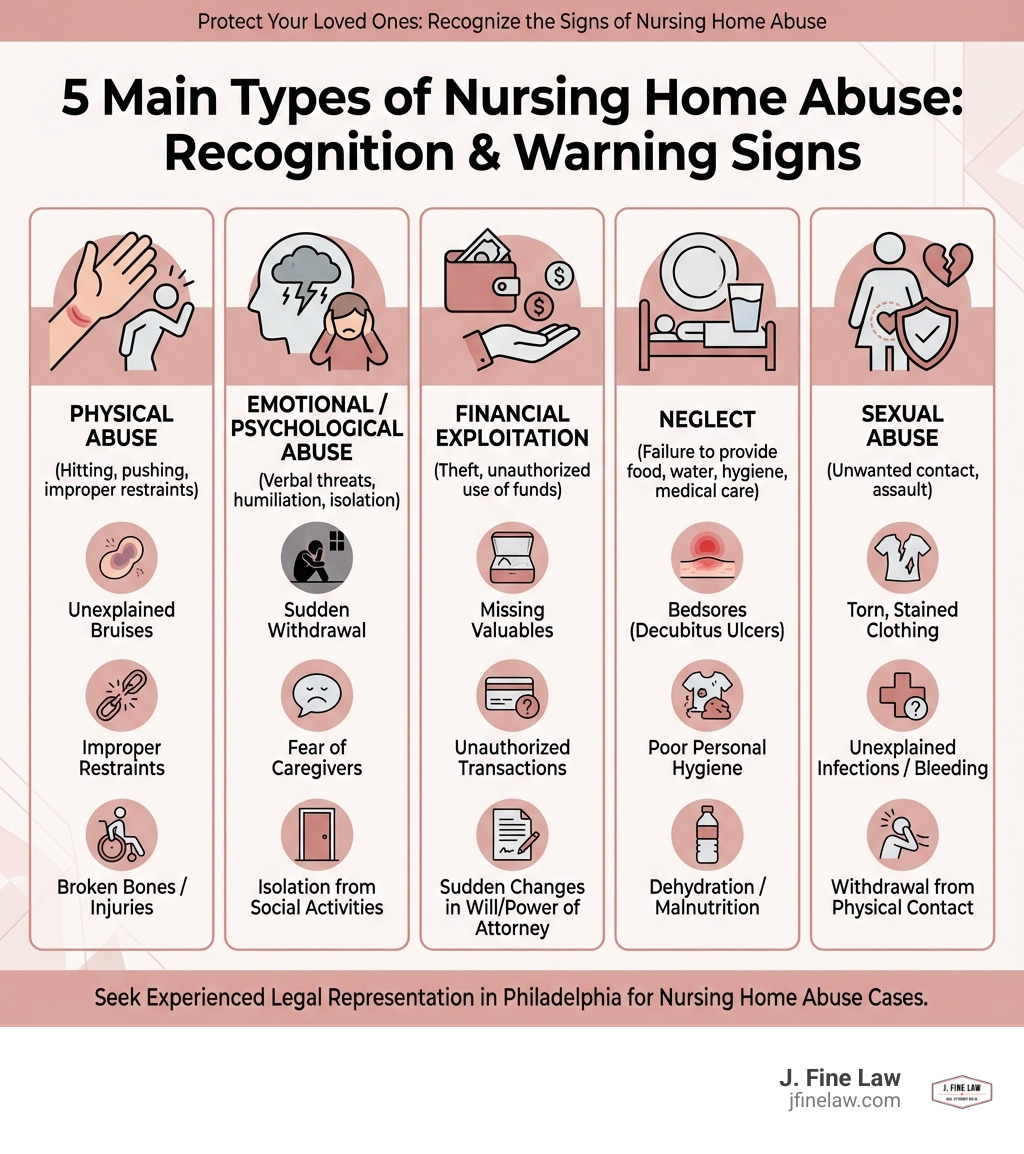
Abuse is an intentional act that causes harm. The National Center On Elder Abuse defines it as an action by a caregiver that creates a serious risk of harm to a vulnerable elder. This includes physical, emotional, sexual, or financial harm, such as hitting, humiliation, or theft.
Neglect, conversely, is the failure to provide necessary care. This can be intentional or unintentional and includes:
- Medical Neglect: Failing to manage medical conditions, administer medication correctly, or seek timely treatment.
- Basic Needs Neglect: Not providing adequate food, water, or a clean environment.
- Social/Emotional Neglect: Ignoring or isolating residents, leading to depression.
- Personal Hygiene Neglect: Failing to help with bathing, changing clothes, or other personal care.
If you suspect any form of mistreatment, understand your rights and how a philadelphia nursing home abuse attorney can help. You can find more information about what constitutes abuse on our website.
Red Flags to Watch For: Common Signs of Elder Abuse
Recognizing the signs of abuse is the first step to protecting your loved one. These indicators can be subtle, especially if a resident cannot communicate effectively. Be vigilant for these common warning signs:
- Bedsores (Pressure Ulcers): Almost always preventable, their presence indicates a lack of proper care and repositioning.
- Dehydration and Malnutrition: Unexplained weight loss, dry skin, or confusion can signal a lack of adequate food and fluids.
- Unexplained Injuries: Bruises, cuts, or fractures without a clear explanation are major red flags.
- Emotional Withdrawal: A sudden change in personality, such as becoming fearful, agitated, or depressed.
- Poor Personal Hygiene: An unkempt appearance, body odor, or soiled bedding points to neglect.
- Unsanitary Living Conditions: A dirty room, foul odors, or pests suggest facility-wide issues.
- Medication Issues: Over-medication, missed doses, or changes leading to lethargy can indicate errors or chemical restraint.
- Suspicious Staff Behavior: Staff who are defensive, evasive, or prevent you from being alone with your loved one.
- Financial Changes: Missing valuables or unauthorized transactions may indicate financial exploitation.
- Fear of Staff: Visible anxiety or fear around certain caregivers is a serious warning sign.
Research highlights the severity of the problem; one study on the physical abuse of older adults in nursing homes found that 24% of families reported an incident of physical abuse by staff. Older adults with dementia are especially vulnerable. If you see any of these signs, take immediate action.
Your Legal Recourse: Partnering with a Philadelphia Nursing Home Abuse Attorney
When you suspect abuse, it’s easy to feel helpless. However, residents have significant legal rights, and facilities have clear obligations. As your philadelphia nursing home abuse attorney, we can help you steer the legal system to secure justice.
Understanding Your Rights and Regulations
Both federal and state laws protect nursing home residents. The federal Nursing Home Reform Act (NHRA) of 1987 grants residents the right to be free from abuse, receive quality care, and participate in their treatment planning. In Pennsylvania, the Older Adults Protective Services Act (OAPSA) mandates the reporting of suspected abuse and neglect.
Despite these laws, enforcement is a challenge. The Pennsylvania Department of Health dismissed 92% of nursing home abuse claims between 2012 and 2014, as reported by WHYY-TV. This shows why relying on state agencies isn’t enough. An experienced attorney is crucial to uphold your loved one’s rights. For more on state law, visit our page on Pennsylvania nursing home law.
The Legal Process with a Philadelphia Nursing Home Abuse Attorney
Navigating a lawsuit is complex, but we guide you through every step:
- Consultation and Investigation: We start with a free, confidential consultation to assess your case. Our rapid response team then gathers evidence like medical records, incident reports, and witness statements.
- Filing a Lawsuit: If we find sufficient evidence, we file a lawsuit against the responsible parties. It’s vital to act quickly due to Pennsylvania’s statute of limitations.
- Findy: Both sides exchange information. We depose staff, consult medical experts, and analyze records. Our attorneys with medical backgrounds (MD, JD) provide a unique advantage here.
- Negotiation and Settlement: Many cases are resolved through settlement. We leverage our track record of recovering over $50 million for clients to negotiate a fair outcome.
- Trial: If a fair settlement isn’t reached, we are fully prepared to advocate for your loved one before a jury.
A lawsuit can take months or years. A liable facility may face financial penalties, loss of licensing, and even criminal charges, which helps protect other residents. Learn more in our guide to nursing home malpractice.
Why You Need a Specialized Attorney
Nursing home abuse cases are difficult to prove. A specialized philadelphia nursing home abuse attorney is essential for several reasons:
- Proving Abuse: Abuse often happens behind closed doors, and victims may be unable to speak out. We know how to build a case by demonstrating a breach in the duty of care.
- Gathering Evidence: We carefully review medical charts, staffing records, and internal reports and interview witnesses to uncover misconduct.
- Fighting Corporate Tactics: Large nursing home corporations use legal teams to deny and delay claims. We have decades of experience countering these tactics.
- Calculating Damages: We fight to secure full compensation for:
- Medical expenses (past and future)
- Pain and suffering
- Loss of quality of life
- Relocation costs
- Punitive damages for egregious misconduct
- Wrongful death damages for families
Our firm’s 98% success rate and rapid attorney response show our commitment to getting justice for victims.
Securing Justice: Your First Steps and What to Expect
Finding that a loved one may be suffering from abuse or neglect is distressing. It’s crucial to turn those feelings into decisive action. As your philadelphia nursing home abuse attorney, we can empower you to protect your loved one and start the path to justice.
Your Immediate Action Plan if You Suspect Abuse
Time is of the essence. Swift action can prevent further harm and strengthen a potential legal case. Here’s what you should do:
- Ensure Immediate Safety: If your loved one is in immediate danger, call 911.
- Report to Facility Management: Formally report your concerns to the nursing home administrator or director of nursing. Document who you spoke with, when, and what was said.
- Contact the Pennsylvania Ombudsman: The Office of the State Long-Term Care Ombudsman advocates for residents. Report your suspicions to them for investigation.
- Document Everything: This is critical. Keep a detailed log of incidents, take photos or videos of injuries and conditions, and gather statements from any witnesses.
- Preserve Medical Records: Request copies of your loved one’s medical records from the facility and other doctors.
- Contact a Philadelphia Nursing Home Abuse Attorney: As soon as you suspect abuse, contact J. Fine Law. Our rapid attorney response team can begin investigating immediately.
We understand you have questions. Our FAQ of 10 questions to ask a nursing home abuse attorney can help you prepare. With a 98% success rate and over $50 million secured for clients, our firm is ready to fight for your family. Don’t delay—contact us for a free consultation.
When you reach out, we will discuss:
- The specifics of your loved one’s situation.
- The potential legal actions available.
- The process of gathering evidence.
- How we can help you pursue compensation for medical costs, pain and suffering, and other damages.
You don’t have to face this alone. We are here to provide the compassionate and experienced legal representation you need.