 Skip to content
When a Crash Changes Everything: What Philadelphia Riders Need to Know
If you’re looking for a motorcycle accident lawyer in Philly after a crash, here’s what matters most right away:
Quick answers for injured riders:
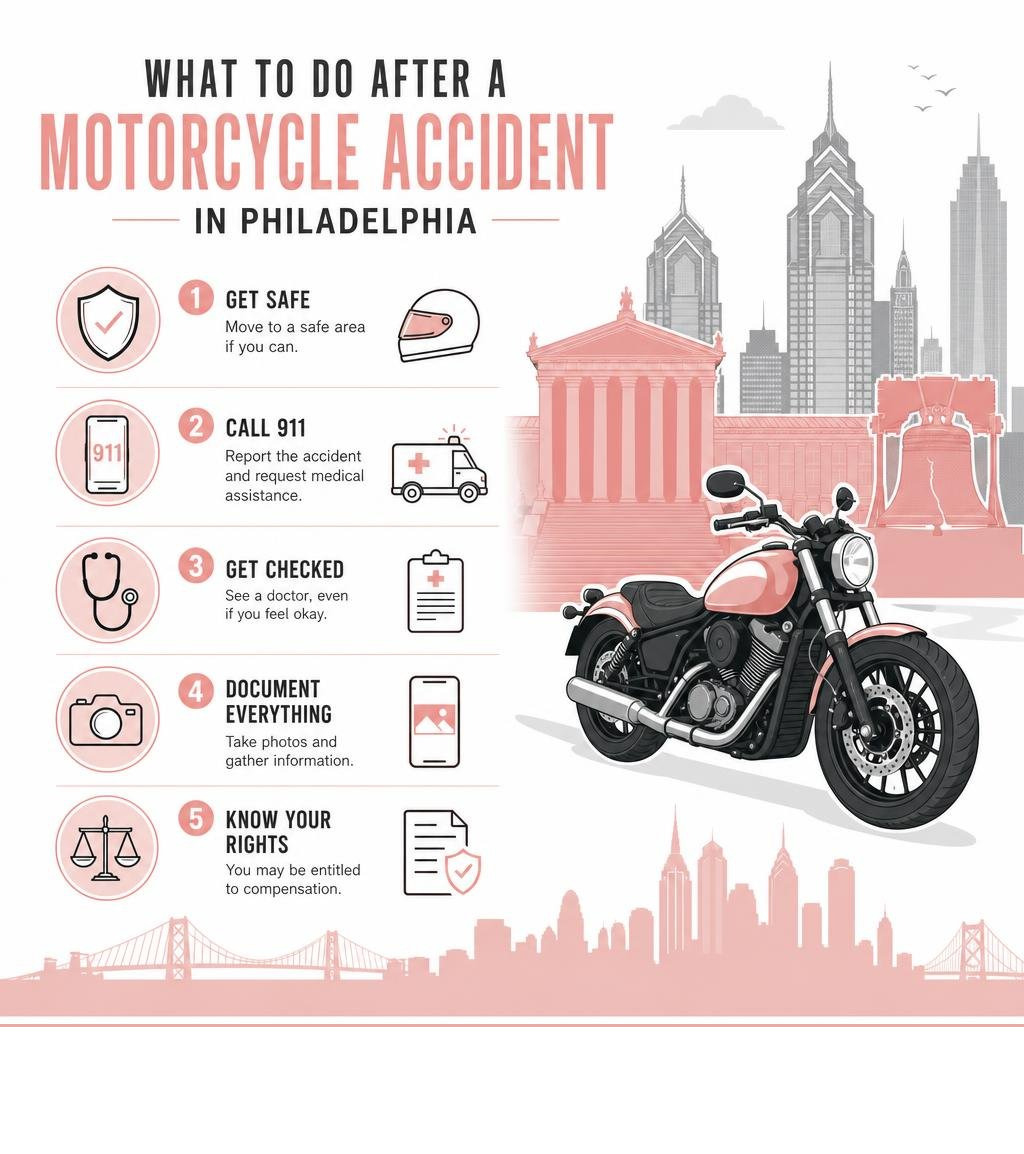
- Call 911 and get medical care — even if you feel fine. Temple University Hospital on North Broad Street is one of Philadelphia’s premier Level I trauma centers and treats many serious rider injuries.
- Don’t give recorded statements to any insurance company before speaking with a lawyer.
- Document everything — photos of the scene, your bike, your gear, and your injuries.
- Contact a lawyer as soon as possible — Pennsylvania’s statute of limitations can limit your time to file.
- Do not accept early settlement offers — they are almost always lower than what your case is worth.
Motorcyclists are 28 times more likely to die in a traffic crash than people in passenger vehicles, according to the National Highway Traffic Safety Administration. Yet when crashes happen, insurance companies often treat injured riders as liabilities rather than people — looking for any reason to pay less or deny a claim entirely.
That bias is real. It shows up in lowball offers, pressure to settle fast, and tactics designed to catch you off guard while you’re still recovering.
I’m Jason Fine, senior trial attorney and founding member of J. Fine Law Group, with over 25 years of experience representing personal injury victims — including those hurt in motorcycle accidents. As a motorcycle accident lawyer with a track record that includes one of the top motor vehicle verdicts in Pennsylvania, I know how hard insurance companies fight to protect their bottom line — and how to fight back. Let me walk you through exactly what you need to know to protect your rights after a Philadelphia crash.
Essential Motorcycle accident lawyer terms:
Why You Need a Philadelphia Motorcycle Accident Lawyer After a Crash

When you are involved in a collision on busy roads like Broad Street, the physical and financial aftermath can be overwhelming. Many riders believe that the insurance company will simply review the police report and pay out a fair settlement. Unfortunately, that is rarely how it works.
Insurance companies are businesses, and their main goal is to protect their bottom line. To do this, adjusters often rely on “biker bias”—the unfair assumption that anyone on two wheels must have been riding recklessly. They might try to argue that you were speeding, lane splitting, or that you could have easily avoided the crash if you were paying closer attention.
A dedicated motorcycle accident lawyer is essential to level the playing field. When we take on your case, we immediately protect you from these aggressive insurance tactics. We handle all communication with the adjusters so you do not accidentally say something that could hurt your claim.
Furthermore, we work to establish the true settlement value of your case. This does not just include your current medical bills from Temple University Hospital; it also accounts for your future medical care, lost income, physical rehabilitation, and the pain and suffering you have endured. To build a solid foundation for your claim, we conduct a comprehensive crash investigation to preserve critical evidence before it disappears. If you have been Injured in Motorcycle Accident, having strong legal advocates on your side ensures your rights are fully protected.
When to Hire a Motorcycle Accident Lawyer
You should seek legal representation immediately after your crash. The hours and days following an accident are critical for evidence preservation. Skid marks fade, weather conditions change, traffic camera footage is overwritten, and witnesses’ memories begin to blur.
Waiting too long can also put you in danger of missing the strict statute of limitations. Getting us involved early allows us to take the burden of paperwork and phone calls off your shoulders so you can focus entirely on healing. If you are unsure where to start, scheduling a free Motorcycle Accident Attorney Consultation is the best way to understand your options without any financial risk.
How a Motorcycle Accident Lawyer Proves Fault
Proving fault in a motorcycle crash requires more than just pointing fingers. We use a combination of resources to build an undeniable case against the negligent driver:
- Accident Reconstruction: We work with professional accident reconstructionists who analyze skid marks, vehicle damage, and physics to recreate exactly how the crash occurred.
- Police Reports: We obtain and thoroughly analyze the official police report, looking for citations issued to the other driver for failure to yield or distracted driving.
- Witness Statements: We track down and interview bystanders who saw the crash happen on Broad Street or nearby intersections.
- Physical Evidence: We secure video footage from nearby business security cameras, dashcams, and smart traffic lights.
Whether your crash happened in Pennsylvania or you need assistance from a Philadelphia Motorcycle Accident Attorney, our legal team knows how to piece together the evidence to demonstrate the other driver’s negligence clearly.
Understanding Pennsylvania Liability Laws vs. Michigan and Ohio No-Fault Systems
Motorcycle laws vary dramatically from state to state. It is crucial to understand how Pennsylvania’s traditional tort system compares to the no-fault systems used in other states like Michigan or Ohio.
| State | Insurance System Type | Fault Rule | How It Affects Riders |
|---|---|---|---|
| Pennsylvania | Choice No-Fault (Full Tort for Riders) | Modified Comparative Negligence (51% Bar) | You can recover damages as long as you are 50% or less at fault for the crash. |
| Michigan | No-Fault | Modified Comparative Negligence (51% Bar) | Highly complex. Riders must look to specific order of priorities to get No-Fault PIP benefits. |
| Ohio | Traditional Tort / Liability | Modified Comparative Negligence (51% Bar) | You can recover damages as long as you are 50% or less at fault for the crash. |
In Pennsylvania, we operate under a choice no-fault system, but motorcyclists are uniquely treated. Motorcyclists are generally deemed to have “full tort” status automatically, meaning you retain the unrestricted right to sue for pain and suffering. However, Pennsylvania also uses a modified comparative negligence rule. Under this rule, you can recover compensation as long as your responsibility for the crash is 50% or less. If you are found to be 51% or more at fault, you are barred from recovering anything.
Statute of Limitations in Pennsylvania, Ohio, and Michigan
Time is your enemy after a motorcycle crash. Every state sets a strict deadline, known as the statute of limitations, for filing a personal injury lawsuit:
- Pennsylvania: You generally have two years from the date of the crash to file a personal injury lawsuit.
If you miss these deadlines, you lose your right to pursue compensation forever. It is also important to note that property damage claims may have different filing deadlines. To ensure you do not miss any critical dates, it is wise to speak with an established Philadelphia Motorcycle Accident Law Firm or a local attorney in your area right away.
Common Motorcycle Accident Injuries Treated at Temple University Hospital
Because motorcycles offer virtually no physical protection, even a low-speed collision can result in catastrophic, life-altering injuries. Many injured riders in the Philadelphia area are rushed directly to Temple University Hospital for emergency treatment.
Some of the most common injuries we see in motorcycle accidents include:
- Road Rash: This is not just a simple scrape. Severe road rash occurs when skin skids across asphalt, stripping away protective layers. It can cause permanent nerve damage, severe infections, and require painful skin graft surgeries.
- Traumatic Brain Injuries (TBIs): Even when wearing a high-quality helmet, the violent shaking of the head during a crash can cause concussions, brain bleeding, and long-term cognitive damage.
- Spinal Cord Injuries: Damage to the spine can lead to temporary or permanent paralysis, forever altering a rider’s independence and quality of life.
- Fractures and Broken Bones: Riders often suffer broken collarbones, shattered wrists, and fractured legs as they instinctively try to brace for impact.
The medical expenses associated with these injuries can easily reach hundreds of thousands of dollars. If you or a loved one is dealing with these physical hurdles, our guide on Bucks County Motorcycle Accident cases highlights how similar severe injuries are evaluated and handled.
Recovering Compensation for Severe Injuries
When you are facing long-term physical recovery, we fight to recover every penny you deserve. Your compensation package should cover:
- Medical Bills: Emergency room visits, surgeries, intensive care, prescription medications, and physical therapy.
- Lost Wages: Income you lost while hospitalized and recovering at home.
- Loss of Earning Capacity: If your injuries prevent you from returning to your previous job or working at all in the future.
- Pain and Suffering: Compensation for the physical agony and emotional distress caused by the crash.
To understand how these damages are calculated, you can read more about filing a Motorcycle Accident Compensation Claim.
Frequently Asked Questions About Motorcycle Accident Claims
How long does it typically take to settle a motorcycle accident claim?
There is no single answer to this question. A straightforward claim with clear liability and minor injuries might settle in a few months. However, complex cases involving severe injuries, high medical bills, or disputes over who caused the crash can take a year or longer to resolve.
We always advise waiting until you have reached Maximum Medical Improvement (MMI)—meaning your doctor believes your condition has stabilized as much as possible. This ensures we know the true cost of your future medical needs before negotiating a final settlement.
What if I was partially at fault for the motorcycle crash?
Under Pennsylvania’s modified comparative negligence law, you can still recover damages as long as you are 50% or less at fault. However, your total compensation will be reduced by your percentage of fault. For example, if a jury decides you were 10% at fault because you were riding slightly over the speed limit, and your total damages are $100,000, you will receive $90,000. For legal support in comparative negligence cases, consult a Bucks County Motorcycle Accident Attorney.
How do insurance companies treat motorcycle accident claims unfairly?
Insurance adjusters frequently use “biker bias” to shift the blame onto you. They may pressure you to give a recorded statement, hoping you will say something that can be twisted to show you were at fault. They might also offer a quick, lowball settlement before you even know the full extent of your injuries. Never sign anything or accept an offer without talking to us first. You can learn more about combatting these tactics by contacting our Southeastern PA Personal Injury Law Office.
Conclusion
At J. Fine Law, we are proud of our 98% success rate, our history of securing over $50 million in settlements for our clients, and our commitment to rapid attorney response. We understand the unique physical, emotional, and financial toll a motorcycle crash takes on you and your family.
As riders get older, a severe crash on Broad Street can have devastating, long-term consequences. Sometimes, these injuries mean an older rider can no longer live independently, requiring a transition to nursing home care. Sadly, families often face a whole new set of challenges in these facilities, where neglect and abuse can occur.
If your loved one has suffered from neglect or mistreatment in a care facility following their recovery, you need a compassionate elder abuse attorney to protect their dignity and legal rights. Whether you need help recovering from a devastating road crash or seeking justice for a vulnerable family member, our team includes experienced advocates ready to stand up against nursing home negligence.
Contact us today for a free, confidential consultation. Let us handle the legal battle so you can focus on what matters most—your recovery and your family.