 Skip to content
When You Need a Philadelphia Car Accident Attorney: What to Know First
If you’ve just been in a crash and are looking for a Philadelphia car accident attorney, here’s what matters most right now:
Quick answers to what most people need:
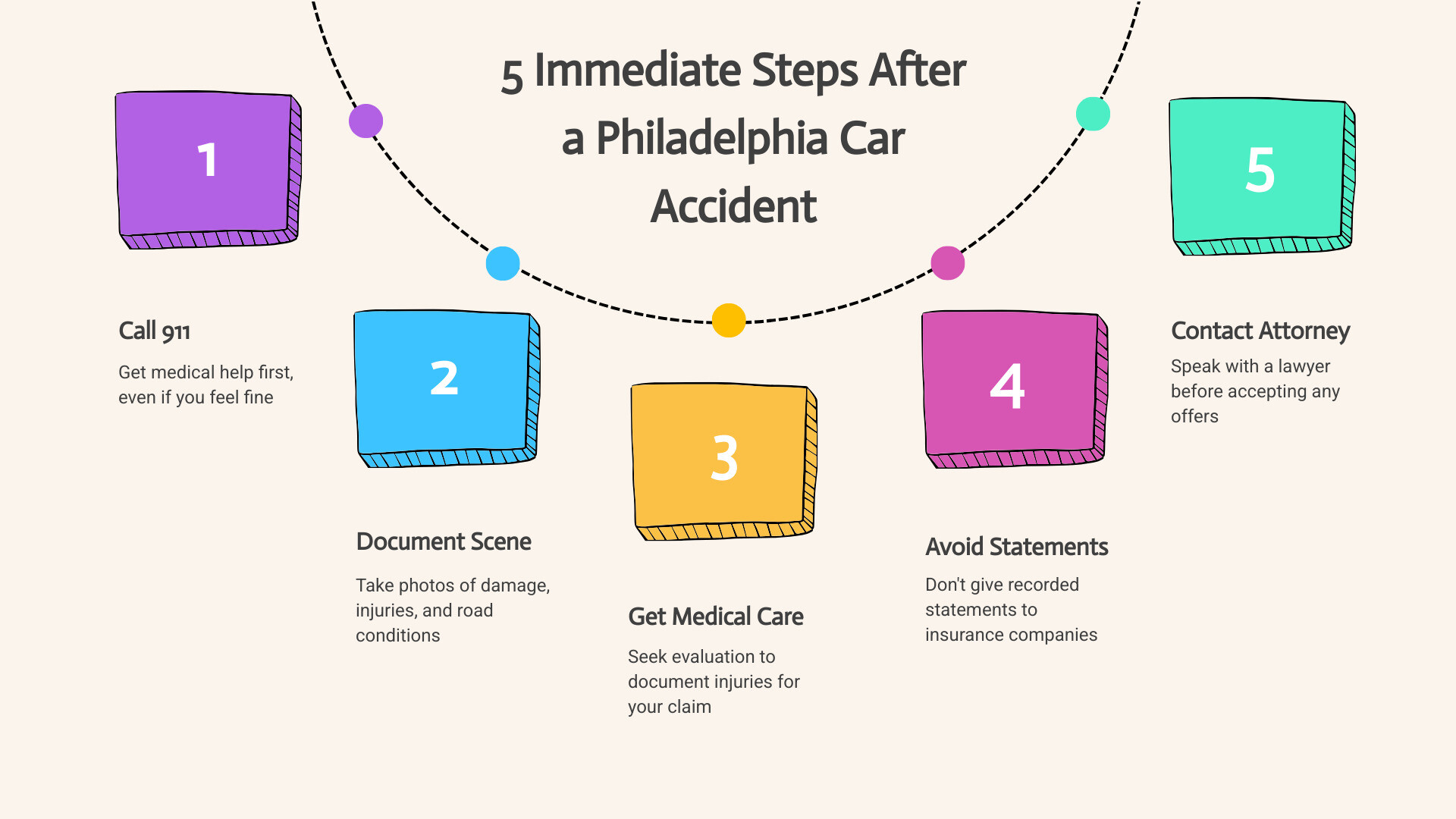
- Call 911 and get medical help first — even if you feel fine
- Don’t give a recorded statement to any insurance company before speaking to a lawyer
- You have 2 years from the date of your crash to file a personal injury claim in Pennsylvania
- Most attorneys work on contingency — you pay nothing unless you win
- You can still recover compensation even if you were partly at fault (as long as you’re less than 51% responsible)
Philadelphia sees over 20,000 car accidents every year. That’s thousands of people suddenly dealing with medical bills, missed work, and insurance adjusters who are not on your side. It’s a lot to handle — especially when you’re in pain and your phone won’t stop ringing.
The right attorney makes a real difference. Not just in how much you recover, but in how much stress you carry through the process.
I’m Jason Fine, founding attorney at J. Fine Law Group and a ten-time consecutive nominee to Pennsylvania Super Lawyers. With over 25 years fighting for injury victims as a Philadelphia car accident attorney — including cases where insurers offered nothing and we took them to federal court and won — I’ve seen what it takes to actually win these cases.
Basic Philadelphia car accident attorney terms:
- Philadelphia Lyft accident lawyer
- Philadelphia distracted driving attorney
- Philadelphia trucking accident lawyer
Understanding Philadelphia Car Accidents: Causes, Injuries, and Hotspots
Philadelphia is a beautiful, historic city, but our streets can be absolute battlegrounds. Navigating local traffic means dealing with unique road designs, heavy congestion, and driver behavior that often leaves a lot to be desired. If you are trying to make sense of a recent collision, understanding how and where these wrecks happen is a crucial first step. For a deeper look at navigating these challenges, check out our Philadelphia Car Accident Lawyer Guide.
Crash data shows that certain stretches of road in our city are notoriously dangerous. Roosevelt Boulevard is widely considered one of the most hazardous corridors in the country, but major highways like I-76 (the Schuylkill Expressway), I-95, Kelly Drive, and busy downtown crossings along Broad Street also see a massive share of local collisions. Whether it is a high-speed rear-end collision on the highway or a side-impact wreck at a busy neighborhood junction, these hotspots keep local emergency rooms busy.
Common Causes of Local Crashes
Why do so many crashes occur on our streets? While every wreck has its own story, several common behaviors stand out:
- Distracted Driving: This is a massive issue on our roads. Approximately 30% of all car accidents in Philadelphia involve a driver looking at a phone, texting, or adjusting a navigation system instead of watching the road.
- Speeding and Aggressive Driving: From tailgating on I-76 to running red lights at major intersections, aggressive driving regularly leads to catastrophic collisions.
- Driving Under the Influence: Drunk or drugged driving remains a leading cause of severe, preventable crashes, particularly around our nightlife districts.
- Pedestrian Injuries: Our city is highly walkable, which unfortunately puts pedestrians at high risk. In 2022, Philadelphia experienced approximately 1,200 pedestrian injuries and 50 pedestrian fatalities due to motor vehicle accidents.
When a driver fails to pay attention or follow traffic safety laws, they breach their legal duty of care to everyone else on the road. If you find yourself dealing with the fallout of such negligence, consulting a dedicated Philadelphia Car Accident Attorney can help you hold the responsible party accountable.
Common Injuries and the Role of Local Hospitals
The physical impact of a car crash can range from minor discomfort to life-altering trauma. Some of the most common injuries we see in local accidents include:
- Whiplash and Soft Tissue Damage: Very common in rear-end collisions, these injuries affect the neck, back, and muscles, often causing long-term chronic pain.
- Traumatic Brain Injuries (TBIs): Concussions and severe brain trauma can occur when a victim’s head strikes the steering wheel, window, or dashboard.
- Spinal Cord Damage: Severe impacts can cause herniated discs, fractured vertebrae, or even permanent paralysis.
- Fractures and Internal Trauma: Broken bones and internal bleeding require immediate emergency intervention.
In the moments following a severe crash, victims are typically transported to world-class local trauma centers like Temple University Hospital or Penn Presbyterian Medical Center. The medical records generated during your emergency room visit and subsequent treatment serve as the foundational proof for your injury claim. Without clear, consistent medical documentation linking your physical trauma directly to the wreck, insurance companies will quickly try to argue that your injuries were pre-existing. Partnering with a respected Philadelphia Injury Law Firm ensures your medical proof is organized and presented effectively.
What to Do (and Avoid) Immediately After a Philly Crash
The minutes and hours immediately following a collision are incredibly stressful, but the actions you take at the scene can dramatically impact both your physical health and your future legal claim. If you want to build a strong foundation for your case, you must know what steps to prioritize. You can read more about protecting your rights in our Philadelphia Car Accident Lawyer resource.
Immediate Steps to Protect Your Health and Claim
If you are involved in a wreck, follow this checklist to protect yourself:
- Prioritize Safety First: If possible, pull your vehicle to a safe location out of active traffic and turn on your hazard lights.
- Call 911: Request both police officers and emergency medical personnel. A formal police report is a vital piece of evidence that insurance adjusters rely on to determine fault.
- Exchange Information: Get the names, contact details, driver’s license numbers, and insurance policy information of all drivers involved.
- Document the Scene: Take detailed photographs and videos of the vehicle damage, road conditions, skid marks, and any visible physical injuries.
- Gather Witness Statements: If anyone stopped to help, ask for their contact information. Independent witness testimonies can make or break a disputed liability claim.
- Preserve Digital Evidence: Act quickly to identify nearby traffic cameras or business security systems. This footage is often overwritten within 30 to 72 hours.
- Seek Medical Attention: Go to an urgent care or emergency room immediately, even if you feel fine. Adrenaline can mask severe internal injuries.
Taking these steps ensures you have a robust paper trail. If you need help gathering this evidence, reaching out to a Philadelphia Injury Lawyer Near Me is a smart move.
Critical Mistakes to Avoid After an Accident
While knowing what to do is vital, knowing what not to do is just as important. Avoid these common pitfalls to protect your claim:
- Do Not Admit Fault: Even a casual “I’m so sorry” at the scene can be twisted by insurers as an admission of liability. Stick strictly to the facts when speaking with officers and other drivers.
- Do Not Give Recorded Statements: The other driver’s insurance adjuster will likely call you within days, acting friendly and asking for a recorded statement. Politely decline and refer them to your attorney. They are looking for any statement they can use to minimize your payout.
- Do Not Delay Medical Care: Waiting weeks to see a doctor creates a massive gap in your medical records, giving the insurance company the perfect excuse to deny your claim.
- Do Not Post on Social Media: Insurance defense lawyers regularly monitor public social media profiles. A simple photo of you smiling at a family dinner can be used to argue that your injuries are not as severe as you claim.
If you have already made one of these mistakes, do not panic. A skilled Philadelphia Car Wreck Attorney can step in, manage communication with the insurance companies, and work to minimize any damage to your claim.
Navigating Pennsylvania Insurance Laws and Fault
Pennsylvania’s auto insurance system is notoriously complex. To fully understand your options for recovering compensation, you need to understand how the state’s insurance laws apply to your accident. For a comprehensive breakdown, take a look at our Philadelphia Personal Injury Guide.
| Insurance Option | Premium Cost | Right to Sue for Pain & Suffering | Covers Medical Bills? |
|---|---|---|---|
| Limited Tort | Lower | Restricted (Only for “serious” injuries) | Yes (Via Personal Injury Protection) |
| Full Tort | Higher | Unrestricted (Can sue for all non-economic damages) | Yes (Via Personal Injury Protection) |
Full Tort vs. Limited Tort and Comparative Fault
Pennsylvania is a “choice no-fault” state. Regardless of who caused the collision, your own Personal Injury Protection (PIP) coverage pays for your initial medical bills. Pennsylvania law requires a mandatory minimum of $5,000 in PIP coverage on all auto policies.
However, your ability to sue the at-fault driver for non-economic damages, such as pain and suffering, depends entirely on the “tort option” you selected when purchasing your policy:
- Limited Tort: This option saves you money on monthly premiums but restricts your right to seek financial recovery for pain and suffering unless your injuries meet a high legal threshold of “serious impairment of body function.”
- Full Tort: This option costs slightly more but preserves your unrestricted right to sue the negligent driver for all physical and emotional suffering, regardless of the severity of the injury.
Additionally, Pennsylvania follows a modified comparative negligence rule (the 51% bar). Under this rule, you can still recover compensation even if you were partially at fault for the crash, as long as your share of the blame is 50% or less. However, your final financial recovery will be reduced by your percentage of fault. If you are found to be 51% or more at fault, you are legally barred from recovering any damages. Navigating these rules requires help from an experienced Philadelphia Personal Injury Law Firm.
How a Philadelphia Car Accident Attorney Calculates Your Settlement
When we evaluate your claim, we look at the full scope of how the crash has impacted your life. The average settlement for car accident claims in Philadelphia can range from $15,000 to $100,000, but serious or catastrophic injuries can easily push values into six or seven figures. We divide these losses into three categories:
- Economic Damages: These are measurable financial losses, including emergency room bills, ongoing physical therapy costs, future medical care, lost wages, and loss of future earning capacity.
- Non-Economic Damages: These cover intangible losses such as physical pain, emotional distress, loss of enjoyment of life, and disfigurement.
- Punitive Damages: In rare cases involving extreme recklessness, such as a drunk driver speeding down Roosevelt Boulevard, courts may award punitive damages to punish the wrongdoer.
Calculating these numbers involves analyzing medical prognoses and financial records. A dedicated Philadelphia Car Wreck Attorney will work to ensure no future costs are left off the negotiating table.
Car Accident Lawyer vs. Personal Injury Lawyer in Philadelphia
You might wonder if there is a difference between these two terms. In short, all car accident lawyers are personal injury lawyers, but not all personal injury lawyers focus primarily on car accidents. Personal injury law is a broad umbrella covering everything from medical malpractice to slip and falls.
When you are hurt in a motor vehicle crash, you want legal representation from a professional who understands the specific mechanics of traffic reconstruction, auto insurance policies, and local traffic laws. Working with a dedicated Philadelphia Personal Injury Law Firm ensures your legal team has the specific background needed to handle auto negligence cases.
How to Choose a Philadelphia Car Accident Attorney
Choosing the right attorney to handle your case is one of the most important decisions you will make. You do not want a firm that treats you like a file number; you want a legal advocate who is responsive, aggressive, and highly respected. To get started, schedule a Philadelphia Injury Attorney Free Consultation.
When researching your options, it is helpful to look at trusted directory listings such as the Best Philadelphia, PA Car Accident Attorneys | Super Lawyers to see which local attorneys are highly rated by their peers. This can help you understand the local legal landscape and find an advocate who is prepared to fight for you.
Key Qualities of a Winning Philadelphia Car Accident Attorney
When evaluating potential attorneys, look for these key indicators of success:
- A Proven Track Record: Ask about their history of settlements and verdicts. You want a firm that has secured substantial recoveries for clients in cases similar to yours.
- Trial Experience: Many lawyers prefer to settle quickly to avoid the courtroom. You need an attorney who is fully prepared to take your case to trial if the insurance company refuses to offer a fair settlement.
- Local System Knowledge: An attorney who regularly practices in the Philadelphia Court of Common Pleas knows the local judges, defense attorneys, and court procedures.
- Clear and Direct Communication: You should have direct access to the attorney handling your case, not just paralegals or assistants.
For more tips on choosing the right representation, refer to our Philadelphia Automobile Accident Lawyer Guide.
Understanding Contingency Fees and Insurance Negotiations
One of the best things about hiring a personal injury lawyer is the payment structure. Most reputable firms operate on a contingency fee basis. This means:
- There are absolutely no upfront costs or hourly fees.
- The attorney advances all the litigation expenses, including filing fees and medical record retrieval costs.
- The attorney only gets paid if they successfully recover money for you through a settlement or court verdict, typically taking a pre-agreed percentage (usually 33% to 40%).
This fee structure levels the playing field, allowing everyday citizens to stand up to multi-billion-dollar insurance corporations. Your attorney will handle all negotiations with the insurance adjusters, shielding you from their high-pressure tactics while fighting for every dollar you deserve. Learn more about this setup with our Philadelphia Car Accident Attorney guide.
The Legal Process: Filing a Lawsuit in Philadelphia
If the insurance company refuses to negotiate in good faith, filing a formal lawsuit in the Court of Common Pleas at City Hall becomes necessary. Understanding the steps of litigation can help ease your anxiety about the process.
Step-by-Step Guide to Filing a Lawsuit
The litigation process generally follows these stages:
- Filing the Complaint: Your attorney drafts and files a formal document detailing how the crash occurred, why the defendant is liable, and the damages you are seeking.
- Service of Process: The defendant is formally served with the complaint and a summons to appear.
- The Discovery Phase: Both sides exchange evidence, request documents, and conduct oral depositions of witnesses, drivers, and medical professionals under oath.
- Mediation and Settlement Talks: Often, after discovery reveals the strength of your case, both parties will attempt to resolve the dispute through a neutral mediator.
- Trial: If mediation fails, the case goes to trial before a judge and jury, where both sides present their arguments and a final verdict is reached.
How Long Will Your Case Take to Resolve?
The timeline for resolving a car accident claim varies significantly. A straightforward claim with clear liability and moderate injuries might settle within a few months. However, complex cases involving catastrophic injuries, disputed fault, or extensive litigation can take anywhere from one to three years to resolve. Your health and medical recovery play a major role, as your attorney should never finalize a settlement until you have reached Maximum Medical Improvement (MMI) to ensure all future medical needs are covered.
Frequently Asked Questions About Philadelphia Car Accidents
How long do I have to file a car accident claim in Philadelphia?
Under Pennsylvania law (42 Pa. C.S. § 5524), you have a strict two-year statute of limitations from the exact date of the crash to file a personal injury lawsuit. If you miss this deadline, you lose your legal right to seek compensation forever.
What if the other driver was uninsured or underinsured?
If you are hit by an uninsured driver or a hit-and-run motorist, you can seek compensation through the Uninsured Motorist (UM) or Underinsured Motorist (UIM) coverage on your own auto policy. Your attorney can help you navigate this process to ensure your own insurer treats you fairly.
Can I recover compensation if I was partially at fault?
Yes, thanks to Pennsylvania’s modified comparative fault rules. As long as your portion of the blame is 50% or less, you can recover damages, though your final settlement will be reduced by your percentage of fault.
Conclusion
A car accident can disrupt your life in an instant, but you do not have to navigate the complex legal and financial recovery process alone. At J. Fine Law, we bring a dedicated approach to every case we handle. With locations in Philadelphia, Cherry Hill, and Feasterville, our team is positioned to help injury victims across the region. We are proud of our 98% success rate, our commitment to rapid attorney response, and the over $50 million in settlements we have secured for our clients.
Our commitment to protecting the vulnerable extends beyond car crashes. Often, the most devastating accidents on our roads involve our elderly loved ones. If an elderly family member was hurt in a nursing home transport accident, or suffered due to elderly passenger neglect during medical transit, they deserve strong, compassionate representation. If you suspect negligence, abuse, or mistreatment has harmed a senior in your family, we are also here to serve as your dedicated elder abuse attorney to fight for their rights and dignity.
Let us carry the legal burden so you can focus entirely on your physical recovery. Protect your rights with J. Fine Law and schedule your free, no-obligation case evaluation today.