 Skip to content
What Families in Philadelphia Need to Know About Wrongful Death Lawyer Fees
Wrongful death lawyer fees are something most families never expect to think about — until they’re forced to. If you’ve lost someone you love because of another person’s negligence, understanding what it costs to pursue justice is one of the first practical questions you’ll face.
Here’s a quick answer before we go deeper:
| Fee Type | Typical Amount |
|---|---|
| Pre-lawsuit contingency fee | ~33% of recovery |
| Post-filing contingency fee | ~40% of recovery |
| Case costs (experts, filings, records) | Additional 10–15% of recovery |
| Upfront attorney fee | $0 in most cases |
| Fee if case is lost | $0 attorney fee (costs vary by agreement) |
The core idea is simple: most wrongful death lawyers in Philadelphia work on contingency. That means you pay nothing upfront. The attorney only gets paid if they win your case — and their fee comes out of the settlement or verdict.
This matters because it means any family, regardless of financial situation, can access skilled legal representation right away.
I’m Jason Fine, senior trial attorney and founding member of J. Fine Law Group, with over 25 years of experience handling wrongful death cases across Pennsylvania and New Jersey — including some of the top verdicts in the state. Understanding wrongful death lawyer fees is something I walk every client through from day one, because clarity about costs is the foundation of trust.
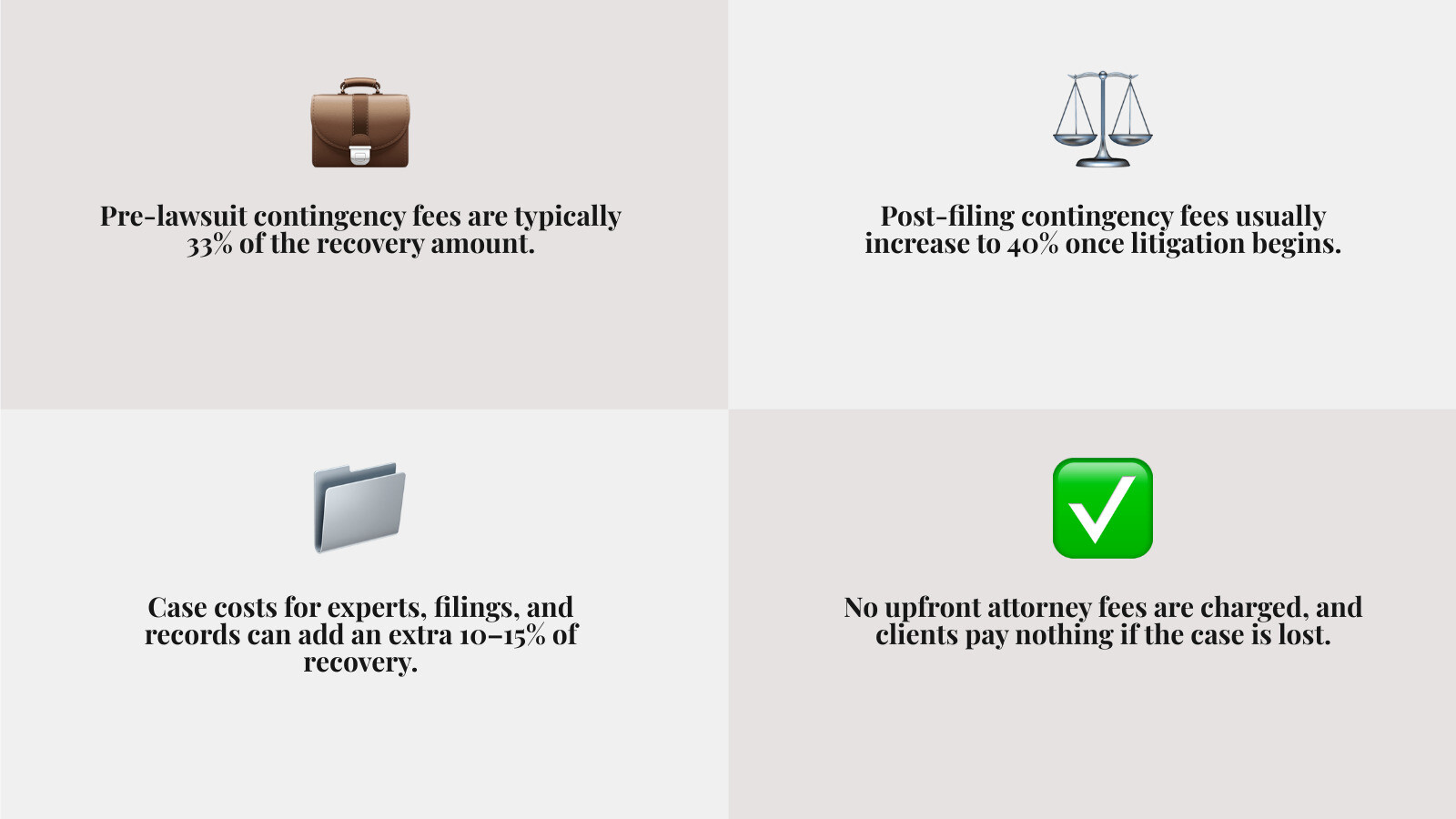
Wrongful death lawyer fees terms explained:
Understanding Wrongful Death Lawyer Fees in Philadelphia
When dealing with the sudden loss of a family member, the financial strain can feel just as heavy as the emotional toll. In the Philadelphia civil courts—such as the Court of Common Pleas on Filbert Street—pursuing a legal claim requires a clear understanding of how attorneys charge for their time.
The legal industry primarily uses three fee models, though one is far more common for wrongful death claims:
- The Contingency Fee Model: This is the gold standard for personal injury and wrongful death claims. We do not bill you by the hour, nor do we require a massive upfront retainer. Instead, our payment is contingent upon securing a settlement or jury verdict. If we do not recover money for your family, you do not owe us any attorney fees.
- Hourly Billing: Under this model, clients are billed an hourly rate (often ranging from $300 to $600+ per hour in Philadelphia) for every phone call, email, and document drafted. This model is rarely used in wrongful death cases because grieving families cannot afford to pay tens of thousands of dollars out of pocket while their case is pending.
- Hybrid Arrangements: A less common structure where a lower hourly rate is combined with a reduced contingency percentage.
We believe the contingency model is the fairest path forward. It completely aligns our goals with yours: we only succeed when we secure the maximum possible recovery for your family. To learn more about how these structures operate, read our guide on Wrongful Death Attorney Fees.
How Wrongful Death Lawyer Fees Are Calculated
The exact way attorney fees are calculated can significantly impact the final amount your family takes home. When reviewing a fee agreement, the most critical distinction to look for is whether the fee is calculated based on gross recovery or net recovery.
- Gross Recovery: The attorney’s fee is calculated as a percentage of the total settlement or verdict before any case costs, medical liens, or outstanding bills are deducted.
- Net Recovery: The attorney’s fee is calculated after case expenses are deducted from the total settlement.
To see how this works in practice, let’s look at a hypothetical $1,000,000 settlement with $50,000 in litigation expenses and a 33% contingency fee:
| Calculation Element | Gross Recovery Method | Net Recovery Method |
|---|---|---|
| Total Settlement | $1,000,000 | $1,000,000 |
| Attorney Fee Deducted | $333,333 (33% of $1M) | $313,500 (33% of $950k) |
| Case Costs Deducted | $50,000 | $50,000 |
| Net to Client | $616,667 | $636,500 |
Many law firms also utilize sliding scale agreements. In these contracts, the fee percentage changes depending on how far the case progresses. For example, a contract might specify a 33% fee if the case resolves through a pre-suit settlement, which increases to 40% if we must file a formal lawsuit and prepare for a trial verdict.
Standard Contingency Percentages in Pennsylvania
In Pennsylvania, the standard contingency fee for personal injury and wrongful death cases typically ranges from 33% to 40%.
- The One-Third Rule (33.3%): This is the most common rate for cases that are resolved through negotiations before a lawsuit is officially filed.
- The 40% Litigation Rate: If we must file a lawsuit in the Philadelphia Court of Common Pleas, draft formal discovery, and prepare for trial, the fee typically increases to 40% to account for the hundreds of additional hours of labor required.
During our initial consultations, we believe in providing completely transparent fee structures. We walk you through every percentage, ensuring there are no surprises when your case is resolved.
Case Costs and Litigation Expenses in Pennsylvania Claims
It is important to understand that wrongful death lawyer fees (the payment for our time and labor) are separate from case costs (the actual out-of-pocket expenses required to build a trial-ready case).
Building a powerful legal claim is expensive. To hold negligent parties accountable, we must invest heavily in the case from day one. Common litigation expenses include court filing fees, deposition transcripts, court reporters, and travel expenses for witnesses.

The High Cost of Medical Records and Trial Exhibits
Some of the most significant expenses in a wrongful death claim involve gathering evidence from local medical institutions like Penn Medicine or Temple University Hospital. Retrieving thousands of pages of complex medical records and hiring independent medical professionals to review them is costly.
Additionally, to convince a jury, we must create clear, compelling demonstrative evidence. This includes high-quality trial exhibits, digital accident reconstructions, and medical illustrations. These tools are vital for showing exactly how the negligence occurred. For a deeper look at how these elements come together, consult the Ultimate PA Wrongful Death Lawyer Guide.
Who Pays Expenses If the Case Is Unsuccessful?
One of the biggest worries families have is: “What happens if we lose? Am I stuck with a massive bill for court costs?”
At our firm, we mitigate this risk for our clients. We advance all litigation costs out of our own pocket while the case is active. If we do not win your case or secure a settlement, we absorb those advanced costs ourselves. You will not owe us a single penny for attorney fees or case expenses.
However, not every firm operates this way. Some contracts state that the client is ultimately responsible for reimbursing expenses even if there is no recovery. Always make sure your agreement explicitly waives these costs if the case is lost. You can read more about these protections in our guide on the Pennsylvania Wrongful Death Lawyer process.
How Case Complexity Impacts Wrongful Death Expenses
No two wrongful death cases are identical. The total litigation expenses depend heavily on the complexity of the accident and the parties involved.
For instance, a straightforward car accident involving a single driver is far less expensive to litigate than a complex commercial vehicle crash. If we are dealing with multiple defendants, government entities (like SEPTA or the City of Philadelphia), or highly disputed liability, the costs of depositions and accident reconstruction experts will rise.
Comparing Wrongful Death Lawyer Fees by Case Type
The nature of the tragedy also dictates the overall cost structure:
- Auto Accidents: Usually resolved relatively quickly, with lower overall case costs unless high-speed reconstruction is required on major highways like Interstate 95.
- Product Liability: Highly complex. These cases require testing defective products, hiring design engineers, and going head-to-head with large manufacturing corporations. Expenses can easily top $50,000.
- Medical Malpractice & Nursing Home Neglect: These are among the most expensive cases to pursue. Under Pennsylvania law, we must secure a “Certificate of Merit” from a licensed medical professional before we can even file the lawsuit. Expert witness fees alone can cost tens of thousands of dollars.
To understand how different scenarios affect your family’s potential recovery, read our breakdown of Wrongful Death Cases Examples and Settlements Explained.
Written Fee Agreements and Pennsylvania Rules
Under the Pennsylvania Rules of Professional Conduct (specifically Rule 1.5), all contingency fee agreements must be in writing.
This is not just a good business practice; it is a legal requirement designed to protect you. The written agreement must clearly state:
- The exact percentage of the recovery the attorney will receive.
- Whether that percentage changes at different stages of litigation.
- Whether case expenses will be deducted before or after the fee is calculated.
- Who is responsible for expenses if the case is unsuccessful.
Key Questions to Ask Before Signing a Representation Agreement
Before you sign any contract with a law firm, you have the right to ask hard questions. We encourage families to seek absolute clarity upfront. Here are the most important questions to ask:
- “Are your fees calculated on the gross recovery or the net recovery?”
- “If we do not win the case, will I owe your firm any money for advanced court costs or expert fees?”
- “How often will I receive updates on my case, and who will be my primary point of contact?”
- “Do you utilize a sliding scale where the fee increases if we file a lawsuit?”
For more guidance on what to look for in a contract, review our Wrongful Death Legal Advice resource.
Frequently Asked Questions About Wrongful Death Costs
Are wrongful death settlements taxable in Pennsylvania?
Generally, no. Under IRS rules and Pennsylvania state tax laws, compensatory damages recovered in a wrongful death claim are not considered taxable income. Because these funds are meant to compensate the family for the loss of financial support, services, and companionship, they are exempt from income tax.
However, if your case goes to trial and a jury awards punitive damages (which are designed to punish the wrongdoer rather than compensate the family), those punitive damages are typically taxable.
Is hiring an attorney worth the cost compared to handling a claim alone?
Yes. Studies consistently show that represented claimants recover three to four times more financial compensation than those who attempt to handle insurance negotiations alone—even after the attorney’s fees are deducted.
Insurance companies are multi-billion-dollar corporations. They use confusing language and lowball offers to take advantage of grieving families. A dedicated attorney level the playing field, handles all communications, and ensures you do not settle for a fraction of what your family deserves.
What is the statute of limitations for a Philadelphia wrongful death claim?
In Pennsylvania, there is a strict two-year deadline from the date of the deceased person’s death to file a wrongful death lawsuit.
Because setting up an estate and gathering medical records takes time, it is critical to begin the process as early as possible. Missing this deadline means your family permanently loses the right to seek justice. You can read a step-by-step breakdown of this timeline in The Steps to Filing a Wrongful Death Lawsuit.
Securing Justice and Protecting Vulnerable Loved Ones in Philadelphia
Losing a family member is a devastating experience, especially when their death was entirely preventable. At J. Fine Law, we are committed to helping Philadelphia families pick up the pieces. With a 98% success rate, rapid attorney response times, and over $50 million recovered for our clients, we have the resources and the drive to hold negligent parties accountable.
Many wrongful death cases in Philadelphia involve our most vulnerable citizens—particularly elderly family members who suffered from severe neglect or abuse in local care facilities. If you suspect that a loved one’s passing was linked to poor care, dehydration, or physical mistreatment, please reach out to us.
We provide compassionate, relentless nursing home abuse representation to ensure that negligent facilities are held fully accountable for their actions. If you need a dedicated elder abuse attorney to fight for your family’s rights, contact us today for a free, no-obligation consultation, and let us help you find the answers and closure your family deserves.