 Skip to content
A premises injury lawyer is the legal professional you need when you’ve been hurt on someone else’s property — whether that’s a slippery sidewalk on Broad Street, a poorly lit stairwell in a Philadelphia apartment building, or a nightclub on Delaware Avenue with no security.
Here’s what you need to know right away:
- What it covers: Slip and falls, trip hazards, dog bites, negligent security, swimming pool accidents, and more — on any commercial, residential, or public property in Philadelphia.
- Who can be held liable: Property owners, landlords, business operators, management companies, and sometimes government entities.
- What you can recover: Medical bills, lost wages, pain and suffering, future care costs, and emotional distress.
- Your deadline in Pennsylvania: You generally have two years from the date of injury to file a claim.
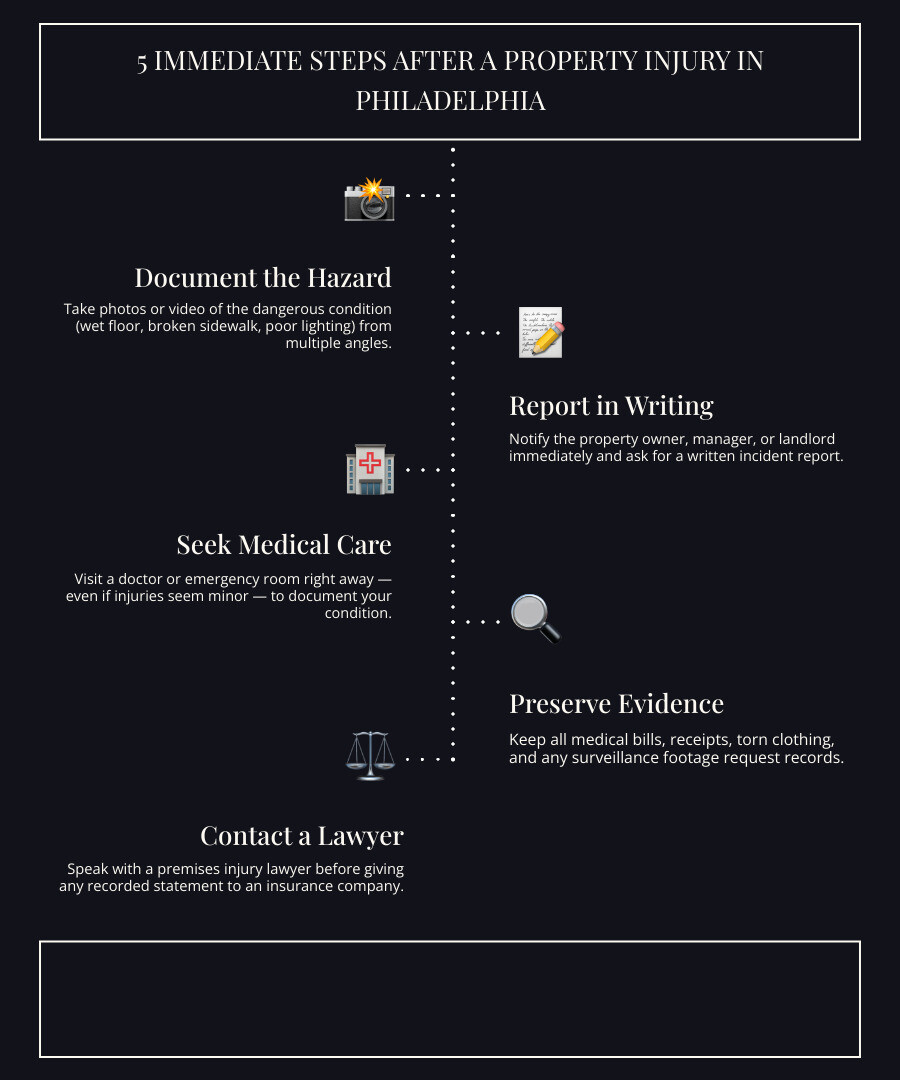
- What to do first: Photograph the hazard, report the incident in writing, seek medical care immediately, and do not give a recorded statement to the insurance company before speaking to an attorney.
Every year, over 36,000 people in the United States die from falls alone — and millions more end up in emergency rooms. Many of those injuries happen on properties where the owner knew, or should have known, about a dangerous condition and did nothing.
That’s not an accident. That’s negligence.
If you’re dealing with mounting medical bills, missed work, and an insurance company that seems more interested in protecting itself than helping you — you’re not alone, and you have rights.
I’m Jason Fine, founding attorney at J. Fine Law, a ten-time consecutive nominee to Pennsylvania Super Lawyers in personal injury with over 25 years handling premises injury lawyer cases across Philadelphia and throughout Pennsylvania. I’ve seen how property owners and their insurers fight these claims — and I know exactly how to fight back.
Must-know premises injury lawyer terms:
- Philadelphia premises liability lawyer
- premises liability lawyer near me
- premises liability legal advice
Understanding Premises Liability Claims in Pennsylvania
Premises liability is the legal concept that makes property owners and occupiers responsible for injuries that occur on their land. In Pennsylvania, this means that if a Philadelphia store owner, residential landlord, or commercial business operator fails to maintain their property, they can be held financially responsible for the physical and emotional damages that follow.
Whether you are shopping at a boutique in Center City, walking up the steps of a duplex in South Philly, or enjoying a concert, you have a right to expect a reasonably safe environment. When property owners cut corners to save money, innocent visitors pay the price.
Our team utilizes the comprehensive resources in our Philadelphia premises liability lawyer guide to build strong cases against negligent property owners. We understand that a sudden fall or structural collapse can turn your life upside down in an instant.
How a Philadelphia Premises Injury Lawyer Classifies Visitors
In Pennsylvania, the level of care a property owner owes you depends entirely on why you were on the property in the first place. Under state law, visitors are divided into three distinct categories:
- Invitees: These are people invited onto the property for business purposes, such as shoppers in a grocery store or patrons at a restaurant. Property owners owe invitees the highest duty of care. They must regularly inspect the property, fix hazards immediately, and warn visitors of any hidden dangers.
- Licensees: These are social guests visiting for non-commercial reasons. Owners must warn licensees of known dangerous conditions that the guest is unlikely to discover on their own, but they are not strictly required to inspect the property for unknown hazards.
- Trespassers: These are individuals on the property without permission. Generally, property owners owe no duty of care to trespassers except to refrain from intentional or reckless harm. However, under the “attractive nuisance” doctrine, property owners can be held liable if a child trespasses and is injured by a hazardous, unsecured feature like an unfenced swimming pool.
Determining these classifications can be tricky, which is why securing professional premises liability legal advice is critical to identifying your status and protecting your rights.
Common Dangerous Conditions on Philadelphia Properties
Dangerous conditions can take many forms in a bustling city like Philadelphia. Some of the most common hazards we see include:
- Slippery and Wet Floors: Puddles from leaks, freshly mopped surfaces without warning signs, or tracked-in rainwater near entranceways.
- Broken Sidewalks and Walkways: Uneven concrete slabs, hidden potholes, and accumulated ice that property owners failed to clear.
- Poor Lighting: Dark stairwells, dim parking garages, and unlit hallways that hide tripping hazards.
- Structural Failures: Loose handrails on staircases, rotting floorboards, or falling ceiling plaster in older buildings.
- Negligent Security: Broken locks, unmonitored entryways, and a lack of security personnel at Delaware Avenue nightclubs or parking lots, leaving visitors vulnerable to predictable criminal activity.
If you have experienced a slip and fall on a broken walking surface, consulting with a dedicated legal team is the most effective way to understand your options and protect your rights.
How to Prove Negligence with a Philadelphia Premises Injury Lawyer
Proving that you were injured is only the first step. To win a premises liability case, your premises injury lawyer must prove that the property owner was negligent.
Proving negligence requires establishing four key legal elements:
- Duty: The property owner owed you a duty of care based on your visitor status.
- Breach: The owner breached that duty by allowing a dangerous condition to exist.
- Causation: The dangerous condition directly caused your slip, trip, or fall.
- Damages: You suffered real, quantifiable physical and financial injuries as a result.
A major hurdle in these cases is proving “notice.” We must show that the owner had actual knowledge (they knew about the hazard because they created it or were told about it) or constructive knowledge (the hazard existed for a long enough time that a reasonable owner should have found and fixed it). This is why holding property owners accountable requires gathering physical evidence, reviewing maintenance logs, securing security camera footage, and interviewing witnesses before the evidence disappears.
Proving Fault and Comparative Negligence in Pennsylvania
Property owners almost always try to turn the tables and blame you for your own injuries. They might argue you were looking at your phone, wearing inappropriate footwear, or walking in a restricted area.
In Pennsylvania, these arguments are governed by the rule of modified comparative negligence (specifically, the 51 percent bar). Under this system, you can still recover compensation as long as your share of the fault is 50% or less. However, your final financial recovery will be reduced by your percentage of fault. For example, if a jury awards you $100,000 but finds you 20% responsible for failing to look down, your final payout will be $80,000. If you are found 51% or more at fault, you are completely barred from recovering any compensation.
Our experienced team uses our premises liability lawyer near me guide to build airtight cases that minimize comparative fault allegations, keeping the focus entirely on the property owner’s negligence.
Why You Need a Philadelphia Premises Injury Lawyer to Fight Insurance Tactics
Insurance adjusters are not your friends. Their primary goal is to settle your claim for as little money as possible — or deny it entirely. They may call you shortly after your accident, acting friendly and asking for a recorded statement. Do not fall for this trap. They will use your own words against you to minimize your injuries or shift the blame.
They might also offer a quick, lowball settlement. While a fast check is tempting when medical bills are piling up, these early offers rarely cover the long-term costs of your care. Once you sign a settlement release, you can never ask for more money, even if you need additional surgeries or physical therapy. We handle all communications and negotiations with the insurance company so you can focus entirely on your physical recovery.
Recovering Compensation After a Philadelphia Property Accident
A serious injury does more than cause physical pain; it threatens your financial stability. A successful premises liability claim can help you recover both economic and non-economic damages, including:
- Medical Bills: Coverage for emergency room visits (such as at Temple University Hospital), surgeries, physical therapy, medications, and any necessary future medical care.
- Lost Wages: Reimbursement for the income you lost while recovering from your injuries.
- Loss of Earning Capacity: If your injury prevents you from returning to your previous job or working at all, you can seek compensation for your future lost earnings.
- Pain and Suffering: Compensation for the physical pain, discomfort, and loss of life enjoyment caused by your injuries.
- Emotional Distress: Damages for anxiety, depression, or post-traumatic stress resulting from the accident.
Calculating the true, long-term value of your claim is essential. Before accepting any settlement, our team works with medical and financial professionals to ensure every dollar of your past and future losses is accounted for. For more information on how we fight for maximum compensation, visit our Philadelphia premises liability lawyer page.
Frequently Asked Questions About Philadelphia Premises Liability
What is the statute of limitations for a premises liability claim in Pennsylvania?
In Pennsylvania, you generally have two years from the date of your accident to file a premises liability lawsuit. If you miss this deadline, the court will almost certainly dismiss your case, and you will lose your right to seek compensation. If you are injured on government-owned property, the timeline is even shorter, requiring a formal notice of intent to sue to be filed within six months.
Should I speak to the property owner’s insurance company after an injury?
No. You should politely decline to give recorded statements or sign any documents until you have consulted with an attorney. Refer the insurance adjusters directly to your legal team to protect your claim from common defense tactics.
What if my elderly loved one was injured due to unsafe conditions in a Philadelphia care facility?
If an elderly family member suffered a fall, bedsores, or other injuries due to unsafe conditions or lack of supervision in a residential care facility, this may involve both premises liability and institutional neglect. These sensitive cases require a compassionate approach to prove facility negligence. You can learn more about your options by speaking with a dedicated elder abuse attorney and reviewing our guide on the Pennsylvania premises liability lawyer page.
Take Action: Secure Your Recovery and Protect Vulnerable Loved Ones in Philadelphia
When property owners neglect their buildings, walkways, or security, the consequences can be devastating. You should not have to carry the financial burden of an injury that wasn’t your fault.
At J. Fine Law, we have a 98% success rate and have recovered over $50 million in settlements for our clients. We pride ourselves on rapid attorney response times, ensuring you are never left in the dark about the status of your case.
If your loved one was injured due to poor maintenance or negligent care in a nursing facility, we are also prepared to step in as your dedicated elder abuse attorney. We will aggressively pursue nursing home negligence representation to hold these facilities accountable for their failures.
We work on a contingency fee basis, which means you pay absolutely nothing upfront, and we only get paid if we win your case.
Don’t wait until evidence disappears or deadlines pass. Contact J. Fine Law today for a free, no-obligation consultation. Let us do the heavy lifting so you can focus on healing.