 Skip to content
Pursuing Justice with Wrongful Death Product Liability Claims in Philadelphia
A wrongful death product liability claim may be available in Philadelphia when a defective or dangerously marketed product causes someone’s death. Families generally need to show that the product had a design, manufacturing, or warning defect, and that the defect caused the fatal harm.
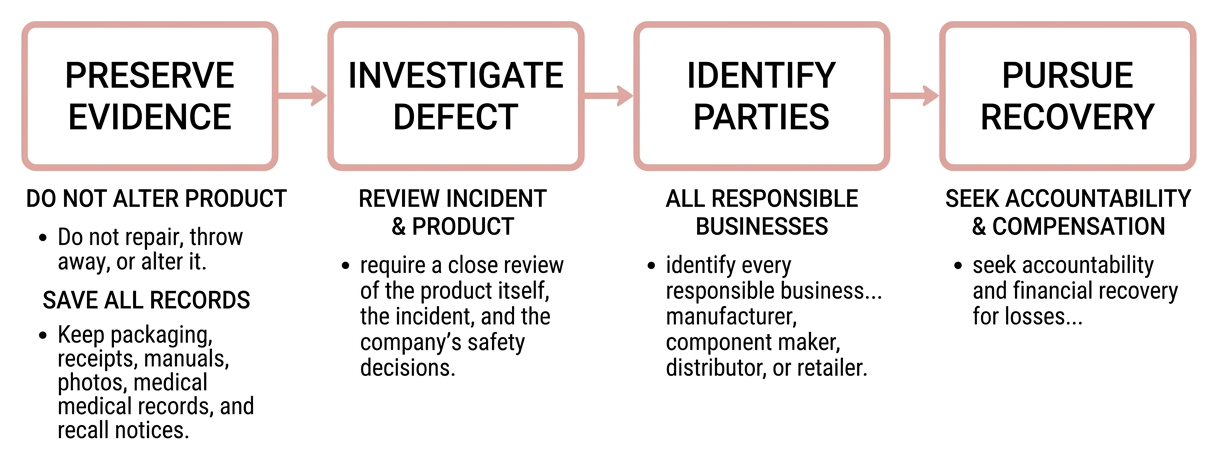
The first steps matter:
- Preserve the product – Do not repair, throw away, or alter it.
- Save records – Keep packaging, receipts, manuals, photos, medical records, and recall notices.
- Identify every responsible business – This may include a manufacturer, component maker, distributor, or retailer.
- Act quickly – Filing deadlines and evidence rules can limit a family’s options.
In Philadelphia, these cases often require a close review of the product itself, the incident scene, and the company’s safety decisions. A civil claim filed in local courts can seek accountability and financial recovery for losses such as emergency medical bills from trauma centers like Penn Presbyterian, funeral costs, lost income, and the loss of a loved one’s support and companionship.
I’m Jason Fine, senior trial attorney and founding member of J. Fine Law, with more than 25 years representing people harmed in serious vehicle, workplace, construction, and nursing-home injury matters across Pennsylvania. That litigation background helps me explain the evidence and accountability issues that can shape wrongful death product liability claims.
Understanding Wrongful Death Product Liability Claims and Legal Grounds

When a dangerous consumer good, auto part, industrial tool, or medical device causes a fatal injury, civil law provides pathways to hold corporate entities accountable. A surviving family or estate can pursue justice by consulting a dedicated wrongful death lawyer to establish liability under several core legal doctrines.
These cases fundamentally rely on three primary grounds:
- Strict Liability: Under strict product liability, a claimant does not necessarily have to prove that a corporation was negligent in its manufacturing or design processes. Instead, the focus remains entirely on the condition of the item itself. If the product was defective, unreasonably dangerous, and directly caused the fatality during foreseeable use, the company can be held liable.
- Negligence: This claim focuses directly on corporate conduct. We examine whether a manufacturer failed to exercise reasonable care during research, design, production, testing, or post-market safety surveillance.
- Breach of Warranty: When an item fails to meet express representations or the implied warranty of merchantability—meaning the product was fundamentally unfit for its ordinary, intended purpose—the estate can pursue damages for the resulting fatal harm.
At J. Fine Law, our rapid attorney response and 98% success rate allow us to begin analyzing these legal grounds immediately following a tragedy. Having recovered over $50 million in settlements and verdicts for our clients, we understand how to unpack complicated liability theories when corporate negligence cuts a life short.
Three Core Defects in Wrongful Death Product Liability Cases
Every fatal product defect claim falls into one of three distinct categories:
- Design Defects: The flaw exists in the blueprint or conceptual engineering of the product before it is ever built. Even if fabricated flawlessly, the design renders the item inherently unsafe. Examples include high-center-of-gravity vehicles prone to rollovers on I-95 or medical implants that degrade prematurely inside the human body.
- Manufacturing Flaws: The design is sound, but an error occurs during fabrication, assembly, or quality assurance. This causes an individual unit or specific batch to deviate from intended specifications, such as a batch of automobile tires with improper bonding that suffer sudden tread separation.
- Failure to Warn (Marketing Defects): Manufacturers must provide clear instructions and warn users about non-obvious dangers associated with foreseeable use. If a prescription drug, lithium-ion battery, or heavy piece of machinery lacks adequate safety warnings and fatal consequences result, the seller or maker can be held accountable for failure to warn.
Identifying Liable Parties Across the Distribution Chain
Fatal defects rarely point to a single isolated source. Modern supply chains are intricate, and holding every responsible party accountable requires mapping the item from its initial design to the retail shelf. When seeking trusted wrongful death legal advice, identifying every entity in the distribution chain is crucial:
- Component Manufacturers: The entities that produce specific raw materials, electronic chips, sensors, or mechanical switches.
- Primary Assemblers and Manufacturers: The company that integrates the components and brands the completed item.
- Wholesalers and Distributors: Middle-tier supply chain entities responsible for transporting, storing, and distributing goods.
- Commercial Retailers: The store, dealership, or commercial outlet in Philadelphia that sold the defective product to the consumer.

Critical Evidence and Proving Causation in Fatal Defect Cases
Proving that a defective product directly caused a death requires extensive physical evidence and forensic documentation. In fatal accident scenarios—such as industrial machine failures or high-speed collisions near the Schuylkill Expressway—preserving physical evidence in an unaltered state is the single most vital factor in building an unshakeable claim.
Securing the product preserves the chain of custody and prevents allegations of spoliation (the destruction or alteration of evidence). Our team acts swiftly to issue formal spoliation letters, impound failed machinery, and transport physical components to secure testing laboratories for non-destructive metallurgical and digital analysis.
Evidentiary Standards in Wrongful Death Product Liability Litigation
In civil court, plaintiffs must establish proximate cause by a preponderance of the evidence, proving that the product defect was a substantial factor in causing the fatal outcome. Because these cases hinge on intricate scientific and engineering questions, federal and state courts apply rigorous standards to determine whether technical testimony can be presented to a jury.
Under the standard established in the landmark federal case Daubert v. Merrell Dow Pharmaceuticals—and highlighted in Chad Weisgram v. Marley Company, 169 F.3d 514—courts strictly screen technical testimony for scientific reliability and methodology. In Weisgram, a fatal heater fire verdict was overturned because the plaintiff’s causation testimony lacked a reliable, scientifically verifiable foundation. To withstand these legal challenges, our firm collaborates with leading forensic engineers, biomechanical professionals, and accident reconstruction investigators who apply validated testing protocols to every piece of evidence.
Common Defenses Raised by Product Manufacturers
Corporate defendants and their insurers employ well-funded legal teams to evade responsibility. Understanding their standard defenses allows us to prepare counterarguments early:
- Unforeseeable Product Misuse: Arguing that the deceased used the product in a bizarre, unforeseeable manner that deviated from all standard safety guidelines.
- Substantial Product Alteration: Claiming that post-sale modifications or third-party repairs altered the item’s safety mechanisms.
- Comparative Fault: Attempting to shift blame onto the deceased to diminish financial recovery under state comparative negligence laws.
| Claim Element | Strict Liability Theory | Negligence Theory |
|---|---|---|
| Focus of Claim | The condition of the product itself | The conduct and reasonableness of the manufacturer |
| Duty of Care Proof | Not required; focus is on defect and danger | Required to prove standard of care was breached |
| Foreseeability | Defect existed at the time of sale/distribution | Harm was a foreseeable outcome of careless actions |
| Key Defenses | Product alteration, assumption of risk, misuse | Comparative negligence, adherence to industry customs |
Damages, Settlements, and Financial Recovery for Surviving Families
Fatal defective product cases often involve substantial financial compensation because the losses are catastrophic and permanent. Looking at published wrongful death case examples and settlements, typical wrongful death settlement values across the nation frequently range from $500,000 to over $1 million, with high-profile or catastrophic matters reaching into multimillion-dollar figures. For instance, major commercial vehicle and defect settlements have reached $5 million, while major jury verdicts involving catastrophic equipment failures have climbed into tens of millions.
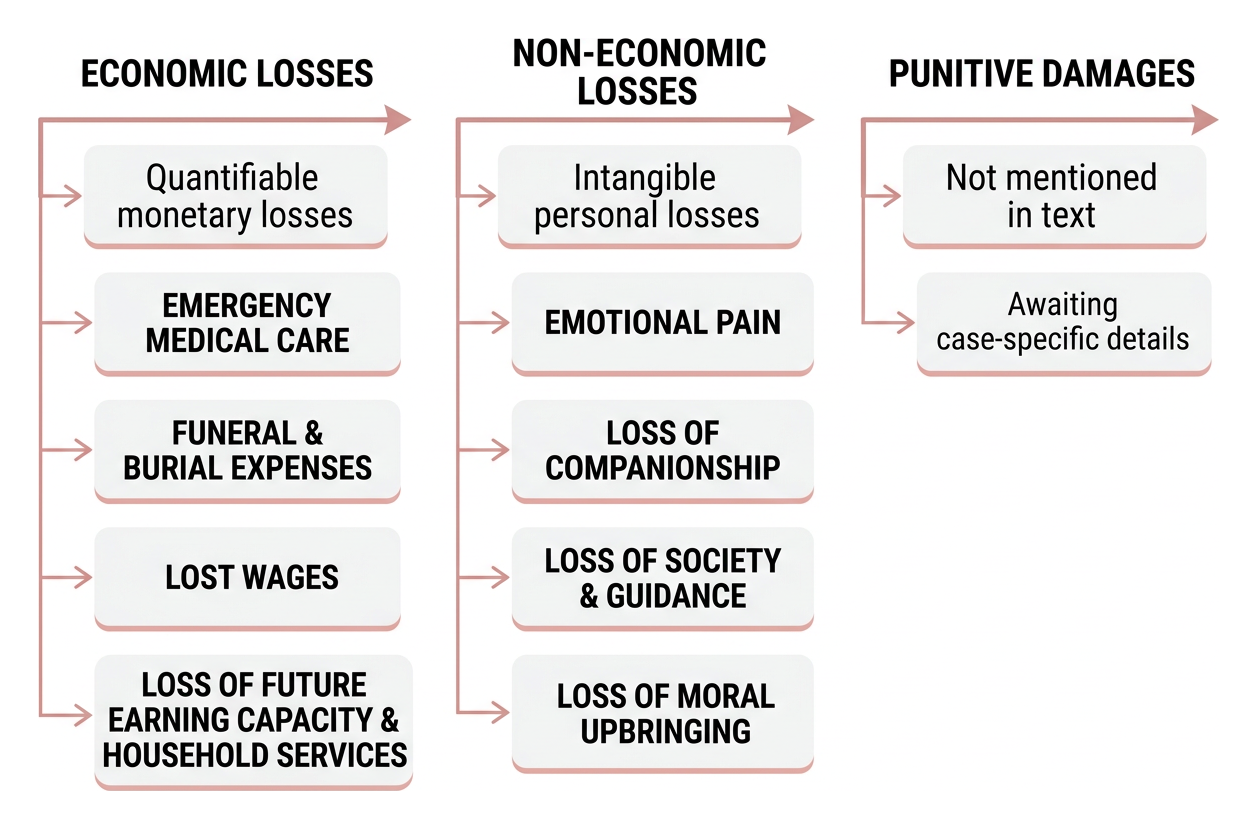
Recoverable damages fall into two primary financial categories:
- Economic Damages: Quantifiable monetary losses, including emergency medical care provided at facilities like Penn Presbyterian Medical Center or Thomas Jefferson University Hospital, funeral and burial expenses, lost wages, and the loss of future earning capacity and household services.
- Non-Economic Damages: Intangible personal losses, including the emotional pain, loss of companionship, society, guidance, and moral upbringing suffered by surviving family members.
Wrongful Death vs. Survival Actions
Fatal product litigation in Pennsylvania is typically brought under two distinct statutory vehicles:
- Wrongful Death Actions: Filed to directly compensate the statutory beneficiaries (surviving spouse, children, or parents) for their personal financial and emotional losses resulting from their loved one’s untimely absence.
- Survival Actions: Filed on behalf of the decedent’s estate to recover damages the deceased person could have claimed had they survived. This includes compensation for conscious physical pain, mental suffering, and fright experienced between the moment of product failure and death, alongside the total net economic value of their lifetime earning potential. In cases involving gross corporate indifference or intentional concealment of product hazards, claims may also seek punitive damages to penalize reckless conduct.
Product Liability Insurance Coverage and Policy Limits
Commercial manufacturers and distributors carry Commercial General Liability (CGL) and excess umbrella policies with substantial limits. Navigating these policies requires a thorough understanding of policy exclusions, reservation of rights letters, and aggregate policy limits.
Understanding transparent wrongful death attorney fees is essential for grieving families. At J. Fine Law, we represent clients on a contingency-fee basis—meaning our clients pay nothing upfront, and we only collect legal fees when we secure a financial settlement or trial verdict on your family’s behalf.
Navigating Procedural Deadlines and Filing Requirements
Filing a defective product claim requires strict adherence to statutory deadlines and formal estate administration rules. Families must follow the steps to filing a wrongful death lawsuit through the proper probate channels before entering a courtroom.
Before a civil complaint is filed in the Philadelphia Court of Common Pleas, a formal estate must be opened. The court-appointed personal representative (executor or administrator) holds the formal authority to initiate survival and wrongful death actions on behalf of the estate and surviving beneficiaries.
Filing Deadlines and Statutes of Repose
Time is of the essence in fatal product cases due to two strict timing mechanisms:
- Statute of Limitations: In Pennsylvania, families generally have two years from the date of the decedent’s death to file a wrongful death and survival lawsuit. While the discovery rule can occasionally toll this deadline if a latent defect could not reasonably have been detected immediately, waiting jeopardizes your legal rights.
- Statute of Repose: Unlike a statute of limitations, which runs from the date of injury or death, a statute of repose creates an absolute outer time cutoff running from the date the product was first manufactured, delivered, or sold to the public (often 10 to 12 years depending on state laws and useful safe life rules). Once the repose period expires, claims are barred regardless of when the injury occurred.
Taking Immediate Legal Action in Philadelphia
Securing justice in local courts requires rapid, assertive investigation. When pursuing wrongful death accountability in Philadelphia, early steps include:
- Filing formal preservation motions to prevent defendants from tampering with testing data.
- Subpoenaing internal engineering memos, failure mode analyses, and consumer complaint logs.
- Reviewing federal recall databases maintained by the National Highway Traffic Safety Administration (NHTSA) or the Consumer Product Safety Commission (CPSC).
Frequently Asked Questions About Fatal Defective Product Claims
Who has legal standing to file a lawsuit after a fatal product defect?
Under Pennsylvania law, the personal representative (executor or administrator) of the decedent’s estate has exclusive standing to file the wrongful death and survival lawsuit. If a personal representative is not appointed within six months of the death, any statutory beneficiary (such as a surviving spouse, child, or parent) may initiate the wrongful death action on behalf of all eligible heirs.
How does a statute of repose differ from a statute of limitations?
A statute of limitations sets a deadline based on when the injury or death occurred (typically two years). In contrast, a statute of repose creates a strict, immovable cutoff based on when the product was originally manufactured or sold (frequently 10 to 12 years). Once a statute of repose passes, no lawsuit can be filed, even if the fatal defect caused harm years later.
What role do technical and forensic witnesses play in proving a defective product claim?
Forensic engineers and scientific investigators provide the foundation of a product liability claim. They inspect physical components, run simulations, review manufacturing schematics, and offer formal testimony explaining why a design, manufacturing error, or missing warning directly caused the fatal incident while satisfying strict Daubert reliability standards.
Protecting Your Family’s Rights with J. Fine Law
When a corporate manufacturer puts profits ahead of human life, families deserve aggressive, dedicated representation to uncover the truth. At J. Fine Law, we combine rapid attorney response, extensive trial resources, and a 98% success rate to hold negligent companies accountable for fatal design flaws, production errors, and inadequate warnings. When a vulnerable loved one or senior in a care facility suffers fatal injuries from a defective medical product, failed mobility device, or institutional neglect, speaking with a dedicated elder abuse attorney and wrongful death lawyer is the first step toward securing the accountability and financial stability your family deserves. Contact our Philadelphia office today for a free, confidential case evaluation.