 Skip to content
What to Do When an Insurer Refuses to Pay in Feasterville
If your insurer denied your claim, delayed payment, or offered far less than the loss appears to justify, save the denial letter, gather your policy and proof of damage, and avoid accepting a final payment before reviewing your options. A Feasterville insurance dispute lawyer can assess the policy language, challenge an improper denial or undervaluation, negotiate with the carrier, and take legal action when necessary.
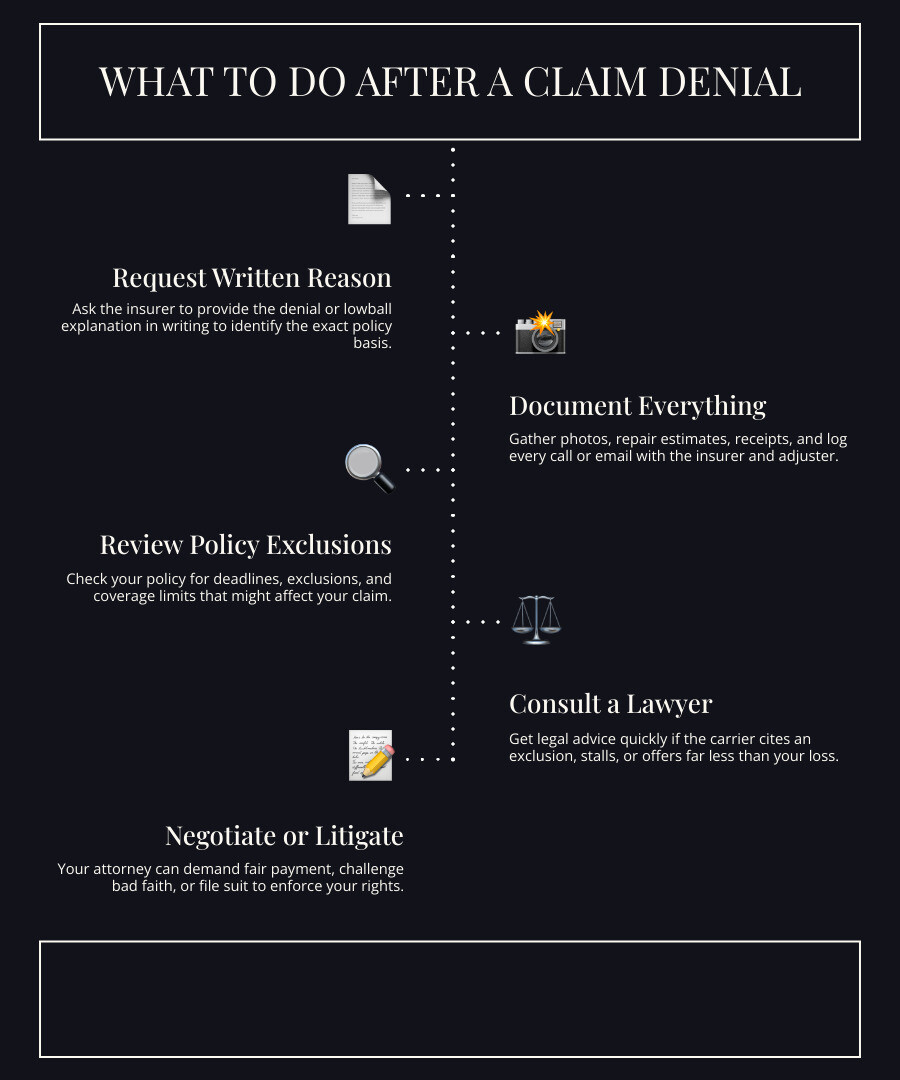
Start with these steps:
- Request the insurer’s reason in writing.
- Document the damage, expenses, estimates, and every insurer contact.
- Review exclusions and deadlines in the policy.
- Get legal advice quickly if the carrier cites an exclusion, stalls, or makes a low offer.
Insurance disputes can involve water damage, storms, fire, vehicle crashes, medical bills, lost income, or a carrier’s failure to handle a claim fairly. The policy wording matters, but so do the facts, evidence, and the insurer’s conduct after you report the loss.
I am Jason Fine, founding trial attorney at J. Fine Law, with more than 25 years representing people dealing with serious injuries, insurance companies, and disputed claims. As a Feasterville insurance dispute lawyer resource, this guide explains practical steps to protect your claim and seek a fair recovery.
Simple Feasterville insurance dispute lawyer word guide:
- Feasterville injury claim attorney
- Feasterville free consultation attorney
- Uninsured motorist lawyer
Common Reasons Insurers Deny or Underpay Property Claims in Bucks County
When disaster strikes a home or commercial building along Bustleton Pike or Street Road, property owners expect their carriers to step up promptly. Feasterville comprises 3,656 residents and 923 households, alongside a vibrant commercial sector. Every single one of these households and local storefronts depends on insurance contracts to protect their physical structures and financial stability. Unfortunately, carriers frequently prioritize their profit margins over timely, fair payouts.
Insurers employ distinct tactics to reduce claim valuations or avoid liability altogether. They scrutinize fine print, invoke restrictive definitions, or argue that pre-existing wear contributed to the incident. Understanding these denial strategies is essential for protecting your recovery.
Water, Storm, and Structural Property Damage Exclusions
Water and weather-related claims generate some of the most contentious coverage battles in Feasterville. Policies are packed with specific exclusions that carriers use to sidestep responsibility:
- Surface Water vs. Internal Water Damage: Standard homeowner policies often distinguish between water coming from above (a broken indoor pipe or sudden plumbing failure) and water rising from outside (surface runoff, flash flooding, or ground saturation). Insurers routinely misclassify sudden burst-pipe incidents as uninsurable surface water penetration.
- Windstorm vs. Wear and Tear: Following severe storms, carriers frequently claim that roof leaks and fallen siding resulted from deferred maintenance or aging materials rather than violent wind gusts.
- Mold Remediation Limits: When a water loss is delayed or mishandled, toxic mold can spread rapidly. Policies often cap mold remediation at minimal sums or exclude it if they claim the homeowner failed to dry the area immediately.
- Maintenance and Deterioration Clauses: Insurers often deny structural damage by asserting the property owner neglected routine upkeep, shifting the burden of expensive structural repairs directly onto the policyholder.
Commercial vs. Residential Property Disputes in Feasterville
While residential disputes often focus on personal contents, roof replacements, and alternate living arrangements, commercial property disputes present even greater financial complexity. Commercial claims in Feasterville involve:
- Business Interruption Losses: When a storm or fire shuts down a local retail shop or professional office, lost operating revenue and continuous payroll costs mount rapidly. Carriers aggressively dispute projected revenue models and fixed expense calculations.
- Inventory and Equipment Loss: Commercial claims require detailed appraisals for specialized machinery, raw materials, and seasonal merchandise.
- Building Code Upgrade Endorsements: Bringing older commercial structures up to current municipal safety codes after a loss can add significant expense, which insurers regularly contest without targeted legal advocacy.
For complex property and injury claims, engaging Feasterville accident legal services helps ensure all policy terms, business records, and structural damage reports are compiled correctly.
Actionable Steps to Take Immediately After a Claim Denial or Lowball Offer
Receiving a claim denial or an insulting lowball settlement check can be infuriating, but how you react directly impacts your chances of overturning the carrier’s decision.
Documenting Losses and Gathering Evidence
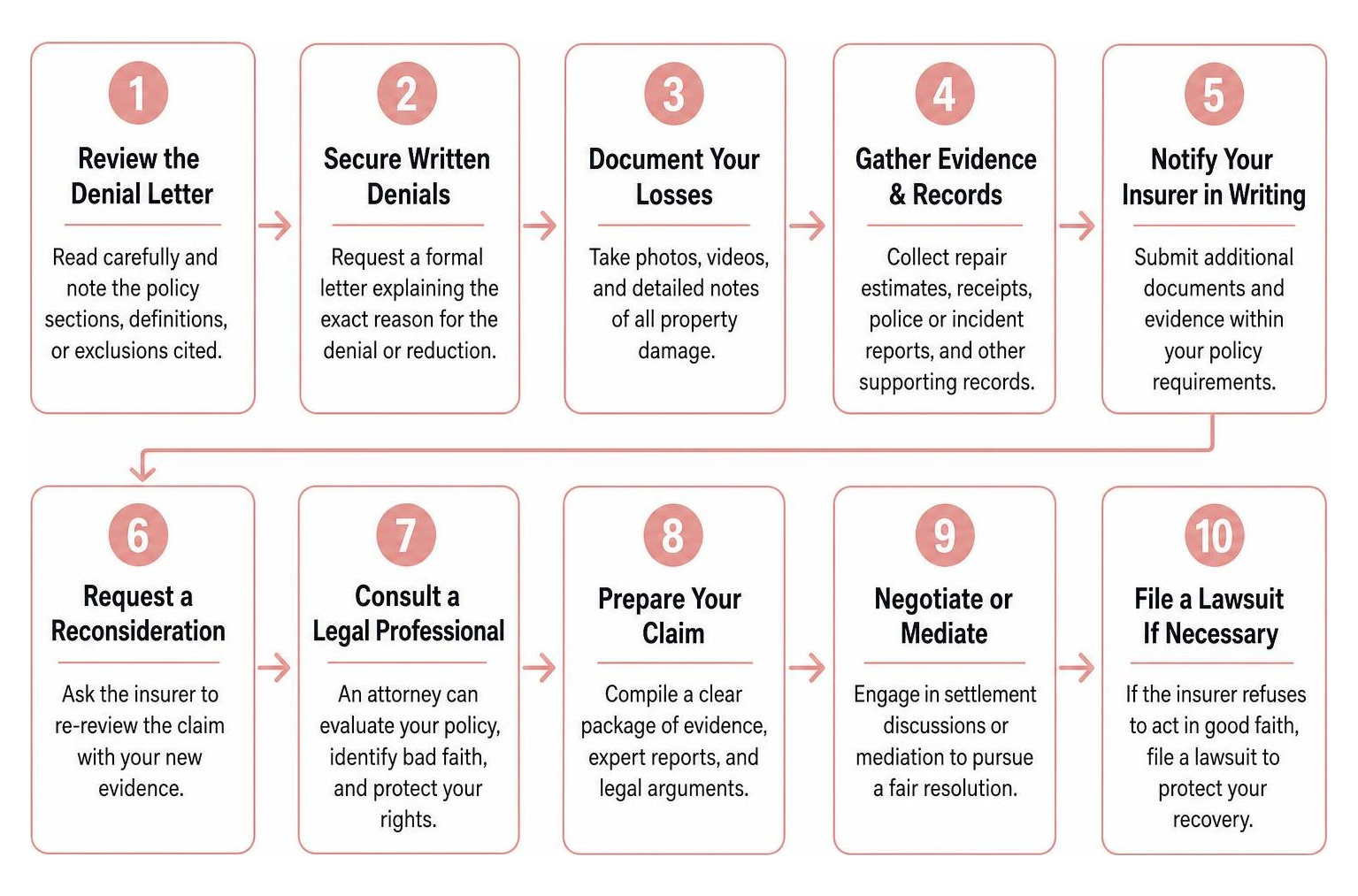
Strong documentation forms the foundation of every successful insurance dispute. Take the following proactive measures:
- Secure Written Denials: Demand that the insurance company provide a formal letter citing the exact policy section, definition, or exclusion they are relying on to deny or reduce your payout.
- Maintain a Comprehensive Communication Log: Record the date, time, name, and summary of every conversation with insurance adjusters, claims representatives, and third-party inspectors.
- Capture Detailed Visual Proof: Take high-resolution photographs and videos of all damaged rooms, personal belongings, exterior structures, and structural failure points before any debris is cleared away.
- Obtain Independent Contractor Estimates: Do not rely on the insurance company’s preferred vendor, who may use cut-rate pricing models. Hire reputable local contractors to provide independent, itemized repair and replacement estimates.
- Preserve Receipts for Emergency Mitigation: Fulfill your policy duty to mitigate further loss (such as boarding up broken windows or tarping an open roof), and retain every receipt for temporary repairs and temporary living arrangements.
Why Working with a Feasterville Insurance Dispute Lawyer Protects Your Rights
Insurance policies are legal contracts drafted by corporate defense teams to limit liability. Navigating these agreements without legal backing places policyholders at a severe disadvantage.
At J. Fine Law, our rapid attorney response ensures that your claim is analyzed without delay. We examine ambiguous policy clauses, issue formal legal demand letters, handle all aggressive insurer communications, and enforce full settlement values. Whether negotiating an undervalued property claim or managing a complicated accident case with an injury claim attorney in Feasterville, having seasoned trial counsel levels the playing field against insurance giants.
When to Hire a Feasterville Insurance Dispute Lawyer for Your Claim
When negotiations stall or an insurer acts dishonestly, bringing in legal representation is vital. Whether your dispute involves property destruction, complex liability, or an auto crash managed by a car accident lawyer in Bucks County, legal representation protects you against unfair settlement practices.
Public Adjusters vs. Insurance Dispute Attorneys
Policyholders often wonder whether to hire a public adjuster or an insurance litigation attorney. While both advocate for policyholders, their capabilities and legal authorities differ significantly.
| Feature / Service | Public Adjuster | Insurance Dispute Attorney |
|---|---|---|
| Primary Focus | Estimating damage, scoping repairs, filing paperwork | Interpreting policy law, litigating disputes, enforcing rights |
| Negotiation Authority | Represents policyholder in administrative claims | Negotiates settlements with formal legal leverage |
| Appraisal Process | Participates as an appraiser or estimator | Directs appraisal strategy and handles legal enforcement |
| Subpoena Power | No legal authority to demand internal insurer records | Can subpoena internal claims files, emails, and claim manuals |
| Courtroom Litigation | Cannot file lawsuits or represent clients in court | Prepares, files, and argues lawsuits in state and federal court |
| Bad Faith Claims | Cannot pursue statutory bad faith damages | Pursues bad faith damages, interest, and attorney fees |
Public adjusters typically charge a contingency fee ranging from 5% to 20% of the claim settlement to handle estimates and initial negotiations. However, if the insurance carrier denies coverage outright based on a policy exclusion or engages in bad faith practices, a public adjuster cannot file a lawsuit or compel the insurer to produce internal claim files. An attorney provides the comprehensive legal authority required to take an uncooperative insurer to trial.
How a Feasterville Insurance Dispute Lawyer Proves Bad Faith Under PA Law
Pennsylvania provides robust statutory protections for policyholders. Under 42 Pa.C.S. § 8371, if an insurer acts in bad faith when handling, investigating, or paying a claim, the policyholder has the legal right to seek significant civil penalties.
To prove statutory bad faith in Pennsylvania, we establish two critical elements:
- The insurer lacked a reasonable basis for denying benefits or delaying payments under the policy.
- The insurer knew of or recklessly disregarded its lack of a reasonable basis.
Bad faith practices often include unreasonable investigation delays, failure to communicate promptly, lowball settlement offers unsupported by evidence, misrepresenting policy terms, and performing biased claims assessments. Under § 8371, courts may award the full value of the underlying claim, statutory interest, court costs, attorney fees, and punitive damages designed to punish the insurance company.
Frequently Asked Questions About Insurance Disputes in Feasterville
What is the time limit for filing an insurance dispute in Pennsylvania?
In Pennsylvania, the statutory deadline for a standard breach of contract lawsuit is generally four years from the date of the breach, while statutory bad faith claims under 42 Pa.C.S. § 8371 carry a two-year statute of limitations. However, many insurance policies contain internal contractual limitation clauses that require policyholders to file formal legal action within one or two years of the actual loss. Reviewing your policy immediately ensures you do not miss critical contractual deadlines.
How do legal fees work when hiring an insurance dispute attorney?
At J. Fine Law, we represent clients on a contingency basis with zero upfront fees. You pay no legal fees unless we successfully recover money for your claim through a settlement or verdict. If you are facing an uncooperative insurer, you can review your options with a free consultation to understand your legal rights without financial risk.
Can an insurer cancel my policy if I dispute a denied claim?
Insurance companies are legally prohibited from canceling a policy in retaliation for a policyholder disputing a denial, filing a legitimate claim, or exercising their legal rights. Pennsylvania insurance regulations strictly govern non-renewal and cancellation terms, protecting consumers who challenge improper claim decisions.
Maximize Your Claim with Feasterville Policyholder Advocacy
When insurance carriers refuse to honor their contractual obligations, policyholders need aggressive, determined representation. With over $50 million recovered for clients and a 98% success rate, J. Fine Law stands ready to challenge corporate delays, improper denials, and bad faith insurance practices.
Whether you are rebuilding after a devastating property loss near Bustleton Pike or recovering from trauma treated at St. Mary Medical Center, our team moves quickly to hold insurers accountable. If you or an aging family member have suffered mistreatment, denied care coverage, or facility neglect, consult our dedicated elder abuse attorney team for immediate guidance. Visit our Feasterville law office today or reach out directly to demand the full compensation and justice you deserve.