 Skip to content
A TBI Lawyer in Philadelphia Can Change the Outcome of Your Brain Injury Case
If you need a TBI lawyer in Philadelphia, here is what you need to know right away:
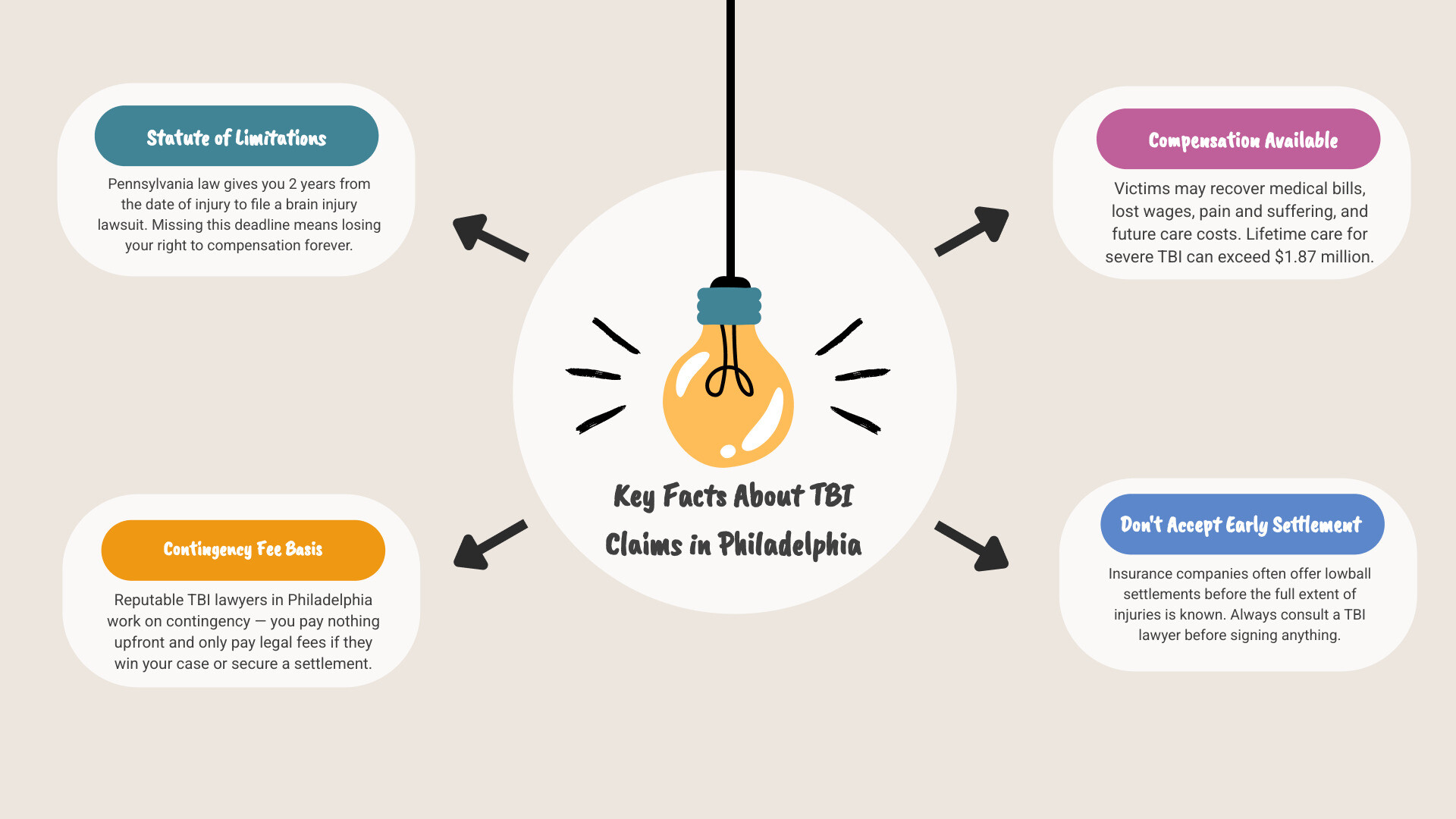
- J. Fine Law handles traumatic brain injury cases in Philadelphia on a contingency fee basis — you pay nothing unless we win
- Pennsylvania’s statute of limitations gives you 2 years from the date of injury to file a claim
- You may recover compensation for medical bills, lost wages, pain and suffering, and future care costs
- Do not accept any insurance settlement offer before speaking with a TBI attorney
- Call J. Fine Law for a free consultation — we respond fast and fight hard for full compensation
A TBI lawyer Philadelphia residents trust can mean the difference between a lowball insurance payout and the full financial recovery your family needs to move forward. Traumatic brain injuries affect roughly 1.7 million Americans every year, and the consequences go far beyond the emergency room. They reshape careers, relationships, daily routines, and long-term health — often permanently.
The financial toll is equally devastating. Lifetime care costs for a severe brain injury can reach $1.87 million, and nearly 60% of adults with a TBI remain unemployed two years after the injury. Yet insurance companies routinely make early settlement offers that fall far short of covering those real costs.
You do not have to face that alone.
I’m Jason Fine, senior trial attorney and founding member of J. Fine Law Group, with over 25 years of experience representing brain injury victims across Philadelphia and Pennsylvania — and as a ten-time consecutive Pennsylvania Super Lawyer nominee, I have built my practice on getting results that insurance companies did not want to pay. In the sections ahead, I will walk you through everything you need to know to protect your rights and your future.
Relevant articles related to TBI lawyer Philadelphia:
- traumatic brain injury lawyer
- tbi attorney near me
- how a lawyer can help with traumatic brain injury recovery
Understanding Traumatic Brain Injuries and Their Causes in Philadelphia
A traumatic brain injury (TBI) happens when an external physical force bumps, jolts, or penetrates the head, disrupting the normal functioning of the brain. This is medically and legally different from brain damage caused by internal medical events like strokes or tumors.
In a bustling city like Philadelphia, these life-altering traumas happen in a split second. You might be walking down Market Street and slip on an icy patch of pavement, or you could be commuting on I-76 when a distracted driver rear-ends your vehicle. Falls account for nearly half of all TBI-related hospitalizations nationwide, closely followed by motor vehicle collisions, workplace accidents, and acts of violence.
When a head impact occurs, the physical and cognitive impacts can be immediately overwhelming. Understanding these changes is the first step toward recovery. You can read more about this in our guide on understanding brain injury symptoms. When victims are rushed to local trauma centers like Temple University Hospital, doctors focus on stabilizing the brain, but the long-term journey of rehabilitation is just beginning.

Signs and Symptoms of a Brain Injury
Brain injuries are often called “invisible injuries” because you cannot see the damage from the outside. However, the internal disruption is profound. Symptoms of a TBI generally range from mild to severe, but even a “mild” concussion can cause lasting disruptions to your daily life.
Common signs of a brain injury include:
- Physical symptoms: Persistent headaches, dizziness, nausea, fatigue, blurry vision, and ringing in the ears.
- Cognitive difficulties: Memory gaps, confusion, trouble concentrating, and feeling mentally “foggy.”
- Emotional and behavioral changes: Uncharacteristic mood swings, anxiety, depression, irritability, and sleep disturbances.
Delayed Symptoms and the Discovery Rule in Pennsylvania
One of the most dangerous aspects of a brain injury is that symptoms do not always appear immediately. After a car crash near City Hall, your body is flooded with adrenaline. You might walk away thinking you just have a minor headache, only to find that weeks later you cannot concentrate at work, are struggling with memory loss, and feel constantly dizzy.
These delayed-onset symptoms are common, but they can complicate your personal injury claim. Insurance adjusters will try to argue that because you did not complain of head pain at the emergency room, your brain injury must have been caused by something else.
This is where Pennsylvania’s “discovery rule” becomes incredibly important. While the state has a strict two-year statute of limitations for personal injury lawsuits, the discovery rule may pause the clock. It specifies that the timeline to file a claim begins when you reasonably should have discovered that you sustained a brain injury. Working with a legal advocate who understands these medical and legal complexities is vital to protecting your rights. For a detailed breakdown of your rights, review our guide on understanding Pennsylvania brain injury legal options.
How a TBI Lawyer Philadelphia Can Prove Your Case
Proving a brain injury in a court of law requires a strategic combination of medical science and legal advocacy. Because insurance companies often try to downplay concussions and head trauma, we must build an ironclad case from day one.
Our team at J. Fine Law takes over the heavy lifting so you can focus on healing. We handle the comprehensive collection of evidence, request and analyze your medical records, and manage all communications with hostile insurance adjusters. Our comprehensive brain injury guide explains how we counter common insurance tactics designed to minimize your payout.
Proving Liability with a TBI Lawyer Philadelphia
To win a TBI lawsuit in Pennsylvania, we must establish the four core elements of negligence:
- Duty of Care: The defendant owed you a legal obligation to act safely (such as a driver obeying traffic laws on Broad Street).
- Breach of Duty: The defendant failed to meet that obligation (such as speeding or driving while distracted).
- Causation: The defendant’s breach directly caused your head impact and subsequent brain injury.
- Damages: You suffered actual physical, emotional, and financial losses as a result.
Proving these elements is highly technical, especially when dealing with “invisible” brain injuries that do not show up on standard CT scans or MRIs. We collaborate with medical professionals, neurologists, and neuropsychologists to present clear, undeniable proof of your cognitive deficits to a jury.
Why You Need a TBI Lawyer Philadelphia Immediately
Time is your enemy after a catastrophic accident. Physical evidence at a crash scene on I-76 can be cleared away within hours. Surveillance footage from local businesses near Market Street might be automatically overwritten within days. Witnesses’ memories fade.
When you hire us immediately, we dispatch investigators to secure traffic camera footage, preserve black box data from commercial vehicles, and record witness statements while they are fresh. Furthermore, having a legal representative protects you from making recorded statements to insurance adjusters, who are trained to twist your words to devalue your claim. We prepare every case as if it is going to trial, which gives us maximum leverage during settlement negotiations.
Calculating the True Value of a Head Injury Claim
No two brain injuries are identical, which means there is no simple calculator to determine what your claim is worth. The value of your case depends heavily on the severity of your cognitive deficits, your age, your pre-injury earning capacity, and the level of medical care you require.
If you receive ongoing rehabilitative care at Penn Medicine, those bills will add up quickly. A comprehensive claim must account for both your current bills and the care you will require decades into the future.
| Damage Type | Description | Examples |
|---|---|---|
| Economic Damages | Measurable financial losses directly caused by the injury. | Emergency room bills, future surgeries, physical therapy, lost wages, and loss of future earning capacity. |
| Non-Economic Damages | Subjective, non-monetary losses affecting your life quality. | Pain and suffering, mental anguish, loss of enjoyment of life, and loss of consortium. |
Economic and Non-Economic Damages
Economic damages are designed to make your wallet whole again. If your injury prevents you from returning to your job, we work with economic analysts to project your lost future earnings over your remaining working years.
Non-economic damages address the human cost of a TBI. Brain injuries can alter your personality, strain relationships, and prevent you from enjoying hobbies or playing with your children. While these losses do not have a price tag, they often represent the largest portion of a personal injury recovery. In rare cases where a defendant acted with complete recklessness, punitive damages may also be awarded to punish the wrongdoer.
The Impact of Head Injuries in Nursing Homes
Catastrophic head injuries do not only occur on our highways. They are also incredibly common in long-term care facilities. Elderly residents are highly vulnerable to falls, and when nursing home staff fail to provide proper supervision, assist with mobility, or keep walkways clear of hazards, the results are often fatal.
A head injury in a nursing home is frequently a red flag for systemic neglect. If your elderly loved one suffered a sudden change in cognitive function, unexplained bruising around the face, or a fall-related concussion in a facility, it is critical to investigate the care they received. Protecting vulnerable seniors requires aggressive legal action. If you suspect your loved one’s head injury was caused by negligent care or facility safety failures, contact an elder abuse attorney immediately to protect their safety and legal rights.
Frequently Asked Questions About Brain Injury Lawsuits
Navigating the Pennsylvania civil court system can feel overwhelming when you are trying to recover from a serious injury. Here are direct answers to the questions we hear most often from families in Philadelphia.
What is the statute of limitations for a TBI lawsuit in Pennsylvania?
In Pennsylvania, you generally have two years from the date of the accident to file a personal injury lawsuit. If you miss this deadline, the court will likely dismiss your case, and you will lose your right to seek compensation.
There are limited exceptions, such as claims involving injured minors, where the two-year clock does not start until they turn 18. Additionally, if your injury was caused by a government entity (such as a Philadelphia city bus), you must file a formal notice of your intent to sue within six months of the incident.
What if my MRI or CT scan looks normal?
It is very common for standard emergency room scans to show no structural damage, even when a patient is suffering from a severe concussion or diffuse axonal injury. This is because standard imaging cannot capture microscopic damage to brain cells and nerve fibers.
We overcome this hurdle by relying on neurocognitive testing, specialized imaging like Diffusion Tensor Imaging (DTI), and testimonies from medical professionals who can document your functional and cognitive limitations in daily life. A “normal” scan does not mean you do not have a case.
How much is a head injury claim worth?
The national average verdict for a brain injury claim in 2020 was $1.4 million, but settlements and verdicts vary wildly based on the details of the case.
The primary factors affecting your claim’s value include the severity of the brain damage, the cost of your past and future medical care, the clarity of liability, and the insurance policy limits available. We do not recommend settling your claim until you have reached Maximum Medical Improvement (MMI), which is the point where your recovery has stabilized and your long-term prognosis is clear.
Secure Your Future with a Dedicated Philadelphia Legal Advocate
A traumatic brain injury changes your life in an instant, but you do not have to carry the financial burden of someone else’s negligence. At J. Fine Law, we have spent decades standing up to insurance companies on behalf of injury victims in Philadelphia and Feasterville.
Our record speaks for itself. We maintain a 98% success rate, provide rapid attorney responses to every inquiry, and have secured over $50 million in settlements for our clients. We work on a contingency fee basis, meaning we absorb all the upfront costs of building your case, and you pay us nothing unless we successfully recover money for you.
Do not let an insurance adjuster dictate the value of your future. Reach out to J. Fine Law today for a free, no-obligation consultation, and let us fight for the Philadelphia traumatic brain injury representation you deserve.