 Skip to content
How to Find Injury Attorneys in Philadelphia
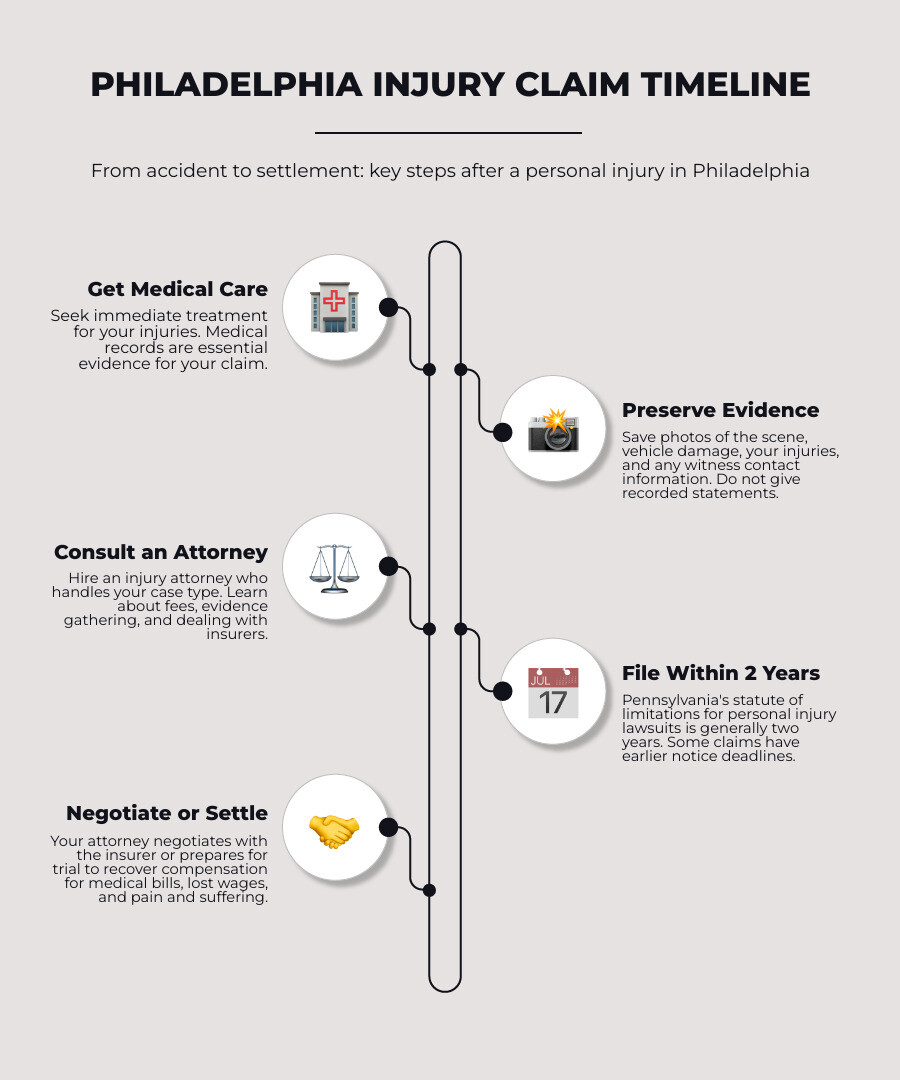
Choose an injury attorney who handles your type of case, explains their fees clearly, and tells you how they will gather evidence and deal with insurers. After an accident, get medical care, save photos and bills, and avoid giving the other party’s insurer a recorded statement before you get legal advice. In Pennsylvania, you generally have two years to file a personal injury lawsuit, though some claims have earlier notice deadlines.
I’m Jason Fine, founding attorney of J. Fine Law, and I’ve handled crashes, falls, and other injury cases for over 25 years. When you need seasoned injury attorneys Philadelphia residents can trust, this guide will help you understand your legal options and what to ask before hiring counsel.
Helpful legal claim resources:
- personal injury lawyer philadelphia
- car accident attorney philadelphia pennsylvania
- slip and fall accident lawyer philadelphia
Navigating Personal Injury Claims and Case Types in Pennsylvania
Core Practice Areas Handled by Injury Attorneys Philadelphia
Personal injury law protects individuals harmed by the reckless or careless actions of others. When someone fails to use reasonable care on the road, in a building, or at a commercial venue, the consequences can be devastating. At J. Fine Law, our focus is on holding negligent parties accountable and helping clients secure the financial resources needed to rebuild their lives.
Working with an experienced personal injury lawyer in Philadelphia ensures that every angle of your claim is investigated thoroughly. Whether you were struck by a reckless driver on Broad Street, injured on a SEPTA platform, or hurt at a construction site near Center City, dedicated legal representation levels the playing field against large insurance companies.
| Case Type | Key Evidence Required | Potentially Liable Parties |
|---|---|---|
| Motor Vehicle Collisions | Police crash reports, traffic camera footage, black box data, witness statements | At-fault drivers, commercial trucking carriers, rideshare companies |
| Slip, Trip & Falls | Maintenance logs, surveillance video, photos of the hazard, weather reports | Commercial property owners, property managers, municipal entities |
| Negligent Security | Prior police dispatch logs, security camera footage, broken lock records | Apartment building owners, venue operators, security contractors |
| Workplace Accidents | OSHA incident reports, equipment maintenance logs, subcontractor contracts | Third-party contractors, equipment manufacturers, property owners |
Our firm has secured significant results across these practice areas, including a $900,000 recovery for a premises liability fall, a $500,000 resolution for a motor vehicle collision, and a $500,000 award for a negligent security case.
Slip and Fall Hazards and Common Premises Liability Myths
Premises liability claims arise when property owners fail to maintain safe conditions for visitors, tenants, and customers. A common myth in Philadelphia is that falling on someone’s property automatically entitles you to compensation. In reality, Pennsylvania law requires the injured party to prove that the property owner either created the dangerous condition, knew about it, or should have known about it through reasonable inspection.
Another widespread misconception involves warning markers. Many people believe that if a grocery store places a yellow warning cone anywhere on the floor, the business is completely protected from liability. This is incorrect. If a spill was left unaddressed for hours in a high-traffic aisle near Market Street, or if the cone was placed far away from the actual hazard, the business owner may still be held responsible for your medical bills and related losses.
Key Pennsylvania Laws Impacting Your Injury Settlement
Pennsylvania Statute of Limitations and Critical Deadlines
Timing is critical in any legal claim. Under Pennsylvania law (42 Pa.C.S. § 5524), the general statute of limitations for filing a personal injury lawsuit is two years from the date of the incident. If you do not file a formal lawsuit in court before this deadline expires, you permanently lose your right to pursue compensation from the responsible party.
Reviewing a comprehensive Philadelphia personal injury guide helps clarify how specific timing rules apply to different scenarios. For instance, claims involving government agencies—such as accidents involving municipal vehicles or hazardous conditions on public sidewalks—require formal written notice within six months of the injury date. For traumatic brain injuries, symptoms may not appear immediately; however, documenting medical evaluations right away at facilities like Penn Presbyterian Medical Center or Temple University Hospital protects both your health and your legal timeline.
Overcoming Limited Tort Insurance to Recover Pain and Suffering
Pennsylvania auto insurance policies require drivers to choose between “Full Tort” and “Limited Tort” coverage. Selecting limited tort reduces insurance premiums, but it restricts your ability to sue an at-fault driver for non-economic damages, commonly known as pain and suffering, unless your situation meets specific statutory exceptions.
Gaining insights from a top personal injury lawyer in Pennsylvania can help you identify whether your injuries qualify for an exemption under Pennsylvania law.
| Tort Option | Economic Damages (Medical & Lost Wages) | Pain & Suffering Recovery | Key Exceptions to Restrictions |
|---|---|---|---|
| Full Tort | Fully Recoverable | Fully Recoverable without threshold barriers | None needed; full rights apply automatically |
| Limited Tort | Fully Recoverable | Barred unless a statutory exception applies | Serious impairment of body function, drunk driver, out-of-state vehicle, pedestrian |
Under 75 Pa.C.S. § 1702, a “serious injury” is defined as a personal injury resulting in death, serious impairment of body function, or permanent serious disfigurement. If your injury prevents you from performing your normal daily life activities or returning to work, our legal team can work to prove that your condition meets this standard so you can pursue full compensation.
How Injury Attorneys Philadelphia Victims Hire Build Winning Claims
Immediate Post-Accident Steps and Dealing with Insurance Adjusters

The actions you take immediately following an accident directly impact your health and the strength of your legal claim. Following a clear sequence of steps protects your rights from day one:
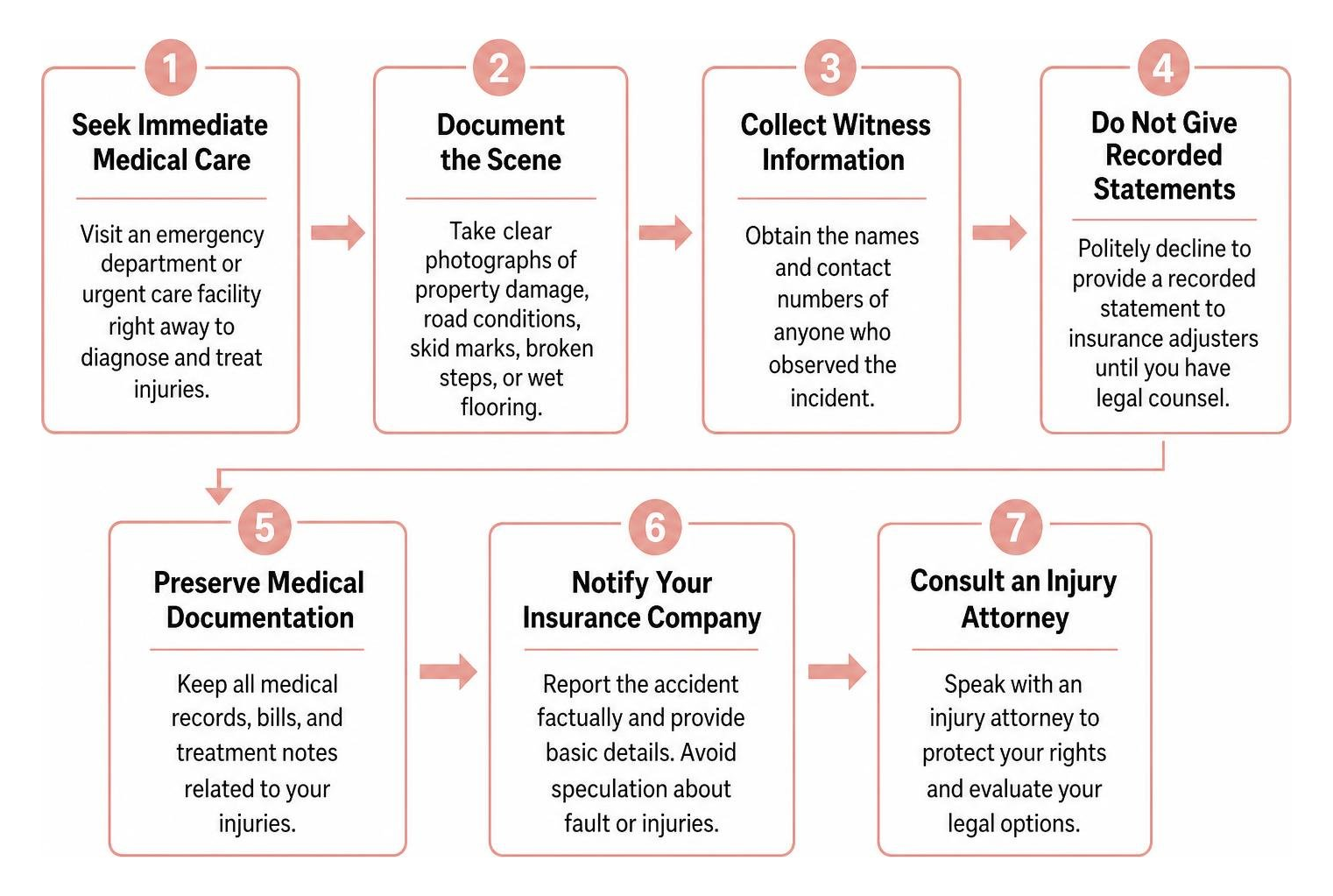
- Seek Immediate Medical Care: Visit an emergency department or urgent care facility right away to diagnose and treat injuries.
- Document the Scene: Take clear photographs of property damage, road conditions, skid marks, broken steps, or wet flooring.
- Collect Witness Information: Obtain the names and contact numbers of anyone who observed the incident.
- Do Not Give Recorded Statements: Insurance adjusters often call within days to request a recorded statement. These statements are designed to lock you into answers before you understand the full scope of your injuries. Politely decline until you have retained legal counsel.
How Legal Teams Calculate Maximum Claim Value
Every injury claim has unique financial and personal dimensions. To determine the fair value of a case, legal teams evaluate both economic and non-economic losses. Economic damages include tangible monetary expenses:
- Current and projected medical treatment expenses
- Physical therapy, prescription medications, and adaptive medical devices
- Lost income during recovery periods
- Diminished future earning capacity if permanent restrictions apply
Non-economic damages cover the human toll of the injury, including physical pain, emotional distress, loss of life’s pleasures, and scarring. We assemble comprehensive documentation—including medical records, employment statements, and financial projections—to present a compelling demand to insurance carriers or a Philadelphia jury.
Selecting the Right Legal Representation for Your Case
Key Questions to Ask Prospective Injury Attorneys Philadelphia
Selecting the right advocate requires asking targeted questions during your initial meeting. Consulting The Philly Guide to Picking a Personal Injury Law Firm provides a practical roadmap for evaluating representation.
Before signing a representation agreement, ask prospective counsel:
- What is your track record in handling cases similar to mine in Philadelphia courts?
- How quickly does your team respond to client calls and case updates?
- What percentage of your cases settle versus going to trial?
- Who within the office will be directly managing my case day to day?
- How do you handle case expenses if a claim requires litigation or courtroom filing?
For additional details, our in-depth guide to finding injury lawyers in Philadelphia PA outlines how local courtroom familiarity and rapid communication benefit your case.
Understanding Contingency Fee Structures and Legal Costs
Personal injury representation is structured on a contingency fee model. This means you pay zero upfront costs or hourly legal retainers. The law firm advances all necessary expenses required to investigate, prepare, and litigate your claim—such as court filing fees, medical record acquisition, and independent consultant fees.
Legal fees are collected only as an agreed-upon percentage of the final settlement or jury award obtained on your behalf. If no financial recovery is secured, you do not owe legal fees for the representation.
Frequently Asked Questions about Philadelphia Injury Claims
What if I slipped in a grocery store aisle and there was a wet floor sign?
A warning sign does not automatically eliminate a business’s legal responsibility. If the hazard was present for an extended period, if the warning was placed away from the spill, or if the property owner failed to clean up the hazard promptly, you may still have a valid premises liability claim under Pennsylvania comparative negligence rules.
Should I give a recorded statement to the other driver’s insurance adjuster?
No. You are not legally required to provide a recorded statement to the other party’s insurance carrier. Adjusters are trained to ask questions that may minimize your payout or place blame on you. Direct all communications from opposing insurers to your attorney.
How long do I have to file a brain injury claim in Pennsylvania?
In Pennsylvania, the statute of limitations for personal injury claims, including traumatic brain injuries, is generally two years from the date the injury occurred. If symptoms were latent and could not reasonably have been discovered immediately, the discovery rule may apply, but acting promptly ensures evidence and medical records are preserved.
Take Action to Protect Your Recovery Today
Navigating the aftermath of a severe injury requires rapid action, dedicated communication, and decisive legal advocacy. At J. Fine Law, our team has achieved a 98% case success rate and secured over $50 million in settlements and verdicts for injured clients across Philadelphia. We respond quickly to client needs and provide clear, straightforward guidance at every stage of the legal process.
If you or an elderly loved one has suffered harm due to neglect, physical injury, or mistreatment, our team is also ready to step in as your trusted elder abuse attorney advocate to demand justice and financial security.
To discuss your claim and learn how we can help you obtain maximum compensation, schedule a Philadelphia injury attorney free consultation today or contact our Philadelphia PA law office directly.