 Skip to content
What to Do After a Back Injury in Feasterville
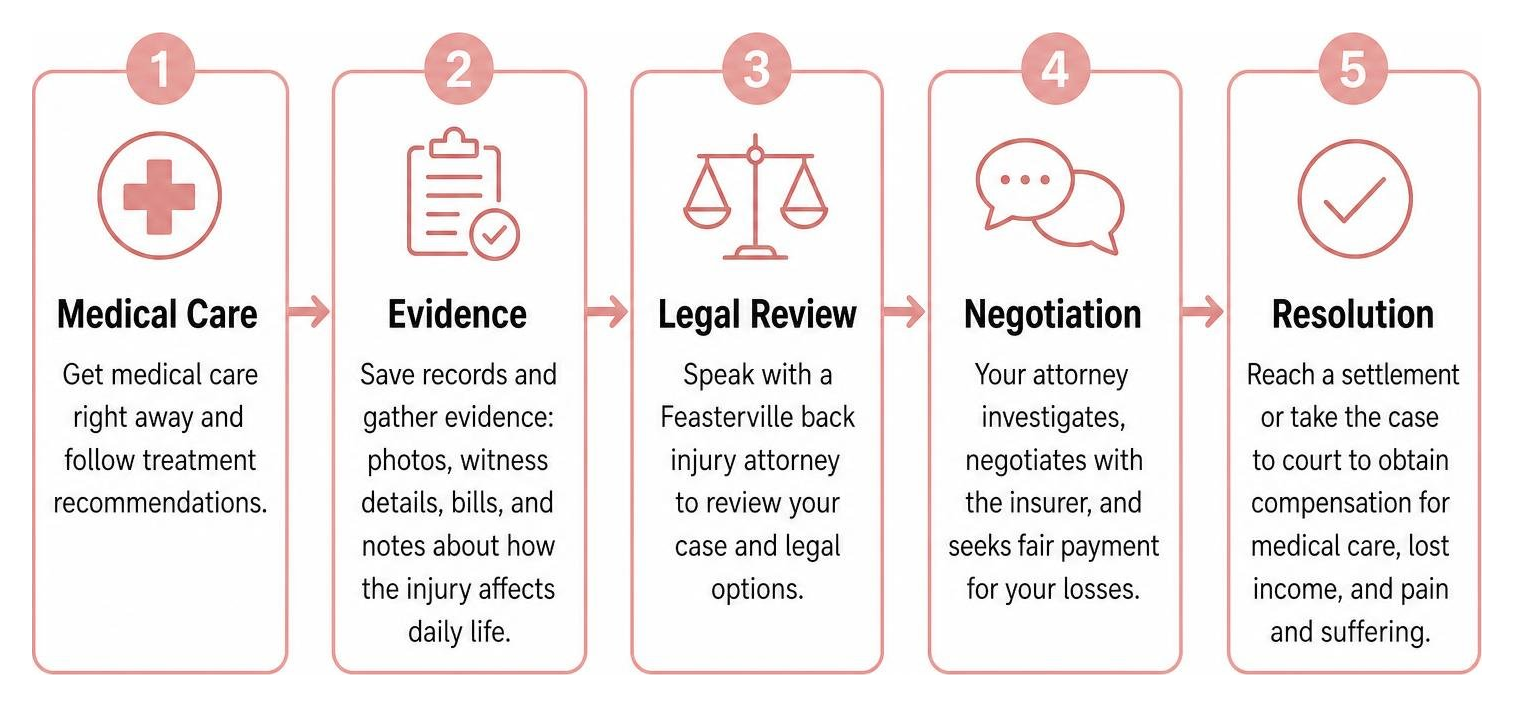
Get medical care, save your records, and speak with a Feasterville back injury attorney before giving an insurer a recorded statement. Back pain can worsen after a crash, and early medical records can help show when your injury began. An attorney can investigate who caused the accident and seek payment for medical care, lost income, and pain and suffering.
Keep photos, witness details, bills, and notes about how the injury affects your daily life. In Pennsylvania, you generally have two years to file a personal injury lawsuit, but evidence can disappear much sooner.
I’m Jason Fine, founding attorney of J. Fine Law, and I’ve spent more than 25 years representing people hurt in vehicle crashes and falls. As a Feasterville back injury attorney, I help clients understand their options while they focus on recovery; here’s the path from injury to claim resolution.
Feasterville back injury attorney vocab to learn:
- Feasterville broken bone accident lawyer
- Feasterville hip fracture attorney
- Feasterville personal injury lawyer
Common Types of Back Injuries in Feasterville Accidents
The force involved in a motor vehicle crash or a severe fall can place intense pressure on the human spine. In Bucks County, traffic along major local routes like Street Road (Route 132), Bustleton Pike, and Lincoln Highway (Route 1) frequently leads to rear-end and T-bone collisions. In 2023 alone, Bucks County recorded more than 2,300 crashes resulting in injuries. These violent impacts often cause lasting spinal trauma that requires months or years of rehabilitation.
The spine consists of 33 vertebrae cushioned by intervertebral discs and supported by a complex network of muscles, tendons, and ligaments. When trauma occurs, the damage can range from muscular strain to catastrophic nerve impingement:
- Herniated and Bulging Discs: Violent impacts can cause the soft interior of a spinal disc to push through its outer ring, irritating nearby nerves. Reviewing spinal trauma legal guidance can help clarify how these specific disc displacements are handled legally.
- Lumbar and Thoracic Strains: Sudden twisting or hyper-extension tears muscle fibers and tendons in the lower and middle back, causing severe spasms and limiting mobility.
- Vertebral Fractures: High-energy collisions can crack or compress the bony vertebrae, sometimes requiring surgical fixation with rods, pins, or fusion cages.
- Cervical and Lumbar Radiculopathy: Compressed nerve roots in the neck or lower back send shooting pain, numbness, and weakness radiating down the arms or legs (sciatica).
- Spinal Cord Damage: Severe trauma can bruise, tear, or sever neural pathways, potentially leading to partial or complete loss of motor function below the injury level.
How Spinal Damage Impacts Your Personal Injury Claim
Spinal injuries rarely follow a simple healing timeline. While a broken bone may set in six to eight weeks, spinal soft tissue trauma and disc injuries can worsen over time. Insurance companies often try to classify back pain as temporary soreness, but comprehensive diagnostic testing tells a different story.
Objective diagnostic imaging is essential for establishing the severity of spinal trauma:
- Magnetic Resonance Imaging (MRI): Visualizes soft tissues, herniated discs, spinal cord compression, and nerve root impingement that standard X-rays miss.
- Computed Tomography (CT) Scans: Provides cross-sectional views of complex bone fractures and structural integrity within the spinal column.
- Electromyography (EMG) and Nerve Conduction Studies: Measures electrical activity in muscles and nerves to document permanent neurological damage.
Insurance adjusters frequently point to age-related degenerative disc disease to argue that your back pain is an unrelated pre-existing condition rather than the result of a crash on Street Road. To counter this, your medical records must clearly link the onset of acute symptoms, physical limitations, and new anatomical damage directly to the accident date.
Why You Need a Dedicated Feasterville Back Injury Attorney
Handling a spine injury claim on your own places you at a severe disadvantage against seasoned insurance claims adjusters. Insurers employ calculated tactics to reduce settlement payouts, such as requesting recorded statements before your diagnosis is complete, delaying communication to run down deadlines, or offering quick, lowball settlements that do not cover future surgical needs.
Retaining local legal help in Feasterville shifts the leverage back in your favor. At J. Fine Law, our legal team manages every element of your case so you can concentrate entirely on physical recovery. We gather objective evidence, consult with treating medical professionals, obtain scene surveillance footage from Feasterville intersections, and construct a comprehensive damages demand. When insurance companies realize that a law firm is prepared to take a claim to a courtroom trial, their willingness to offer fair compensation increases significantly.
Proving Negligence and Building a Strong Spine Injury Case

Securing financial compensation for a back injury requires establishing legal liability under Pennsylvania tort law. To succeed, an injured victim must establish the four core legal elements of negligence:
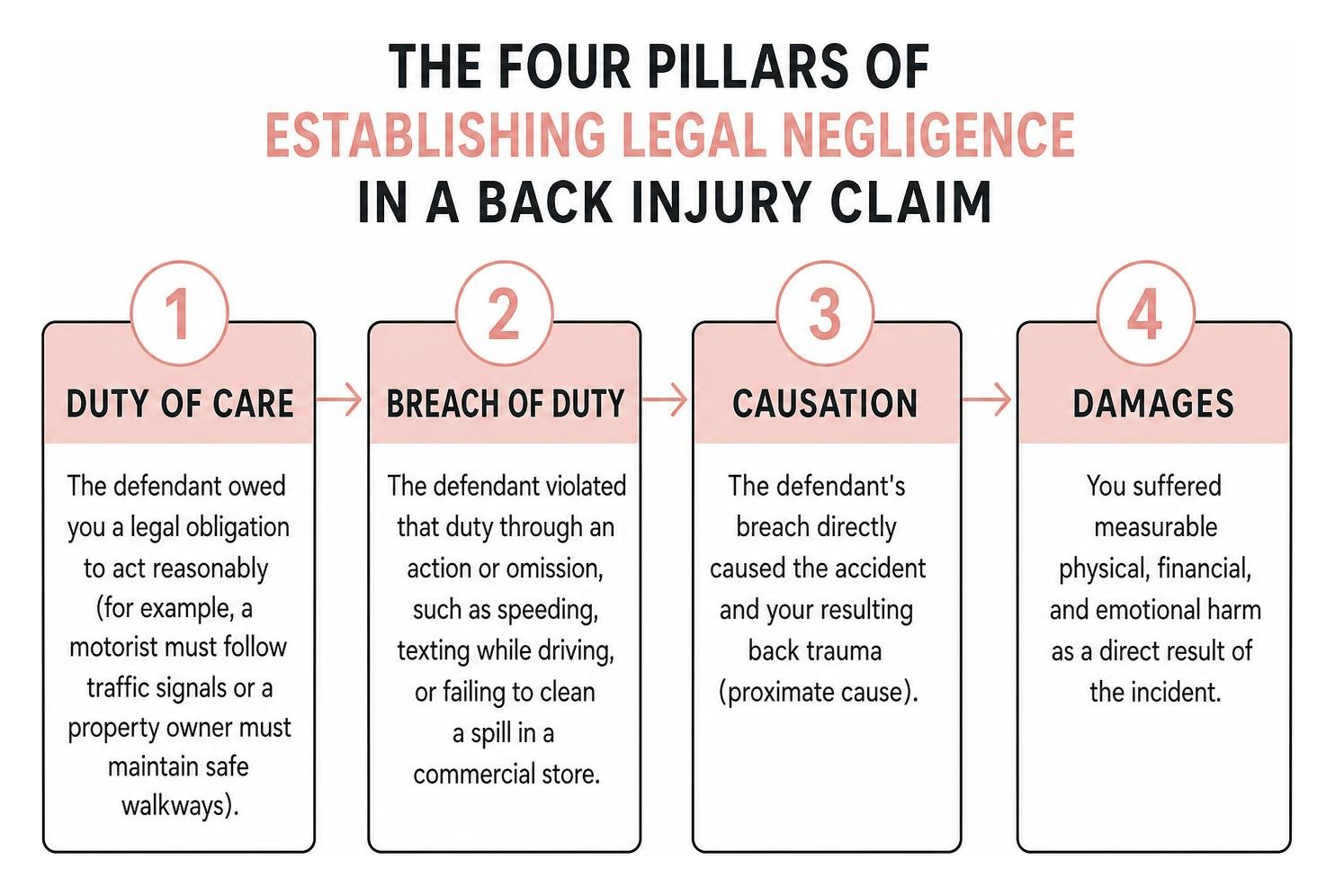
- Duty of Care: The defendant owed you a legal obligation to act reasonably (for example, a motorist must follow traffic signals along Bridgetown Pike, or a property owner must maintain safe walkways).
- Breach of Duty: The defendant violated that duty through an action or omission, such as speeding, texting while driving, or failing to clean a spill in a commercial store.
- Causation: The defendant’s breach directly caused the accident and your resulting back trauma (proximate cause).
- Damages: You suffered measurable physical, financial, and emotional harm as a direct result of the incident.
Developing an unshakeable case requires thorough documentation. This includes Feasterville Police Department incident reports, eyewitness statements, traffic camera recordings, vehicle black box data, and medical progress notes. Gaining a solid grasp of understanding personal injury claims ensures you know how each piece of evidence fits together to demonstrate liability.
Understanding Pennsylvania Comparative Negligence and the 51% Rule
In many accidents, insurance companies attempt to reduce their financial exposure by arguing that the injured person was partially at fault. Pennsylvania addresses these disputes through a modified comparative negligence system governed by a 51 percent bar rule (42 Pa.C.S. § 7102).
Under this statute, you can still recover compensation as long as your share of fault is 50 percent or less. However, your final financial recovery is reduced in direct proportion to your percentage of fault. If a jury determines your total damages equal $100,000 but assigns you 20 percent of the fault for an intersection collision, your final payout is reduced to $80,000. If your share of fault is found to be 51 percent or higher, Pennsylvania law completely bars you from receiving any compensation. Our role is to build evidence that defeats these shared-fault defenses and protects the full value of your claim.
Pennsylvania Statute of Limitations for Back Injury Claims
Pennsylvania enforces a strict two-year statute of limitations (42 Pa.C.S. § 5524) for personal injury lawsuits. This means you must formally file your lawsuit within two years of the date the injury occurred.
Missing this statutory deadline almost always results in the permanent dismissal of your case by the Bucks County Court of Common Pleas, regardless of the severity of your spinal injury. While limited exceptions exist under the “discovery rule”—where an injury could not reasonably have been detected right away—these exceptions are narrow and rarely apply to traumatic vehicle collisions or falls. Furthermore, if your injury involved a government vehicle or a dangerous condition on municipal property, formal written notice must often be submitted within six months. Contacting an attorney promptly ensures all preservation notices and court filings are completed well before statutory limits expire.
Calculating Compensation: How a Feasterville Back Injury Attorney Maximizes Your Recovery
Calculating the true financial value of a spine injury requires looking far beyond initial emergency room bills. Back injuries often involve lingering pain, recurring muscle spasms, and future medical interventions. A thorough damages calculation encompasses both economic and non-economic losses.
| Damage Category | Specific Expense or Impact | Documentation Required |
|---|---|---|
| Economic Damages | Emergency care, diagnostic MRIs, spinal surgery, physical therapy, prescription medication | Itemized hospital bills, medical records, pharmacy receipts |
| Economic Damages | Past lost wages, reduced future earning capacity, lost vocational benefits | Pay stubs, tax returns, employer wage verification letters |
| Non-Economic Damages | Physical pain, physical impairment, sleep disruption, loss of life enjoyment | Daily pain logs, physician impairment ratings, family testimony |
| Non-Economic Damages | Emotional distress, anxiety, loss of spousal consortium | Mental health records, personal impact statements |
Economic damages provide reimbursement for direct, out-of-pocket financial losses resulting from the injury. Non-economic damages compensate you for the intangible human toll—the inability to lift your children, work in your garden, or sleep through the night without throbbing lumbar pain. We work directly with your doctors and economic analysts to project lifelong care expenses, ensuring no future costs are left out of your demand.
Navigating the Contingency Fee Structure and Legal Costs
Many people worry about the cost of hiring an attorney while facing mounting medical bills and missing paychecks. We handle back injury claims on a contingency fee basis. Under this arrangement:
- You pay zero upfront legal fees to begin your case.
- Our firm advances all litigation expenses, including filing fees, medical record retrieval costs, accident reconstruction reports, and depositions.
- We only collect attorney fees if we successfully recover compensation for you through a negotiated settlement or a court verdict.
- If we do not win your case, you owe us nothing in attorney fees.
This structure ensures that every injured Feasterville resident has equal access to dedicated legal representation, regardless of their current financial situation.
Essential Steps to Protect Your Rights After a Back Injury
The actions you take in the hours and days following a spinal trauma can significantly impact both your physical health and your legal recovery. Follow these critical steps to preserve your claim:
- Seek Immediate Medical Attention: Visit an emergency department, such as St. Mary Medical Center in nearby Langhorne or Jefferson Bucks Hospital, or see your primary care physician immediately. Tell the doctor about all aches, stiffness, or tingling sensations.
- Report the Incident: Call the police after a vehicle crash to secure an official accident report. For a slip and fall, report the incident to the store manager or property owner in writing and obtain a copy.
- Preserve Scene Evidence: Take photos and videos of vehicle damage, road conditions, skid marks, footwear, or walkway hazards. Gather names and phone numbers of any eyewitnesses.
- Avoid Giving Recorded Statements: Do not provide recorded audio statements or sign medical releases for the other party’s insurance adjuster before consulting legal counsel. If you were involved in a traffic accident, reviewing this guide on navigating Bucks County car crashes provides additional post-accident guidance.
- Maintain a Daily Pain and Treatment Journal: Keep a detailed log of your pain levels, physical therapy appointments, missed work shifts, and activities you can no longer perform.
- Consult a Qualified Attorney: Speak with a dedicated injury attorney early in the process so evidence can be preserved before it is lost or destroyed.
Selecting the Right Feasterville Back Injury Attorney for Your Case
Selecting the right legal advocate is one of the most critical decisions you will make on your path to recovery. You need an attorney who combines deep familiarity with local Bucks County courts with an established history of successful trial advocacy. When evaluating law firms, look for these key indicators:
- Local Court Familiarity: Experience filing actions and trying cases in the Bucks County Court of Common Pleas in Doylestown.
- Trial Preparedness: A firm that prepares every file as if it is heading to trial, which provides maximum negotiation leverage against insurance companies.
- Direct and Transparent Communication: Attorneys who respond promptly, answer your calls, and keep you informed at every milestone.
- Demonstrated Settlement Record: A proven track record of securing substantial financial recoveries for individuals with severe back and spinal cord trauma. For more details on choosing representation, explore finding a qualified injury attorney.
Frequently Asked Questions About Feasterville Back Injury Claims
How long does a typical back injury case take to resolve in Bucks County?
The duration of a spine injury case depends on the complexity of the accident, the time required to understand the full extent of your medical recovery, and court scheduling. Simple cases with clear liability may resolve within six to twelve months once you reach Maximum Medical Improvement (MMI). Reaching MMI is vital because settling before your treatment is complete means you cannot ask for more money if you later require spine surgery. Complex cases involving disputed fault or severe disc injuries requiring surgical fusion can take eighteen months to two years or longer, especially if formal litigation is filed in the Bucks County court system.
Do I have to go to court for a back injury claim in Feasterville?
The vast majority of personal injury claims—approximately 95 percent—are resolved outside the courtroom through structured negotiations, informal settlement conferences, or alternative dispute resolution methods like mediation and arbitration. However, the best way to secure a full and fair settlement without going to trial is to prepare the claim thoroughly for court from day one. If an insurance carrier refuses to offer adequate compensation for your long-term medical needs and pain, our attorneys are always prepared to present your case before a Bucks County jury.
Can I recover compensation if I had a pre-existing back condition?
Yes. Under Pennsylvania’s “eggshell skull” doctrine, a negligent defendant must take an injured victim as they find them. Having prior degenerative disc disease, arthritis, or an older healed back injury does not disqualify you from receiving compensation. You are legally entitled to recover damages for the aggravation or worsening of a pre-existing condition caused by the new accident. We utilize pre-accident and post-accident MRI imaging, alongside testimony from your treating physicians, to clearly show how the crash caused new trauma or exacerbated your prior baseline condition.
Take the First Step Toward Physical and Financial Recovery
A severe back injury disrupts every aspect of your life—from your ability to earn a living to your capacity to care for family members. Whether addressing sudden collision trauma or navigating injuries suffered by vulnerable older adults requiring the guidance of a dedicated elder abuse attorney, you do not have to carry this legal and financial burden on your own.
At J. Fine Law, our team brings rapid response times, personalized advocacy, and an established history of success to every case. With a 98% success rate and over $50 million recovered for injured clients across Pennsylvania and New Jersey, we have the resources and determination to stand up to insurance companies on your behalf. We will fight to secure the compensation you need for medical bills, lost wages, and long-term recovery.
Contact us today to schedule a free consultation at our Feasterville law office and discover how our legal team can help you rebuild your life.