 Skip to content

When Can a Swimming Pool Accident in Philadelphia Lead to a Liability Claim?
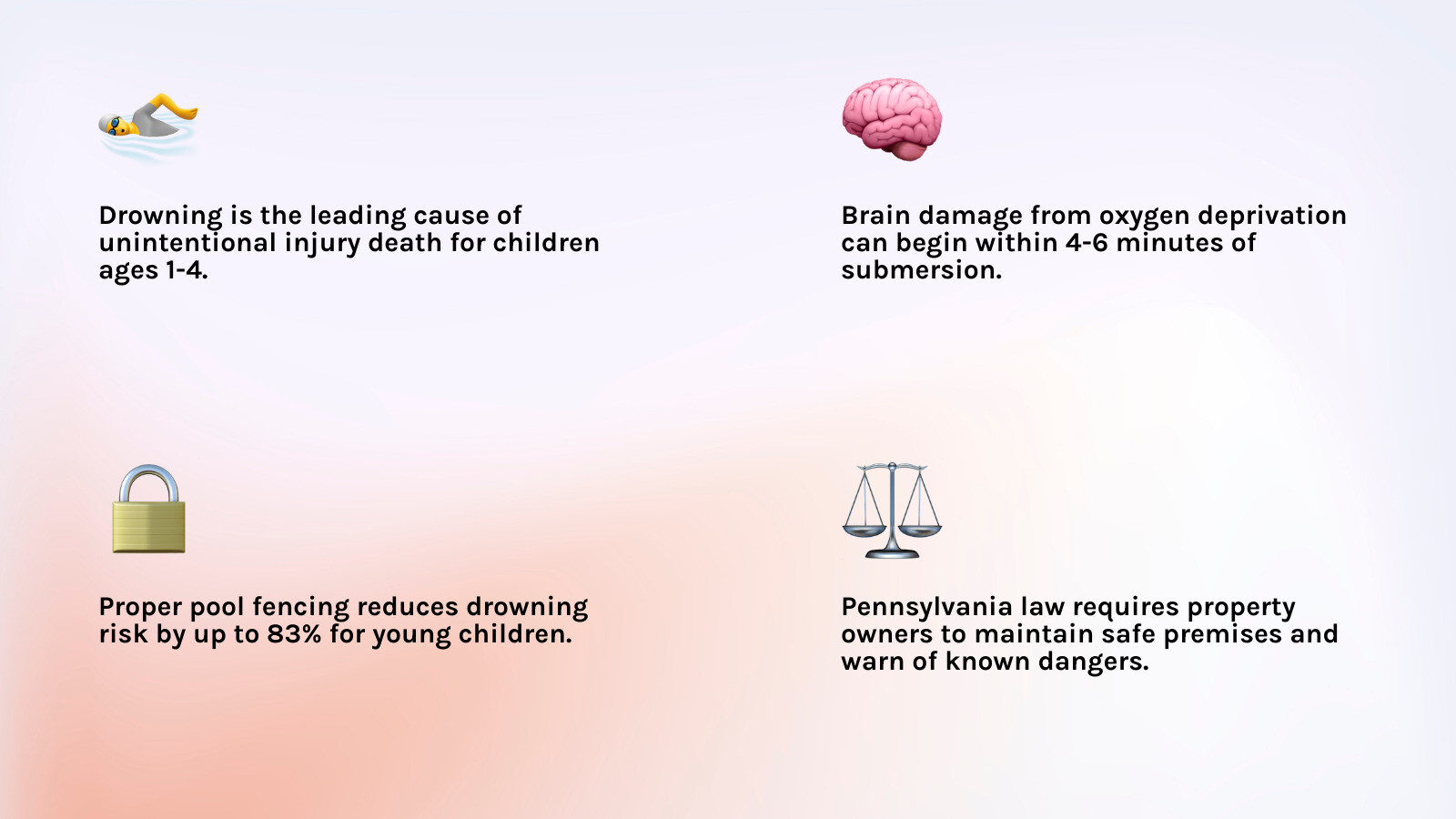
A swimming pool accident in Philadelphia leads to a premises liability claim when a property owner fails to prevent foreseeable harm. Near-drowning incidents can cause pediatric brain trauma from oxygen deprivation, and local property standards govern fencing, drains, and water clarity. Property owners face legal liability when unsafe conditions cause avoidable harm.
I am Jason Fine, founding attorney of J. Fine Law. With over 25 years handling negligence claims, I assess aquatic injury cases to protect victim rights across Pennsylvania. Our firm has secured over $50 million for injured clients, maintaining a 98% success rate.
Navigating local municipal codes requires prompt action and meticulous evidence preservation. Working with a dedicated Philadelphia premises liability lawyer ensures injured victims hold negligent property owners accountable. Contact our team today to evaluate your legal options after a serious pool incident.
What Common Hazards Cause a Swimming Pool Accident?
Swimming pool accidents stem from submersion, shallow diving, slick decks, chemical imbalances, and faulty drains. Inadequate depth markers and poor supervision also increase injury severity across public and private facilities. These aquatic hazards cause trauma ranging from chemical burns to hypoxic brain injury and severe spinal fractures.
Nearly 3,700 people drown accidentally each year nationwide, according to the CDC. Children represent over a quarter of fatal submersions, making pool safety an urgent community priority. Many survivors suffer permanent hypoxic brain damage from prolonged oxygen deprivation.
Chemical imbalances also pose severe health threats to swimmers. Improper chlorine or pH levels cause serious chemical burns to the skin, eyes, and lungs. Missing or faded depth markers frequently lead to traumatic head injuries when swimmers dive into shallow water.
Suction Entrapment and Drain Failure Risks During a Swimming Pool Accident
Powerful circulation systems create catastrophic pool suction-drain injury hazards for swimmers of all ages. Uncovered main drains generate hundreds of pounds of vacuum force that can trap a swimmer underwater. These forces lead to severe internal trauma, limb entrapment, disembowelment, and fatal drowning.
Aquatic facilities must install certified anti-entrapment drain grates to disperse suction force safely. Property operators are also required to install accessible emergency pump shut-off switches. Routine mechanical maintenance prevents grate displacement and pump malfunctions.
Diving Trauma, Wet Decks, and Lack of Supervision
Shallow diving frequently fractures cervical vertebrae, resulting in permanent quadriplegia or paraplegia. BBC News reported on a swimmer who broke his neck diving into a pool without clear warning signs. Facilities must post conspicuous no-diving notices in all shallow zones.
Slick concrete pool decks cause serious slip-and-fall injuries, including concussions, wrist fractures, and spinal trauma. Commercial facilities also fail their guests when lifeguards are inattentive, poorly trained, or absent. Alcohol availability around pool decks further increases fall and drowning risks when property owners fail to monitor premises.
How Does Pennsylvania Premises Liability Apply to Pool Owners?
Pennsylvania pool owners are liable when neglected property conditions cause foreseeable injuries. Responsibility depends on visitor classification, the hazard, and whether reasonable warnings or maintenance were provided. Philadelphia standards govern local property upkeep, including safety requirements enforced near landmarks like Fairmount Park and along corridors such as Roosevelt Boulevard.
Under state premises liability law, property owners owe an explicit duty of care to authorized visitors. Failing to repair known hazards or warn guests of latent dangers constitutes actionable negligence. When pool owners violate safety codes, injured victims can establish negligence per se under Pennsylvania law.
Commercial and residential pool operators must maintain safe physical grounds at all times. Property owners cannot ignore recurring hazards such as broken safety latches or slippery algae growth. Documenting these neglected conditions is critical to proving fault.
What Safety Regulations Govern Philadelphia Swimming Pools?
Pool safety regulations govern physical enclosures, self-closing gates, drain covers, and water clarity. Federal rules mandate anti-entrapment grates, while local municipal codes regulate barriers and inspections across private, public, and rental properties. Philadelphia pools near neighborhoods like Manayunk and Roxborough must also meet strict city inspection standards.
The federal Virginia Graeme Baker Pool and Spa Safety Act mandates anti-entrapment covers on all public pools. CDC guidelines require water clarity sufficient to see the main drain clearly from the deck. Philadelphia building codes mandate perimeter barriers at least four feet tall around outdoor residential pools.
Compliance with Federal Drain and Barrier Mandates
Anti-entrapment drain grates must feature dome-shaped or anti-vortex designs meeting strict safety standards. Public pools with single main drains require secondary safety vacuum release systems to prevent suction blockages. Enclosure gates must be self-closing and self-latching, with latches placed out of small children’s reach.
Short-Term App Rentals and Platform Liability
Hourly pool rentals through peer-to-peer apps convert private residential backyards into commercial hospitality venues. Hosts must maintain sanitary water chemistry, clear depth markers, and functional rescue equipment. Online platform liability waivers do not shield negligent homeowners from claims involving gross negligence.
What Actions Should Victims Take Immediately After an Incident?
After an aquatic injury, seek immediate medical care and report the incident to facility managers or police. Obtain witness contact details, photograph the scene, preserve physical evidence, and speak with an attorney before providing insurer statements. Victims treated at Temple University Hospital or Penn Presbyterian Medical Center should request complete medical records.
Calling 911 ensures prompt emergency medical intervention for submersion trauma, concussions, or spinal shock. Filing an official police or facility incident report establishes a documented timeline of the accident. Securing surveillance video before footage is overwritten preserves vital proof of property neglect.
What Evidence Must Be Preserved After a Swimming Pool Accident?
Preserve evidence that can show how the unsafe condition developed:
- High-resolution photographs of pool water clarity, broken gate latches, missing warning signs, and drain covers
- Facility maintenance logs, lifeguard duty schedules, and daily chemical testing sheets
- Video recordings showing a malfunctioning gate latch or other hazardous condition
Avoiding Critical Mistakes with Insurance Adjusters
Insurance adjusters frequently contact injured victims early to obtain recorded statements that minimize payouts. You should decline recorded interviews until you have spoken with qualified legal counsel. Schedule a Free Consultation to protect your rights before negotiating any settlement.
What Compensation Can You Recover in a Pool Injury Lawsuit?
Pool injury compensation covers medical expenses, lost wages, reduced earning potential, and pain and suffering. Catastrophic injuries often require continuous neurological treatment and long-term rehabilitation support. Available damages depend on specific case facts, evidence, and applicable Pennsylvania law, helping victims rebuild their lives after preventable trauma.
Economic damages reimburse past hospital bills, upcoming surgeries, prescription medications, and adaptive medical equipment. Non-economic damages compensate victims for physical pain, emotional distress, and loss of life enjoyment. In cases of intentional misconduct or extreme recklessness, Pennsylvania courts may also award punitive damages.
Comparative Negligence Rules in Pennsylvania
Under 42 Pa. C.S. § 7102, Pennsylvania applies modified comparative negligence with a 51 percent recovery bar. An injured swimmer can recover financial damages as long as their share of liability is 50 percent or less. The final compensation award is reduced proportionately by the plaintiff’s percentage of fault.
Wrongful Death and Catastrophic Brain Injury Claims
Fatal drownings allow surviving family members to file wrongful death and survival actions. These claims recover funeral expenses, estate administration costs, and compensation for the decedent’s pre-death pain. Near-drowning hypoxic brain injuries secure resources for life-care plans and specialized neurological therapy.
What Are Common Questions About Swimming Pool Liability in Philadelphia?
How does the attractive nuisance doctrine protect children injured in a pool?
The attractive nuisance doctrine holds property owners responsible when trespassing children suffer injuries from dangerous conditions they cannot understand. Pools represent a recognized hazard that entices young children into danger. Homeowners must maintain secure four-foot perimeter fencing and functional self-latching gates to prevent unsupervised access.
Can a homeowner be held liable for injuries during an app-based pool rental?
Yes, homeowners renting their pools through hourly apps assume commercial duties of care toward paying guests. Renting property for profit triggers elevated inspection and sanitation obligations under local codes. Landlords cannot rely on generic app disclaimers to excuse hazardous property conditions or broken safety equipment.
What is the statute of limitations for filing a pool injury claim in Pennsylvania?
Under 42 Pa. C.S. § 5524, victims generally have two years from the injury date to file a personal injury lawsuit. Minor victims may benefit from tolling provisions that extend filing deadlines until after their eighteenth birthday. Prompt investigation ensures crucial evidence and witness testimonies remain fully preserved.
When aquatic accidents occur in senior living centers, nursing homes, or residential care facilities, inadequate supervision and neglected pool maintenance frequently represent actionable facility neglect. If an aging loved one suffered harm due to caregiver failure or dangerous premises, consulting a qualified elder abuse attorney protects their dignity and legal rights. Contact Attorney Jason Fine to discuss your claim with our dedicated team.