 Skip to content
When a Defective Product Hurts You in Feasterville, Here’s What You Need to Know
A product liability lawyer helps injured consumers hold manufacturers, distributors, and retailers legally responsible when a defective product causes harm. If you’ve been hurt by a dangerous product in Feasterville or anywhere in Pennsylvania, here’s a quick overview of what matters most:
- You may not need to prove negligence. Under strict liability, proving the product was defective and caused your injury is often enough.
- Three parties can be held liable: the manufacturer, the distributor, and the retailer who sold the product.
- Three types of defects matter: design flaws, manufacturing errors, and failure to warn.
- Compensation can cover medical bills, lost wages, pain and suffering, and in serious cases, punitive damages.
- Time is limited. Pennsylvania has a statute of limitations for product liability claims, so acting quickly protects your rights.
Every year, hundreds of thousands of people suffer serious injuries from products they trusted to be safe. From a faulty appliance near Street Road to a defective car part that caused a crash, these cases can turn your life upside down — fast.
I’m Jason Fine, founding attorney at J. Fine Law Group and a ten-time consecutive Pennsylvania Super Lawyers nominee in personal injury, and I’ve spent over 25 years fighting for injured people throughout Pennsylvania and New Jersey — including those harmed by defective products and elder abuse — as a product liability lawyer. Let me walk you through exactly what you need to know.
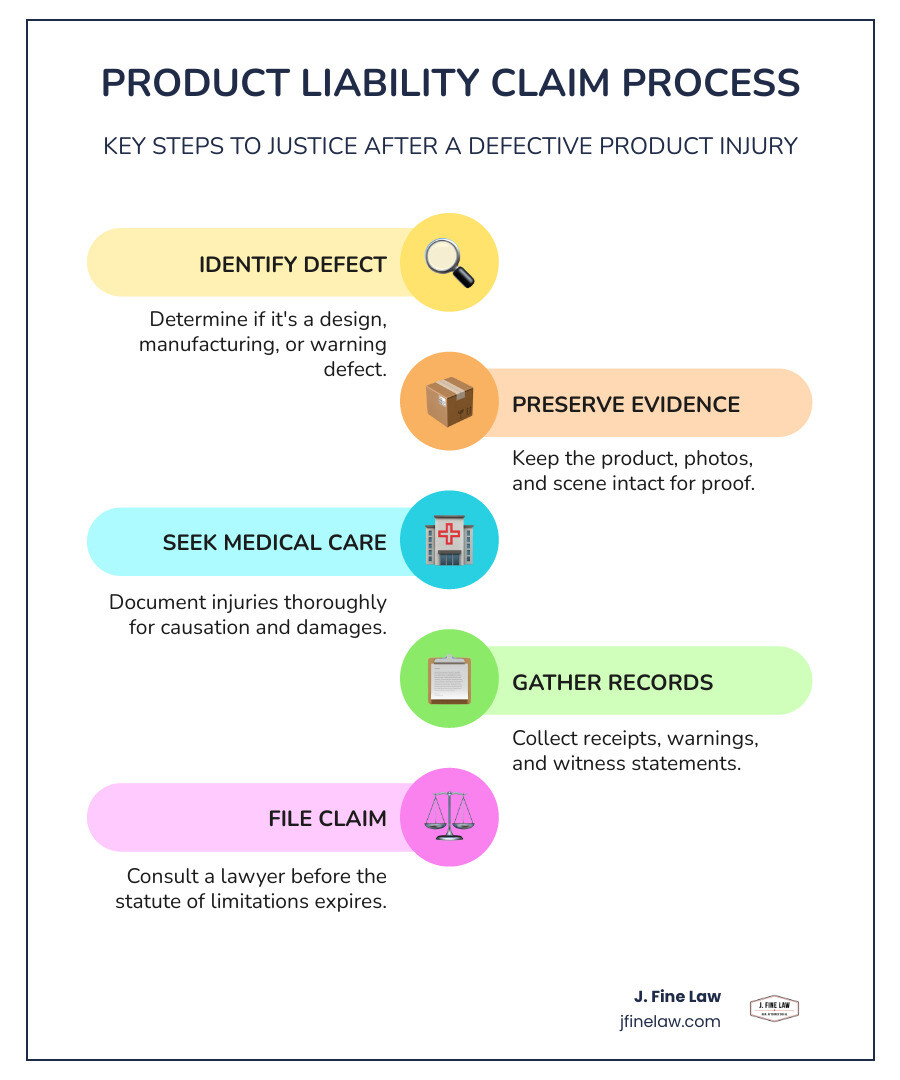
Product liability lawyer word guide:
Understanding Product Liability Law and Strict Liability
When we buy a toaster at a shop on Street Road or a new car seat for the kids, we aren’t just buying an object; we are buying the peace of mind that it won’t explode, collapse, or poison us. Product liability law is the area of the legal system that ensures companies keep that promise.
In many personal injury cases, you have to prove the other person was “negligent”—meaning they were careless. However, product liability often operates under a different rule called strict liability. This is a powerful tool for a product liability lawyer. Under strict liability, we don’t necessarily have to prove the manufacturer was “lazy” or “messy” in their factory. We just have to prove that the product was defective when it left their hands, that you used it as intended, and that the defect caused your injury.
The law looks at the entire “stream of commerce.” This means anyone involved in getting that product to your home in Feasterville could be on the hook. This includes:
- The company that designed the product.
- The factory that built it.
- The wholesaler that shipped it.
- The retail store that sold it to you.
At J. Fine Law, we use our deep understanding of these legal theories to protect our neighbors. We’ve secured over $50 million for our clients because we know how to navigate the complex web of the Restatement of Torts and Pennsylvania consumer protection laws. If you’re looking for guidance, check out our J. Fine Law Product Liability Services.
Three Main Types of Defects Handled by a Product Liability Lawyer
To win a case, we have to categorize exactly what went wrong. It’s not enough to say, “it broke.” We need to identify if the mistake happened on the drawing board, on the factory floor, or in the instruction manual.
Design Defects
A design defect means the product was dangerous before it was even built. The blueprint itself was flawed. Even if the factory built it perfectly according to the plans, the product would still be unsafe.
In Pennsylvania, we often use the “consumer expectation test.” This asks: Did the product fail to perform as safely as an ordinary consumer would expect when used in a foreseeable way? For example, if a specific model of an SUV is designed with a high center of gravity that makes it prone to rolling over during a standard turn, that is a design defect. A product liability lawyer would look for an “alternative design”—a way the company could have made the product safer without ruining its usefulness or making it too expensive.
Manufacturing Defects
This is the “one-in-a-million” mistake (though sometimes it’s more frequent than that). A manufacturing defect occurs when a product deviates from its intended design during the assembly process. Maybe a worker at the plant forgot a bolt, or a batch of cough syrup was contaminated with a cleaning chemical.
Unlike design defects, where every unit is dangerous, manufacturing defects usually affect just one item or a specific “bad batch.” Proving this requires looking at production records and quality control data to show that your specific unit didn’t match the safe blueprints.
Marketing Defects and Failure to Warn
Sometimes a product is designed well and built perfectly, but it’s still dangerous because the company didn’t tell you how to use it safely or didn’t warn you about hidden risks. This is often called a “failure to warn.”
If a space heater doesn’t have a label warning you not to leave it near curtains, or if a medication doesn’t list a dangerous side effect, the manufacturer has failed in their duty. These warnings need to be clear, easy to read, and placed where you can actually see them. If you’re injured because a company stayed silent about a danger they knew (or should have known) about, a product liability lawyer can hold them accountable.
Common Defective Products and Liable Parties
We see defective products in every corner of Feasterville homes. Some of the most common culprits that lead to lawsuits include:
- Automotive Parts: Faulty airbags that explode with too much force, brakes that fail on Street Road, or tires that de-tread at high speeds.
- Medical Devices: Defective hip implants, pacemakers with battery issues, or faulty medical equipment used in nursing homes.
- Children’s Toys: Choking hazards, lead paint, or cribs with slats that are spaced too far apart.
- Household Appliances: Pressure cookers that explode, lithium-ion batteries in laptops or e-scooters that catch fire, and dryers that spark electrical fires.
- Pharmaceuticals: Drugs that are released into the market with undisclosed risks of heart attack, stroke, or cancer.
When these products cause harm, we don’t just look at the brand name on the box. We investigate the wholesalers, distributors, and even the local retailers. In some cases, multiple companies share the blame, and we make sure every one of them is brought to the table to ensure you get the maximum compensation possible.
Proving Your Case and Recovering Compensation
Proving a product liability claim is a bit like putting together a high-stakes puzzle. You can’t just walk into court and say, “I got hurt.” You need evidence that links the defect directly to your injury.
How a Product Liability Lawyer Proves Your Case
We use a variety of tools to build a rock-solid case:
- Evidence Preservation: This is the most important step. We need the actual product that hurt you. Don’t throw it away or try to fix it!
- Technical Testimony: We work with engineers and safety professionals who can explain to a jury exactly why a product failed.
- Production Records: We dig into the company’s internal emails and factory logs to find out if they knew about the defect but ignored it to save money.
- Testing Data: We look at the crash tests or safety trials the company performed before the product hit the shelves.
Immediate Steps After an Injury in Feasterville
If you are injured by a product while at home or out on Street Road, your actions in the first few hours are critical:
- Seek Medical Help: Go to St. Mary Medical Center or your nearest emergency room immediately. Your health is priority number one, and medical records are vital evidence.
- Keep the Product: Put the defective item, its packaging, and the instruction manual in a safe place. Do not return it to the store for a refund!
- Take Photos: Take pictures of the product, your injuries, and the scene where it happened.
- Find the Receipt: Proof of purchase helps establish the “stream of commerce.”
- Call a Product Liability Lawyer: The sooner we start investigating, the better.
| Type of Damage | What it Covers |
|---|---|
| Economic Damages | Medical bills, physical therapy, lost wages, and future loss of earning capacity. |
| Non-Economic Damages | Pain and suffering, emotional distress, and loss of enjoyment of life. |
| Punitive Damages | Extra money awarded to punish a company for especially reckless behavior. |
Why You Need a Product Liability Lawyer in Feasterville
Large corporations have massive legal teams and insurance companies whose only job is to make your claim go away. They might claim you “misused” the product or that you “altered” it after you bought it. Without an experienced product liability lawyer, it’s like bringing a toothpick to a sword fight.
In Pennsylvania, the statute of limitations is generally two years from the date of the injury. If you miss this window, you lose your right to sue forever. We handle the deadlines, the paperwork, and the aggressive negotiations so you can focus on getting better.
The Role of Product Recalls
A product recall by the Consumer Product Safety Commission (CPSC) or the FDA can be a huge help to your case. It serves as strong evidence that the product was indeed dangerous. However, even if a product hasn’t been recalled yet, you can still file a lawsuit. In fact, many recalls only happen because a brave consumer and their product liability lawyer stood up and held the company accountable first.
Defending Against Corporate Tactics
Companies often use “comparative negligence” as a defense. They might argue that you were 20% responsible for your own injury because you didn’t read the manual perfectly. In Pennsylvania, as long as you are not more than 50% at fault, you can still recover compensation. We know how to push back against these tactics and keep the focus where it belongs: on the defective product.
Frequently Asked Questions about Product Liability
What is the statute of limitations for a claim in Feasterville?
In Pennsylvania, you generally have two years from the date you were injured or the date you discovered the injury was caused by a defective product. Because these cases require extensive investigation, it is best to call us as soon as possible.
Who can be held liable for my injuries?
Potentially anyone in the supply chain: the manufacturer, the parts supplier, the distributor, and the retail store where you bought the item.
Do I need to keep the defective product?
Yes! The product itself is the most important piece of evidence. If you throw it away, it becomes much harder (and sometimes impossible) to prove there was a defect.
Conclusion
At J. Fine Law, we are proud to serve the Feasterville community. Whether you were injured by a faulty tool in your garage near Street Road or a defective medical device at St. Mary Medical Center, we are here to help. With a 98% success rate and over $50 million recovered for our clients, we have the resources to take on the biggest manufacturers in the world.
Our commitment to safety doesn’t stop at consumer products. We also fight for the most vulnerable members of our community. If you have a loved one in a local facility and suspect they are not receiving the care they deserve, please reach out.
Contact a Feasterville product liability lawyer today. We treat every case with the warmth and personal attention you’d expect from a neighbor, backed by the power of a top-tier law firm. Let us help you get the justice you deserve.