 Skip to content
Mass Transit Accident Lawyer: Win Your 2025 Claim
Understanding Mass Transit Accidents and Your Right to Compensation
A mass transit accident lawyer represents people injured in accidents involving public transport like buses, trains, subways, and ferries. These cases are complex, often involving government agencies (like SEPTA), strict deadlines, damage caps, and multiple at-fault parties. Experienced legal help is essential for fair compensation.
Key factors in mass transit accident claims:
- Act Fast: Claims against public transit authorities have much shorter deadlines than regular injury cases (sometimes just 30 days to 1 year).
- Government Rules Apply: Special notice requirements and damage caps often limit recovery when suing government entities like SEPTA.
- Multiple Parties May Be Liable: The transit authority, vehicle manufacturer, or driver could all be responsible.
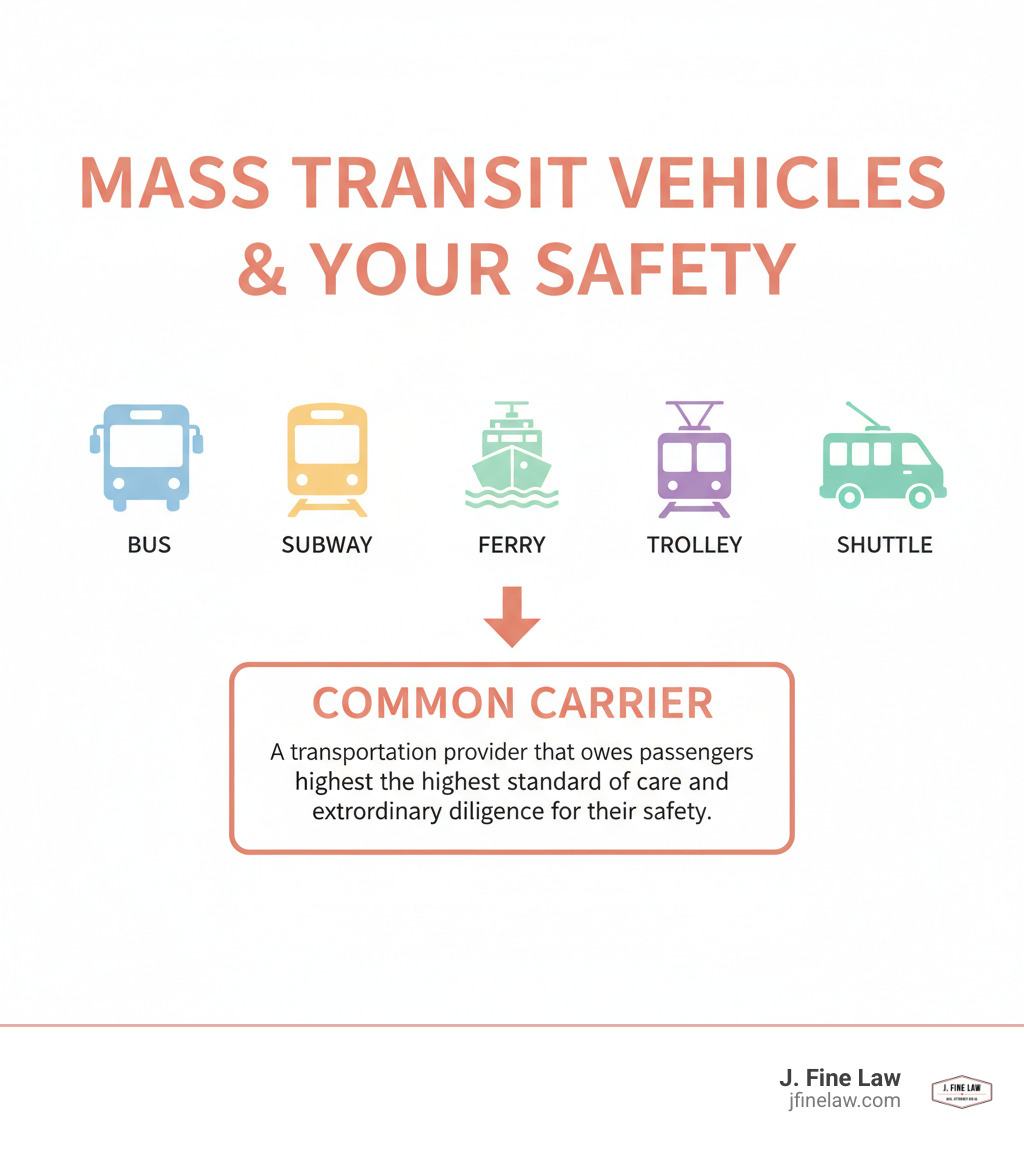
- Higher Duty of Care: Mass transit operators are “common carriers” and owe passengers the highest standard of care.
- Complex Evidence: Cases require expert witnesses, maintenance records, and specialized accident reconstruction.
Unlike car crashes, mass transit operators owe passengers extraordinary diligence. Yet, negligence, poor maintenance, and unsafe conditions cause severe injuries annually, including brain and spinal cord damage, fractures, and wrongful death.
As Jason Fine, a ten-time Pennsylvania Super Lawyer nominee with over 25 years of experience, I have a proven track record as a mass transit accident lawyer. Our firm understands these unique challenges and acts quickly to preserve evidence and meet critical deadlines to protect your rights.
Introduction: What is a Mass Transit Accident?
A mass transit accident is any incident involving a public or commercial transportation system that results in injury, death, or property damage. In Pennsylvania and New Jersey, we rely on systems like SEPTA and PATCO, trusting them to transport us safely.
This trust is legally mandated. Mass transit operators are considered “common carriers,” meaning they owe passengers the highest degree of care and “strictest vigilance” for their safety—a much higher standard than regular drivers. This principle is the foundation of most mass transit accident claims.
The term “mass transit” covers a wide range of vehicles:
- Buses: Including city buses (SEPTA, NJ Transit), school buses, charter buses, and private shuttles. Accidents can involve collisions or passenger falls. If you’ve been injured in a bus accident, you understand the potential severity.
- Trains and Subways: Commuter rail (SEPTA Regional Rail, NJ Transit), subways, and Amtrak. Incidents include derailments, collisions, and platform injuries.
- Trolleys and Light Rail: Systems in Philadelphia and New Jersey face similar risks of collisions and mechanical failures.
- Ferries and Watercraft: Operator negligence or equipment failure can cause serious accidents.
- Shuttles and Taxis: These also operate as common carriers with a high duty of care.
Accidents can cause devastating injuries, from traumatic brain injuries and spinal cord damage to amputations and wrongful death. Victims can be passengers, pedestrians, or occupants of other vehicles. When negligence by a driver, maintenance crew, or manufacturer is the cause, a skilled mass transit accident lawyer is crucial for uncovering the truth and fighting for your rights.
Navigating Your Claim: The Legal Complexities and Why You Need a Mass Transit Accident Lawyer
Filing a claim after a mass transit accident is far more complex than a typical car crash case. The defendants are often government agencies like SEPTA or large private companies, both of which have significant legal resources to minimize your claim. A mass transit accident lawyer is essential to steer this difficult legal landscape.
Identifying Common Causes and Liable Parties
Our first step is to investigate the cause of the accident and identify all responsible parties. Common causes include:
- Driver Negligence: Distracted driving, speeding, impairment, or other careless actions. A bus driver’s negligence is a frequent factor.
- Operator Fatigue: Companies pushing drivers to work long, unsafe hours.
- Mechanical Failure & Poor Maintenance: Failed brakes, faulty equipment, or deferred repairs.
- Defective Parts: Liability may extend to the vehicle or parts manufacturer.
- Unsafe Station Conditions: Icy platforms, broken stairs, or poor lighting.
Liable parties can include the transit authority, the individual driver, a vehicle manufacturer, or a third-party maintenance company. Identifying all parties is key to maximizing your recovery.
Special Rules for Suing the Government: Deadlines and Damage Caps
Suing a government entity like SEPTA involves special rules designed to protect them. This concept, known as governmental immunity, is outlined in state-specific Tort Claims Acts.
Key challenges include:
- Shorter Deadlines: The statute of limitations is often drastically shorter. For example, some jurisdictions require a claim within one year, not the typical two.
- Notice of Claim: Before suing, you must file a formal “Notice of Claim” within a very short window (sometimes just six months). Failure to file this correctly and on time will bar your claim.
- Damage Caps: Many states cap the amount of money you can recover from a government entity.
As your Philadelphia SEPTA accident lawyer, we manage these strict deadlines and requirements for Pennsylvania and New Jersey transit authorities.
| Feature | Claim Against Public Transit Authority (e.g., SEPTA) | Claim Against Private Charter Bus Company |
|---|---|---|
| Statute of Limitations | Often shorter (e.g., 1 year in some jurisdictions) | Typically 2 years (standard personal injury) |
| Notice Requirements | Strict “Notice of Claim” deadlines (e.g., 6 months) | Generally no pre-suit notice required |
| Damage Caps | May have statutory limits on recoverable damages | No statutory caps on damages |
| Liable Party | Government agency, public authority | Private corporation, individual owner |
The Process of Filing a Mass Transit Accident Claim
An experienced mass transit accident lawyer guides you through each step:
- Initial Consultation: We listen to your story and evaluate your case for free.
- Investigation: We immediately gather police reports, surveillance footage, witness statements, and maintenance records.
- Filing the Claim: We file the necessary Notice of Claim or lawsuit, meeting all deadlines.
- Findy: We exchange information with the other side, taking depositions and requesting documents to build your case.
- Settlement Negotiations: We leverage the evidence to negotiate a fair settlement. Most bus accident injury claims are resolved at this stage.
- Litigation and Trial: If a fair offer isn’t made, we are prepared to fight for you in court.
We keep you informed at every stage, ensuring your legal rights are our top priority.
Building a Winning Case and Securing Your Future

While you focus on recovery, our job as your mass transit accident lawyer is to build a winning case to secure your financial future. This involves meticulous evidence gathering, collaboration with experts, and a deep understanding of how to maximize your claim.
Immediate Steps to Take After a Mass Transit Accident
What you do immediately after an accident can significantly impact your claim. If you are able, take these steps:
- Seek Medical Attention Immediately: Your health is the priority. This also creates an official record of your injuries.
- Report the Incident: Ensure an official report is filed with the transit operator or police. This is critical, for example, in a SEPTA bus accident today.
- Document the Scene: Take photos and videos of the scene, vehicle, and your injuries.
- Get Witness Information: Collect names and contact details from anyone who saw what happened.
- Do Not Admit Fault: Avoid making any statements that could be used against you.
- Preserve Evidence: Keep your ticket, receipts, and damaged personal items.
- Contact a Lawyer Promptly: Strict deadlines require immediate action to protect your rights.
How an Attorney Investigates and Proves Your Case
As your mass transit accident lawyer, we conduct a thorough investigation to prove negligence. This includes:
- Evidence Collection: We gather accident reports, surveillance footage, maintenance logs, driver records, and witness statements.
- Expert Collaboration: We work with accident reconstruction experts to determine fault and medical experts to document the full extent of your injuries and future needs.
- Regulatory Review: We analyze whether the transit operator violated federal, state, or local safety regulations. Findings from agencies like the NTSB can provide valuable insights. You can learn more about scientific research on accident investigation from the NTSB.
Our goal is to prove the defendant owed you a duty of care, breached that duty, and directly caused your damages. Our firm’s resources and experience allow us to build the strongest case possible.
What Compensation Can a Mass Transit Accident Lawyer Recover for You?
As your mass transit accident lawyer, our goal is to recover every dollar you deserve. The types of damages you can recover fall into several categories:
- Economic Damages: These are your financial losses, including current and future medical bills, lost wages, loss of future earnings, and property damage.
- Non-Economic Damages: This compensates for the impact on your quality of life, including pain and suffering, emotional distress, and loss of enjoyment of life.
- Punitive Damages: In cases of extreme recklessness, these may be awarded to punish the wrongdoer.
Our firm has a 98% success rate and has recovered over $50 million for clients. We understand the full scope of damages and fight to ensure your bus accident compensation claim is maximized.
If you were injured in a mass transit accident in Pennsylvania or New Jersey, do not face this alone. Contact a Public Transit Accident Attorney for a free evaluation today. Trust us to fight for the justice and compensation you deserve.