 Skip to content
When an unexpected collision occurs near City Hall, along Broad Street, or on Market Street, the physical impact is often just the initial phase of a lengthy recovery process. Non-economic damages represent the true human cost of a severe bodily injury. Unlike economic damages, which deal with quantifiable financial records such as medical bills and pay stubs, non-economic damages compensate accident victims for subjective, intangible losses that deeply alter daily quality of life. Understanding these legal categories is vital when building a full financial recovery strategy through a Demystifying Damages Your Guide to Personal Injury Compensation plan.
After a severe traffic crash or fall in Philadelphia, non-economic losses usually fall into two main categories: physical pain and emotional trauma. A dedicated pain and suffering lawyer works to document both dimensions so that insurance adjusters understand the complete real-world impact of your injuries.
Qualities of Physical Pain and Suffering
Physical pain and suffering encompasses the direct bodily discomfort triggered by trauma. In major Philadelphia motor vehicle accidents, this often involves:
- Acute discomfort from bone fractures, spinal cord trauma, soft tissue tears, or severe lacerations.
- Chronic physical pain stemming from joint damage, neck strain, or persistent lower back dysfunction.
- Permanent disfigurement and severe scarring requiring ongoing surgical consultations and physical rehabilitation.
- Severe sleep disturbances caused by intense bodily discomfort or an inability to lie down comfortably.
- Reduced mobility and physical impairment affecting fundamental daily tasks, such as walking, climbing stairs, or carrying groceries.
Treating physicians at major regional medical facilities like Thomas Jefferson University Hospital routinely document these physical limitations in diagnostic charts and physical therapy notes. These medical records serve as foundational proof when proving physical suffering during settlement negotiations or court proceedings.
Characteristics of Emotional Suffering and Trauma
Emotional pain and suffering addresses the profound psychological consequences of an unexpected crash and subsequent physical impairment. Injury victims frequently endure long-lasting emotional harm, including:
- Post-traumatic stress disorder (PTSD), severe panic episodes, and persistent anxiety when driving or riding in motor vehicles.
- Ongoing depression, mental distress, and frustration tied to physical limitations, reduced independence, or loss of career functionality.
- Chronic insomnia, recurring nightmares, and disrupted rest patterns caused by crash-related trauma.
- Loss of enjoyment of life when physical restrictions prevent active participation in favorite hobbies, family gatherings, or athletic pursuits.
- Loss of consortium, which addresses the loss of intimacy, affection, and emotional companionship between married spouses.
Comprehensive psychological evaluations and mental health therapy records from providers at facilities like Penn Presbyterian Medical Center help establish the true scope of mental anguish, ensuring that your non-economic loss claim reflects every aspect of your suffering.
How a Philadelphia Pain and Suffering Lawyer Calculates Your Claim
Insurance companies do not voluntary step forward with fair settlement offers for human suffering. An experienced pain and suffering lawyer utilizes established financial and mathematical models to calculate and aggressively pursue financial recovery based on your total hard damages, such as medical bills and lost earnings. To examine these valuation framework models in detail, review Damages in Legal Cases How Compensation Works and How to Fight for It.
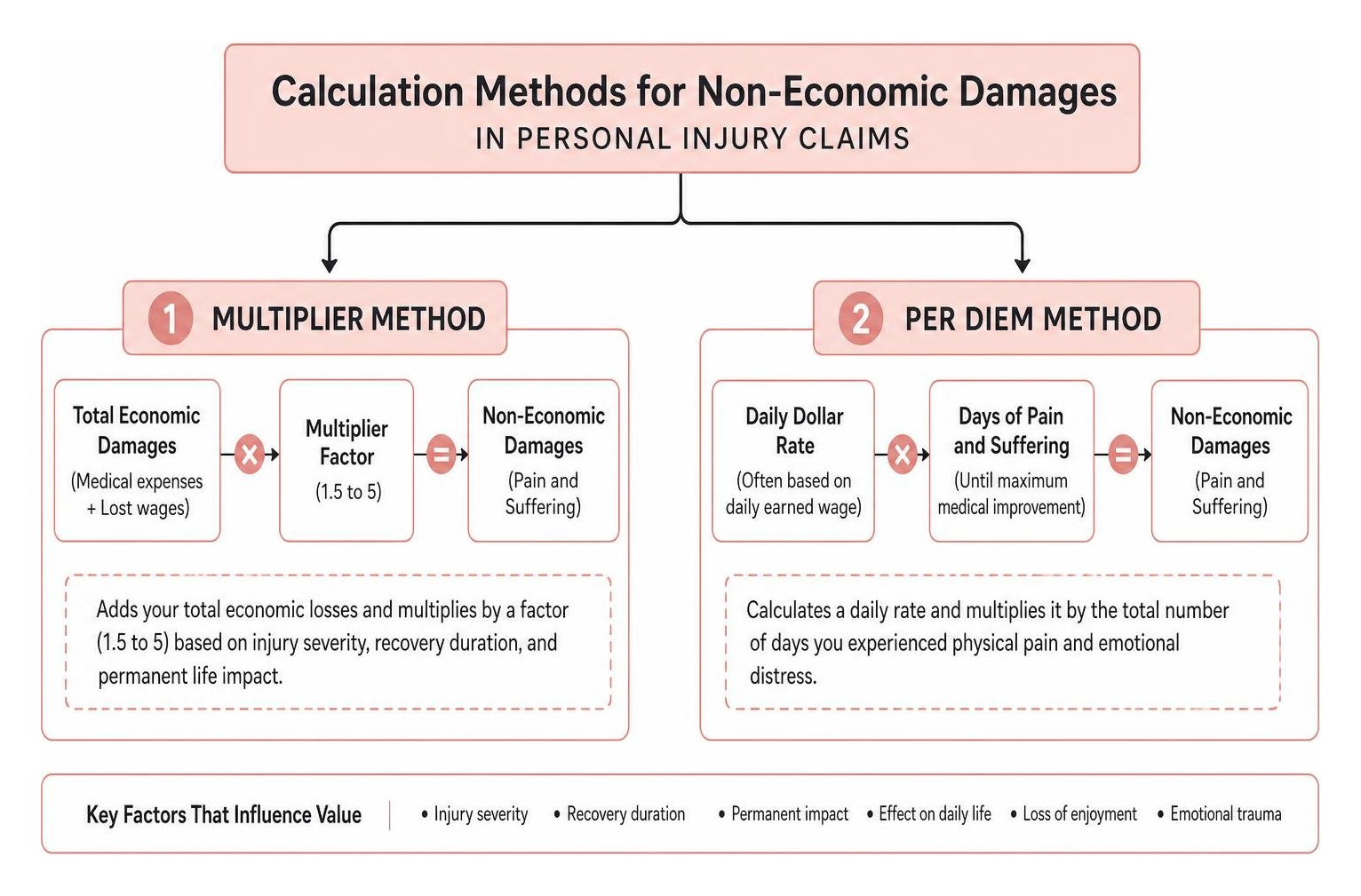
- The Multiplier Method: This traditional legal calculation sums all verifiable economic damages (such as ambulance costs, hospital bills, physical therapy fees, and lost income) and multiplies that figure by a factor typically ranging between 1.5 and 5. The multiplier increases based on injury severity, recovery duration, permanent physical limitations, and direct life disruption.
- The Per Diem Method: This framework assigns a specific daily financial rate (frequently calculated using the victim’s daily wage) and multiplies it by the total number of days the victim suffers physical pain, mental distress, and recovery limitations until reaching maximum medical improvement.
Why You Need a Pain and Suffering Lawyer to Protect Your Rights
Insurance adjusters utilize automated software programs engineered to minimize or eliminate non-economic loss claims. Partnering with a legal team ensures your claim accurately reflects your full loss.
At J. Fine Law, our team maintains a stellar 98% success rate and has successfully recovered over $50 million for injury clients across Philadelphia. We operate under a strict contingency fee model, meaning you pay zero legal fees unless we successfully win a financial recovery for you. Our rapid attorney response team steps in immediately following an accident to secure physical evidence, direct all adjuster interactions, and maximize your settlement outcome. Discover more about our approach through our guide on Personal Injury Lawyer Philadelphia.
Comparative Fault and Damage Caps in Pennsylvania
Navigating state negligence rules is essential when calculating your final settlement potential:
- Modified Comparative Fault: Pennsylvania enforces a strict 51 percent bar rule. You can recover non-economic compensation as long as your percentage of responsibility for the crash is 50 percent or less. If a court or jury finds you 20 percent responsible, your financial award is reduced by exactly 20 percent. However, if your share of fault reaches 51 percent or higher, you are legally barred from recovering any damages.
- Uncapped General Claims: Pennsylvania places no statutory caps on pain and suffering compensation for standard personal injury lawsuits brought against private individuals, commercial drivers, or business entities.
Crucial Evidence Needed to Prove Pain and Suffering in Philadelphia

Because physical discomfort and psychological strain are subjective experiences, insurance adjusters often push back vigorously unless your claim is backed by solid medical and personal documentation. Detailed evidence transforms personal hardship into clear legal proof. For additional strategies, consult our Philadelphia Personal Injury Guide.
Essential evidence needed for your non-economic claim includes:
- Comprehensive medical records, diagnostic imaging reports, and progress notes from treating facilities like Temple University Hospital.
- Written statements and official testimony from treating physicians describing expected recovery timelines, pain levels, and permanent physical restrictions.
- Consistent personal pain journal entries tracking daily discomfort levels, missed social functions, mobility challenges, and mood changes.
- Sworn statements from family members, coworkers, and neighbors detailing clear changes in your daily behavior, independence, and lifestyle.
- Formal psychological evaluations, psychiatric reports, and therapy logs confirming conditions such as crash-induced PTSD, anxiety, or clinical depression.
How a Pain and Suffering Lawyer Proves Future Pain and Suffering
When an auto collision or serious slip and fall results in chronic conditions or long-term disability, a pain and suffering lawyer must project future pain and suffering damages. We collaborate with life care planners, treating physicians, medical professionals, and vocational analysts to document anticipated future medical treatment, ongoing pain management, and long-term psychological impacts. To explore legal representation in your area, review our guide on finding an Injury Lawyer Near Me.
How Insurance Adjusters Minimize Non-Economic Claims and How to Fight Back
Insurance corporations focus on protecting profit margins. Adjusters utilize predictable tactics to undervalue or deny non-economic injury claims:
- Pushing Rapid Lowball Settlement Offers: Offering fast, low cash payouts before crash victims understand the full extent of their long-term medical needs or physical suffering.
- Exploiting Gaps in Medical Treatment: Arguing that missed physical therapy appointments or brief delays in medical care mean the victim was not actually experiencing significant pain.
- Capitalizing on Diagnostic Limitations: Claiming that soft tissue injuries, sprains, or chronic back soreness are exaggerated because they do not always appear on standard X-rays.
- Demanding Recorded Statements: Attempting to record unrepresented victims during stressful moments, hoping to elicit casual statements that can be twisted to imply minor injuries or shared fault.
Having skilled legal representation protects you from falling into these corporate traps. Read our comprehensive resource on how to Hire a Philadelphia Injury Attorney Essential Guide for complete details on protecting your rights.
Frequently Asked Questions About Philadelphia Non-Economic Injury Claims
Can I recover pain and suffering compensation if I was partially at fault?
Yes, provided your proportion of fault is 50 percent or less under Pennsylvania’s modified comparative fault system. Your financial award will simply be reduced in direct proportion to your assigned percentage of responsibility.
How long do I have to file a pain and suffering claim in Philadelphia?
Under Pennsylvania law, the personal injury statute of limitations is generally two years from the exact date of the accident. Missing this strict legal filing deadline permanently bars your right to pursue compensation.
Are pain and suffering damages capped in Pennsylvania personal injury cases?
No, standard personal injury cases against private individuals, drivers, or businesses feature no statutory dollar limits on non-economic compensation. (Claims against state or local municipal government entities are subject to specific statutory liability limits under state law).
Take Back Control of Your Recovery with J. Fine Law
Physical injuries and emotional suffering disrupt every aspect of your personal and professional life. You do not have to confront insurance adjusters alone while working to rebuild your health.
At J. Fine Law, our attorneys move fast to protect your legal rights, prove the full value of your human suffering, and aggressively seek the compensation you deserve. With a 98% success rate, over $50 million recovered for injury victims, and rapid response times, we handle the heavy legal burden so you can focus on your medical recovery.
In addition to vehicle crashes and premises liability cases, our legal team provides dedicated advocacy for vulnerable family members harmed in care facilities. Whether your pain and suffering stems from a severe collision or a loved one has suffered neglect, unexplained falls, or mistreatment in a residential facility, consulting an experienced elder abuse attorney at our firm ensures their dignity and legal rights are fully protected. Learn more by visiting our Philadelphia PA Law Office or reviewing our resources on Nursing Home Injury Compensation Legal Support.
Contact an elder abuse attorney or personal injury lawyer at J. Fine Law today for a free, confidential case evaluation. We charge no upfront fees, and you pay nothing unless we successfully win your case.