 Skip to content

Wrongful Death Damages NJ Families Can Recover in Cherry Hill
Wrongful death damages NJ families can recover include lost financial support, the value of household services, and qualifying medical or funeral expenses. New Jersey law focuses strictly on the financial value of what the deceased person would have provided, rather than emotional grief. An estate representative generally must file the formal legal action within two years of death.
I’m Jason Fine, founder of J. Fine Law, and I’ve spent over 25 years representing people harmed in accidents and negligence cases. If you need help understanding wrongful death damages NJ law may allow your family to claim, contact Jason Fine at J. Fine Law.
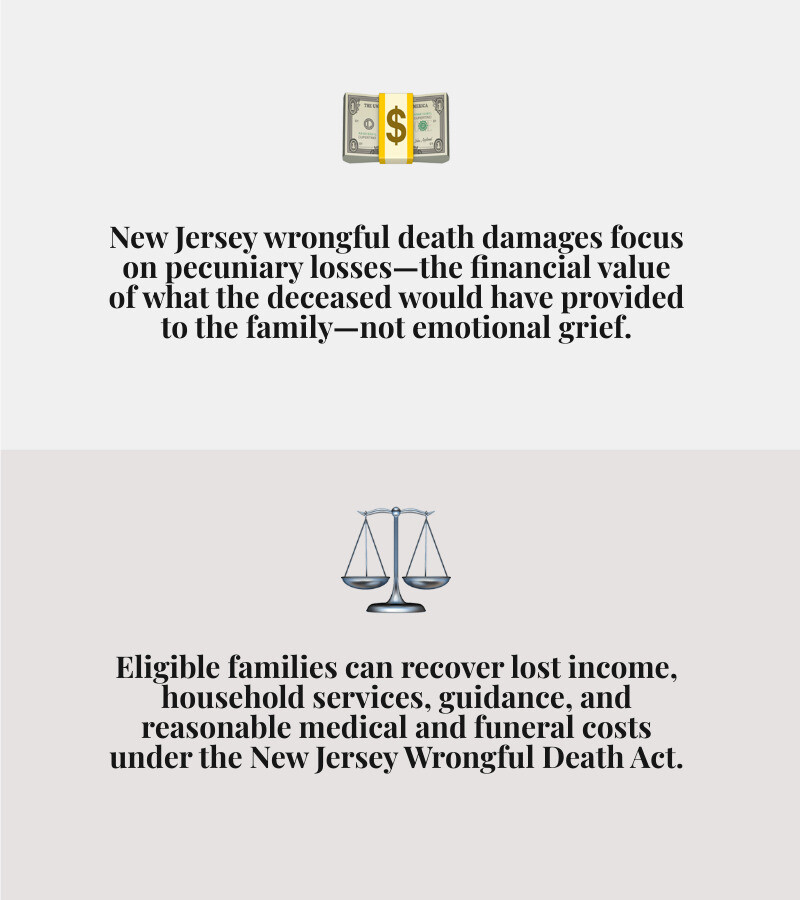
Wrongful death damages NJ considerations include:
- Establishing economic dependence and lost lifetime financial contributions.
- Proving the replacement value of practical household support and child guidance.
- Meeting statutory filing deadlines to protect estate and beneficiary claims.
What Are Recoverable Wrongful Death Damages NJ Families Can Claim?
New Jersey wrongful death damages generally compensate eligible family members for the financial value of what the deceased would have provided. Recoverable losses may include qualifying medical and funeral expenses, income and benefits, and household services. The amount depends on evidence of the family’s pecuniary loss, not grief alone.

Under N.J.S.A. 2A:31-5, compensation is strictly limited to the pecuniary injuries suffered by surviving dependents. According to the New Jersey State Police Fatal Accident Statistics, New Jersey recorded 607 fatal crashes resulting in 650 fatalities in 2023 alone. Families in Cherry Hill pursuing claims after fatal crashes along Route 70 or Route 38 work with our legal team on securing fair financial compensation.
Recoverable damages include:
- Reasonable funeral, burial, and memorial expenses.
- Hospital bills, emergency care at Jefferson Cherry Hill Hospital, and end-of-life medical costs.
- Loss of net financial contributions the deceased would have earned.
- Market replacement value of household chores, childcare, and maintenance.
Calculating Pecuniary Wrongful Death Damages NJ Juries Award
Juries calculate awards by measuring the direct financial dependency of each survivor. In cases like Dutton v. Rando, courts established that lay witness testimony from family members can prove the economic value of advice, guidance, and companionship without mandatory economic models.
Non-Recoverable Losses and Non-Pecuniary Limits on Wrongful Death Damages in NJ
New Jersey law prohibits recovery for emotional grief, mental anguish, or sorrow under the Wrongful Death Act. In Robert B. Beim v. Trevor R. Hulfish, the Supreme Court affirmed that indirect financial impacts, like estate tax payments, are not recoverable pecuniary damages. Additionally, under Linquito v. Siegel, damage awards in medical cases may be reduced using the Scafidi allocation when pre-existing health conditions contributed to the fatal outcome.
Who Is Legally Eligible to Receive Wrongful Death Compensation in New Jersey?
Under New Jersey law, the personal representative files the action for the benefit of statutory heirs. A spouse, children, parents, or other qualifying relatives may receive a share when they establish the required relationship or financial dependence. Distribution follows the statute and applicable intestacy principles, based on each beneficiary’s circumstances.
Eligibility is governed by N.J.S.A. 2A:31-4. A dedicated Cherry Hill wrongful death lawyer ensures that only legally recognized beneficiaries seek compensation based on actual financial dependence.
Statutory Beneficiaries and Inheritance Priority Under N.J.S.A. 2A:31-4
The statute grants priority to surviving spouses and dependent minor children. If no spouse or children exist, surviving parents or dependent siblings may qualify for distribution under New Jersey probate rules.
Legal Limits for Unmarried Partners and Cohabitants
New Jersey abolished common-law marriage in 1978. In Sykes v. Zook Enterprises, Inc., the court ruled that unmarried partners cannot recover wrongful death compensation unless they have registered a formal domestic partnership or civil union.
How Do Wrongful Death Claims Differ From Survival Actions in New Jersey?
A wrongful death claim compensates eligible beneficiaries for their financial losses caused by the death. A separate survival action belongs to the estate and may recover damages the deceased could have pursued, including conscious pain and suffering before death. The claims can proceed together, but they compensate different losses and proceeds are distributed differently.
Our firm provides clear guidance on navigating the essential steps required to pursue fatal accident claims across New Jersey courts.
| Legal Feature | New Jersey Wrongful Death Act (N.J.S.A. 2A:31-1) | New Jersey Survivor’s Act (N.J.S.A. 2A:15-3) |
|---|---|---|
| Claim Beneficiary | Surviving dependent heirs directly | The deceased person’s estate |
| Primary Damages | Pecuniary losses, lost wages, lost services | Conscious pain and suffering prior to death |
| Punitive Damages | Not permitted under the statute | Allowed for egregious or reckless misconduct |
Conscious Pain and Suffering Under the Survivor’s Act
If a loved one survived for any period following a fatal incident near Haddonfield Road, the estate can seek compensation for physical pain and emotional distress experienced before passing.
Availability of Punitive Damages in Fatal Injury Lawsuits
While the Wrongful Death Act does not allow punitive damages, the New Jersey Supreme Court in Smith v. Whitaker affirmed that punitive awards are recoverable under the Survivor’s Act to punish reckless corporate conduct or gross negligence.
How Are Future Financial and Service Losses Calculated for Families?
Courts assess the income and services the deceased probably would have contributed over a working life, using evidence such as earnings, benefits, health, and work-life expectancy. Economic models estimate future value and discount it to present value. Families can also document lost childcare, household work, and other practical support.
Our team evaluates economic trends and loss projections to build comprehensive financial claims for grieving families.
Earning Capacity, Tax Deductions, and Present Value Discounting
Calculating future income requires projecting gross career earnings and subtracting estimated state and federal income taxes. The court then deducts the deceased’s personal consumption expenses and applies a present-value discount rate to account for inflation and investment interest over time.
Quantifying Household Services, Guidance, and Companionship
Services such as home repairs, elder care assistance, and parental guidance are quantified using prevailing hourly market rates for replacement services in Camden County.
What Is the Deadline and Process for Filing a Wrongful Death Claim in Cherry Hill?
A wrongful death action in New Jersey generally must be filed within two years of the death, though specific circumstances can affect the analysis. The estate’s personal representative or an appointed administrator ad prosequendum typically files the case. Prompt action helps preserve evidence and identify beneficiaries, losses, and responsible parties.
Under New Jersey civil procedure, surviving families face strict statutory windows when pursuing fatal accident litigation. Prompt legal review helps clarify filing requirements and protects essential beneficiary rights.
Appointing the Personal Representative and Administrator Ad Prosequendum
The personal representative or court-appointed administrator ad prosequendum manages the lawsuit through the Camden County Superior Court, ensuring all recovered funds are allocated properly among heirs.
Navigating New Jersey’s Two-Year Statute of Limitations
The standard statute of limitations runs exactly two years from the date of death. Exceptions apply for intentional acts resulting in criminal homicide convictions, where the civil filing deadline may be eliminated entirely.
Frequently Asked Questions About Wrongful Death Damages in New Jersey
Can families recover emotional distress damages in a New Jersey wrongful death claim?
No, New Jersey law limits wrongful death recovery strictly to pecuniary losses, excluding compensation for grief or sorrow.
Are punitive damages allowed under the New Jersey Wrongful Death Act?
Punitive damages cannot be recovered under the Wrongful Death Act, but they can be pursued through a companion claim under the Survivor’s Act.
How are medical and funeral expenses recovered in fatal accident cases?
Eligible medical and funeral expenses are recovered through the wrongful death lawsuit and reimbursed directly to the estate or surviving family members who paid them.
{ “@context”: “https://schema.org”, “@type”: “FAQPage”, “mainEntity”: [ { “@type”: “Question”, “name”: “Can families recover emotional distress damages in a New Jersey wrongful death claim?”, “acceptedAnswer”: { “@type”: “Answer”, “text”: “No, New Jersey law limits wrongful death recovery strictly to pecuniary losses, excluding compensation for grief or sorrow.” } }, { “@type”: “Question”, “name”: “Are punitive damages allowed under the New Jersey Wrongful Death Act?”, “acceptedAnswer”: { “@type”: “Answer”, “text”: “Punitive damages cannot be recovered under the Wrongful Death Act, but they can be pursued through a companion claim under the Survivor’s Act.” } }, { “@type”: “Question”, “name”: “How are medical and funeral expenses recovered in fatal accident cases?”, “acceptedAnswer”: { “@type”: “Answer”, “text”: “Eligible medical and funeral expenses are recovered through the wrongful death lawsuit and reimbursed directly to the estate or surviving family members who paid them.” } } ] }Demanding Full Financial Accountability for Your Family’s Loss
Navigating wrongful death damages in NJ requires swift legal advocacy to protect your family. When fatal injuries stem from nursing home neglect or facility mistreatment, an elder abuse attorney can help hold accountable parties responsible. At J. Fine Law, we maintain a 98% success rate and have secured over $50 million in settlements for injured clients.
Contact Jason Fine today to consult an elder abuse attorney about your case.