 Skip to content
New Jersey elder abuse: Spot 4 Critical Signs
Introduction: The Silent Crisis Affecting New Jersey’s Seniors
New Jersey elder abuse is a serious and growing problem. If you suspect an older adult is being abused, neglected, or exploited, report it immediately:
- Adult Protective Services (APS) 24-Hour Hotline: 1-800-792-8820
- Emergencies: 911
- Long-Term Care Ombudsman (Nursing Homes): 1-877-582-6995
- Department of Health Complaint Hotline (Licensed Facilities): 1-800-792-9770
Each year, thousands of seniors suffer mistreatment, often from family members or caregivers. Despite New Jersey’s protective laws, like the Adult Protective Services Act and the Nursing Home Residents’ Bill of Rights, abuse frequently goes unreported. Victims may be too afraid, isolated, or impaired to ask for help.
This guide explains what constitutes elder abuse in New Jersey, how to recognize the signs, who to contact, and what legal protections are available. Knowing how to spot and report abuse can save a life.
I’m Jason Fine, a Pennsylvania Super Lawyer nominee with over 25 years of experience representing victims of abuse and neglect, including New Jersey elder abuse cases. My firm is committed to helping families seek justice and hold abusers accountable.
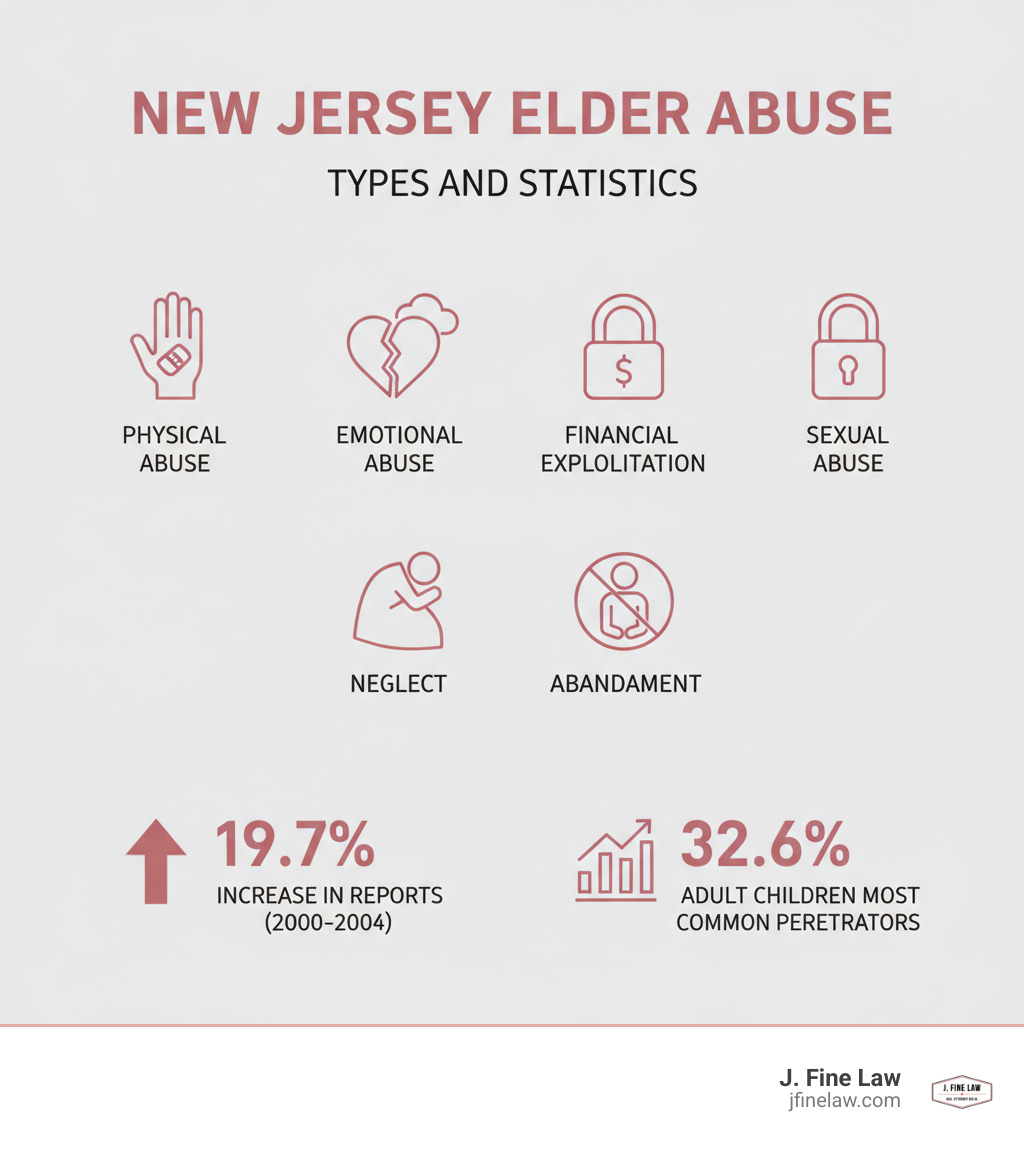
Understanding and Reporting New Jersey Elder Abuse
The first step in combating New Jersey elder abuse is understanding what it is and how to spot it. Awareness and knowing when to speak up can save lives.
Defining the Types of Elder Mistreatment
In New Jersey, elder mistreatment applies to a “vulnerable adult”—someone 18 or older unable to fully protect themselves due to physical or mental limitations. Understanding the different forms of abuse is the first step to intervention.
- Physical abuse: Intentional acts causing bodily injury, pain, or impairment, such as hitting, pushing, or misusing restraints.
- Emotional or psychological abuse: Inflicting mental pain or distress through verbal assaults, threats, intimidation, or isolation.
- Sexual abuse: Any non-consensual sexual contact, including unwanted touching or sexual assault.
- Financial exploitation: The illegal or improper use of an elder’s funds, property, or assets. This is a common form of New Jersey elder abuse and a serious crime.
- Neglect: A caregiver’s failure to provide essential care like food, water, medicine, or hygiene.
- Self-neglect: A vulnerable adult’s inability to provide for their own essential needs, putting their health and safety at risk.
- Abandonment: The desertion of an elder by a person responsible for their care.
For more details on recognizing these signs, see this Brochure on the Signs of Abuse, Neglect, and Exploitation.
Recognizing the Warning Signs of Abuse and Neglect
Victims often cannot or will not speak up, so it’s crucial to look for warning signs.
- Physical signs: Unexplained bruises, cuts, broken bones, burns, or pressure marks. Poor hygiene, untreated bedsores, and sudden weight loss can signal neglect.
- Behavioral and emotional changes: Sudden withdrawal, depression, anxiety, or fear, especially around a specific caregiver. New or worsening confusion can also be a red flag.
- Financial red flags: Unusual bank account activity, unexplained withdrawals, sudden changes to wills or power of attorney, or unpaid bills despite adequate income.
- Environmental hazards: An unsafe or unsanitary living space, such as a home with garbage, no heat, or inadequate food.

A single sign may not prove abuse, but a pattern of indicators warrants concern. This Abuse in Later Life Wheel helps illustrate the tactics abusers use.
Key Laws Protecting Against New Jersey Elder Abuse
New Jersey has strong legal protections for its elderly population.
- The New Jersey Adult Protective Services (APS) Act: Empowers APS to investigate reports of abuse, neglect, and exploitation of vulnerable adults living in the community.
- The Nursing Home Residents’ Bill of Rights: Guarantees residents in long-term care facilities the right to be free from all forms of abuse and ensures quality of care, privacy, and dignity.
- The Mandatory Adult Abuse and Exploitation Reporting Law: Requires staff in institutional settings like nursing homes to report suspected abuse of residents aged 60 and older.
- Criminal statutes: Allow for the prosecution of crimes like assault, theft, and neglect, with improved penalties when the victim is elderly or disabled.
- The Prevention of Domestic Violence Act: Can provide protective orders for elders abused by a household member.
- Financial Industry Regulations (FINRA) and Banking Laws: Help combat financial exploitation by allowing temporary holds on suspicious transactions and authorizing banks to report suspected illegal activity to APS or law enforcement.
These laws create multiple layers of protection against New Jersey elder abuse. Learn more about New Jersey elder abuse laws and your rights to understand how these protections work.
How to Report Suspected Elder Abuse in New Jersey
Anyone with reasonable cause to suspect elder abuse should report it. Certain professionals, like healthcare workers and social workers, are legally mandated reporters. Timely reporting is critical—reports involving serious injury in a facility must be made within 2 hours, and other situations within 24 hours or in a timely manner.
Who to Contact:
- For emergencies or immediate danger, always call 911.
- Adult Protective Services (APS): For vulnerable adults living in the community. Call the 24-hour hotline at 1-800-792-8820. APS will conduct a confidential investigation. You can find more Adult Protective Services information here.
- The New Jersey Long-Term Care Ombudsman (NJLTCO): For residents of nursing homes and assisted living facilities. Call 1-877-582-6995.
- The Department of Health Complaint Hotline: For concerns about care at any licensed healthcare facility. Call 1-800-792-9770.
- Medicaid Fraud Control Unit (MFCU): For abuse or fraud involving Medicaid recipients. Call 1-877-55-FRAUD.
When reporting, provide as much detail as possible. Your identity as a reporter is kept confidential, and you are protected from liability for reports made in good faith. Don’t hesitate to speak up—your call could save a life.
Seeking Justice and Support for Victims
After reporting suspected New Jersey elder abuse, the next step is understanding your options for justice and healing. The legal system provides multiple pathways to hold abusers accountable and help victims recover.
Legal Remedies for New Jersey Elder Abuse Victims
When an elderly person suffers abuse, the law provides several ways to seek justice and hold abusers accountable.

- Civil Lawsuits: Victims can file a claim against an individual abuser or a negligent facility (like a nursing home) to seek compensation for medical expenses, pain and suffering, emotional distress, and lost assets. In egregious cases, punitive damages may be awarded to punish the wrongdoer.
- Wrongful Death Claims: If New Jersey elder abuse leads to a victim’s death, surviving family members can file a lawsuit to recover damages for funeral expenses and loss of companionship.
- Criminal Complaints: Many forms of elder abuse are crimes. Reporting to law enforcement can lead to a state prosecution, resulting in criminal penalties for the abuser.
- Protective Orders: A Temporary Restraining Order (TRO) can be obtained under the Prevention of Domestic Violence Act to legally prevent an abuser from contacting or coming near the victim, providing immediate safety.
- Financial Remedies: To combat financial exploitation, laws allow financial institutions to place temporary holds on suspicious transactions and report them to authorities, helping to freeze accounts and prevent further loss.
Navigating these options can be complex. Learn more about legal options for elder abuse victims in New Jersey to see how an experienced attorney can guide you.
Finding Legal Help and Support Resources
Dealing with the aftermath of elder abuse is challenging. Fortunately, New Jersey has a network of legal and social support resources to help victims and their families.
Legal Help for Elder Abuse Victims
Finding an attorney who specializes in New Jersey elder abuse is a critical step. At J. Fine Law, we have over 25 years of experience representing victims of nursing home abuse and neglect. With a 98% success rate and over $50 million recovered for clients, we know how to build strong cases and hold negligent parties accountable. We offer free consultations to discuss your claim and explain your options with the compassion and respect you deserve.
State and Community Support
When an older adult’s ability to make decisions is compromised, options like guardianship or supported decision-making can be explored through your county surrogate’s office. For broader support, New Jersey offers excellent resources:
- The Aging and Disability Resource Connection (ADRC) is your one-stop shop for connecting with local services, including home-delivered meals, transportation, and care providers in your county.
- The New Jersey Division of Aging Services (DOAS) coordinates numerous programs to help seniors live safely and independently.
- The Division of Consumer Affairs offers an anti-fraud toolkit to help seniors recognize and avoid financial scams.

If you suspect New Jersey elder abuse, you don’t have to face it alone. We believe every senior deserves to live with dignity and safety.
We invite you to Contact a New Jersey Nursing Home Abuse Lawyer for a free consultation to discuss your situation. Your call is the first step toward protecting your loved one and securing the justice they deserve.