 Skip to content
Philadelphia nursing home negligence: Secure 2025 Justice
Protecting Your Loved One: Understanding Philadelphia Nursing Home Negligence
Philadelphia nursing home negligence occurs when a facility fails to provide the standard of care required by law, resulting in harm to a resident. If you suspect mistreatment, it’s critical to recognize the warning signs—such as bedsores, unexplained bruises, dehydration, and sudden behavioral changes—and understand your legal rights.
The statistics are alarming: an estimated 5 million elders are abused each year in the U.S., yet only 1 in 14 cases is reported. In Philadelphia, a staggering 85% of abuse and neglect complaints were dismissed between 2015 and 2017, even as health inspections uncovered horrific conditions. These numbers represent vulnerable loved ones who deserve safe, dignified care.
This guide will help you recognize the signs of mistreatment and take action. I’m Jason Fine, and for over 25 years, I’ve represented victims of Philadelphia nursing home negligence. My team and I are committed to securing justice for families and stopping the cycle of abuse in our community.
Understanding Philadelphia Nursing Home Negligence and Abuse
When we place a loved one in a nursing home, we expect professional, compassionate care. Philadelphia nursing home negligence occurs when a facility fails to meet the legal “standard of care” and a resident is harmed.
Federal and state laws, including the 1987 Nursing Home Reform Act (NHRA), guarantee residents’ rights to safety, appropriate medical care, and dignity. Yet systemic problems, especially chronic understaffing in many for-profit facilities, can lead to violations and harm. For national context on elder mistreatment, see the CDC elder abuse fast facts.
Defining Negligence vs. Abuse in Pennsylvania
It’s important to distinguish between negligence and abuse, though both cause serious harm.
Negligence is usually an unintentional lapse in care (for example, medication errors, failure to prevent bedsores, or missed hygiene assistance).
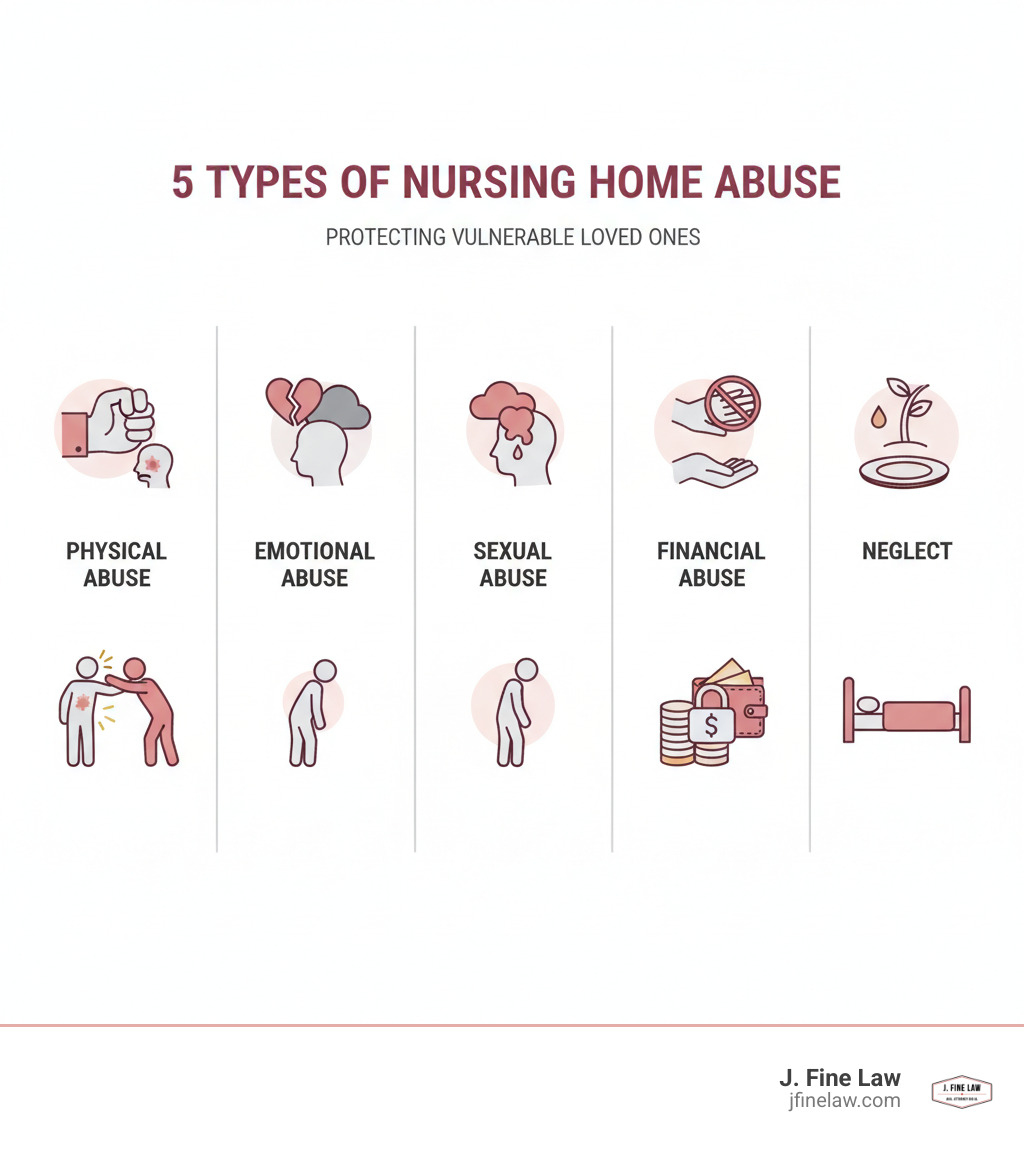
Abuse is intentional harm. The main types include:
- Physical Abuse: Hitting, pushing, or improperly restraining a resident.
- Emotional Abuse: Threatening, humiliating, or isolating a resident.
- Sexual Abuse: Any non-consensual sexual contact.
- Financial Exploitation: Illegally using a resident’s money or assets.
- Neglect: The failure to provide basic needs like food, water, hygiene, or medical care.
Understanding these differences helps identify mistreatment. For more details, visit our page on Nursing Home Abuse. Also note: skilled nursing homes are more heavily regulated than assisted living facilities, which affects the standard of care and accountability.
Common Warning Signs of Mistreatment
Recognizing red flags is the first step to protecting your loved one. Trust your instincts and look for these signs:
- Bedsores (Pressure Ulcers): Often preventable and a red flag for neglect.
- Dehydration & Malnutrition: Sudden weight loss, confusion, or dry skin.
- Frequent Falls & Fractures: May reflect poor supervision or unsafe conditions.
- Unexplained Bruises, Cuts, or Injuries: Possible physical abuse or preventable falls.
- Poor Hygiene: Unbathed residents, soiled clothing, or odor.
- Medication Errors: Over-sedation, confusion, or worsening symptoms.
- Sudden Withdrawal or Depression: Fear or anxiety, especially around certain staff.
If you see these signs, act immediately. For more guidance, read our article: Do You Suspect Nursing Home Abuse in Philadelphia?

How to Prove a Philadelphia Nursing Home Negligence Claim
To prove a Philadelphia nursing home negligence claim, you must show:
- Duty of Care
- Breach of Duty
- Causation
- Damages
Key evidence includes medical records, staffing logs, photos of injuries or unsafe conditions, and state inspection reports. We also use witness and expert testimony to connect the facility’s failures to the harm. See our Philly Nursing Home Fall Lawyer Guide.
Securing Justice: Your Legal Recourse in Pennsylvania
When a loved one suffers from Philadelphia nursing home negligence, you have strong legal options to seek compensation and hold facilities accountable, helping protect other residents too.
Negligent homes may face civil liability, regulatory penalties, restrictions on admissions, loss of funding, or even license revocation. Taking legal action makes clear that mistreatment will not be tolerated. Para clientes hispanohablantes: Abogados de abuso en hogares de ancianos en Filadelfia.
First Steps: How to Report and Document Suspected Neglect
If you suspect abuse or neglect, act quickly:
- Ensure Immediate Safety: If there is immediate danger, call 911.
- Report to Administration: Notify the administrator and medical director. Record who you spoke with, when, and what was discussed.
- Document Everything: Take dated photos or videos of injuries or unsanitary conditions and keep a detailed log of observations and treatment.
- Contact Authorities: Report concerns to the PA Department of Aging’s 24-hour hotline at 1-800-490-8505 and the Long-Term Care Ombudsman Program.
Trust your instincts. For guidance in Spanish, see: Sospechas abuso en residencias de ancianos en Filadelfia.
Understanding the Statute of Limitations for Philadelphia Nursing Home Negligence
In Pennsylvania, most claims must be filed within a two-year statute of limitations from the date of injury or, in wrongful death matters, from the date of death. New Jersey has a similar two-year limit. Act promptly to preserve evidence and protect your rights. Learn more on our New Jersey Elder Law page.
How a Specialized Lawyer Can Help Your Family
At J. Fine Law, we guide families through every step:
- Expert Investigation: We obtain medical records, staffing logs, and inspection reports to build a strong case.
- Calculating Full Compensation: We assess medical costs, pain and suffering, and emotional distress.
- Navigating Legal Procedures: We handle filings, deadlines, and court representation.
- Negotiating with Insurance Companies: We pursue fair settlements and protect your rights.
Our firm has a 98% success rate and has recovered over $50 million in settlements. Contact our Philadelphia office today for a free, confidential consultation.

What are the consequences for nursing homes found to be negligent or abusive?
When a nursing home is found negligent or abusive, the consequences are significant and serve to both compensate victims and deter future misconduct. At J. Fine Law, we work to ensure these consequences are fully enforced.
- Financial Penalties: Negligent facilities face civil lawsuits that can result in substantial monetary awards for medical expenses, pain and suffering, and punitive damages. These lawsuits are a powerful tool for holding facilities accountable.
- Regulatory Actions: State and federal agencies, like the Pennsylvania Department of Health, can impose their own penalties. These include hefty fines, restrictions on admitting new residents, mandatory corrective action plans, and, in severe cases, the loss of Medicare/Medicaid funding or revocation of the facility’s operating license.
- Reputational Damage: A finding of negligence can devastate a facility’s reputation. Negative publicity and poor ratings on public health websites can lead to a decline in resident admissions, impacting their long-term viability.
- Criminal Charges: In egregious cases, individual staff members found guilty of abuse may face criminal charges, such as assault or battery. In Pennsylvania, all facility employees are mandated reporters, legally obligated to report suspected abuse.
Legal action is a powerful way to stop the cycle of mistreatment and promote accountability across the long-term care industry.
How do factors like understaffing and profit motives contribute to nursing home negligence?
Systemic issues like understaffing and profit-driven business models are major contributors to Philadelphia nursing home negligence. Understanding these root causes explains why neglect and abuse persist despite regulations.
Understaffing is a primary cause of neglect. Studies suggest more than half of U.S. nursing homes are understaffed. When staff are stretched too thin, they cannot provide timely assistance with basic needs like feeding, hygiene, or repositioning to prevent bedsores. This leads to an increase in medication errors, falls, and a general decline in the quality of care. The constant stress also leads to high staff turnover and burnout, further compromising resident safety.
The profit motive often drives these dangerous conditions. Approximately 70% of U.S. nursing homes are for-profit institutions. To maximize profits, some facilities intentionally operate with minimal staff to reduce payroll costs. This business decision has devastating real-world consequences for residents. Funds may also be diverted from staff training, proper nutrition, and building maintenance, creating an environment where neglect is almost inevitable.
We believe that holding these facilities financially accountable through legal action is one of the most effective ways to break this cycle. When a nursing home’s profitability is threatened by lawsuits for neglect, it sends a clear message that patient safety must come before profit.
What are the rights of nursing home residents in Pennsylvania?
In Pennsylvania, nursing home residents are protected by a combination of federal and state laws designed to ensure they are treated with dignity, safety, and respect. The federal Nursing Home Reform Act (NHRA) of 1987 provides the foundation for these protections.
Key rights guaranteed to every resident include:
- Freedom from Abuse and Restraints: Residents have the right to be free from physical, mental, emotional, and sexual abuse, as well as neglect and involuntary seclusion. Chemical or physical restraints may only be used when medically necessary and ordered by a physician.
- Quality Medical Care and Participation: Residents are entitled to appropriate medical care custom to their individual needs. They have the right to be fully informed about their condition and to participate in the planning of their own care.
- Dignity, Privacy, and Autonomy: Every resident must be treated with respect. This includes the right to privacy in their personal care and communications, the right to manage their own finances, and the freedom to make personal choices about their daily life.
- The Right to Voice Grievances: Residents can make complaints to staff, family, or state agencies without fear of retaliation. This protection is crucial for ensuring accountability.
- Protection Against Improper Discharge: A facility cannot force a resident to leave without a valid, documented reason, such as a necessary transfer for the resident’s welfare.
Furthermore, Pennsylvania’s Older Adult Protective Services Act (OAPSA) makes all employees of skilled care facilities mandated reporters, meaning they are legally required to report any suspected abuse. If you believe your loved one’s rights have been violated, we are here to help enforce them.
What are the differences between various types of care facilities (e.g., assisted living vs. skilled nursing homes) and their respective regulations?
Understanding the differences between long-term care facilities in Pennsylvania is crucial, as the type of facility determines the level of care provided and the regulations it must follow. This directly impacts how a case of Philadelphia nursing home negligence is handled.
Skilled Nursing Facilities (SNFs) / Nursing Homes
- Level of Care: SNFs provide the highest level of medical care outside of a hospital, including 24-hour skilled nursing and rehabilitation therapies. They are for individuals with complex medical needs or those recovering from serious injury or surgery.
- Regulation: These are the most heavily regulated facilities, licensed by the PA Department of Health and subject to strict federal rules under the Nursing Home Reform Act. Regulations cover staffing levels, resident rights, and quality of care.
- Common Negligence: Due to the high level of medical care, negligence often involves medication errors, failure to prevent bedsores, and falls related to inadequate supervision.
Assisted Living Facilities (ALFs)
- Level of Care: ALFs are for individuals who need help with daily activities (like bathing, dressing, and medication management) but do not require 24/7 skilled nursing care. They offer more independence and social activities.
- Regulation: ALFs are regulated by the state (PA Department of Human Services) and typically operate under less stringent oversight than SNFs. This can lead to wider variations in quality.
- Common Negligence: Negligence in ALFs often stems from inadequate supervision, medication management errors, or failure to recognize a resident’s declining health.
The key takeaway is that the standard of care and legal obligations differ by facility type. Understanding this distinction is vital when building a negligence case and allows us to effectively advocate for your loved one.
Conclusion
When trust is broken by Philadelphia nursing home negligence or abuse, swift action matters. Pennsylvania law protects residents, but the two-year filing deadline makes early investigation critical.
Accountability not only secures compensation, it drives change that protects others. With a 98% success rate and over $50 million recovered, J. Fine Law is ready to act fast for your family. If you suspect mistreatment, contact us for a free, confidential consultation.
Contact our Philadelphia office for a free consultation