 Skip to content

What Immediate Steps Should You Take After a Nursing Home Injury?
If you suspect a nursing home injury, get the resident medical care first. Then photograph visible injuries, write down what happened, ask the facility for its incident report, and save medical records. These steps can help you understand the harm and whether a preventable care failure played a role.
I’m Jason Fine, founding elder abuse attorney of J. Fine Law. For more than 25 years, I’ve represented injured people, including families dealing with a nursing home injury such as a fall or bed sores. Contact Jason Fine to discuss what happened and your options.
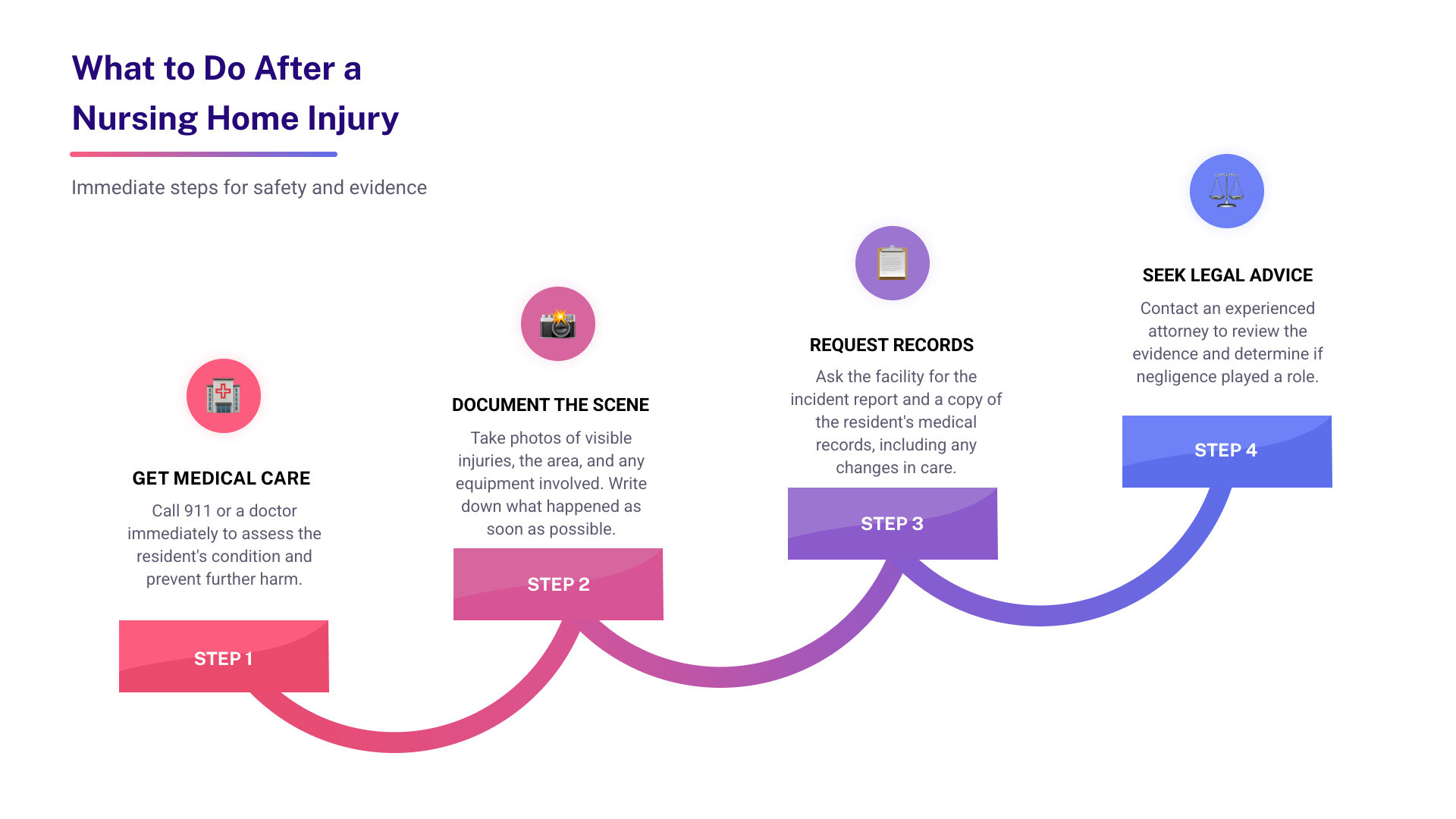

When an incident occurs, immediately demand an emergency medical assessment by an independent physician. Secure clinical observation records, photograph all physical wounds, and request the administrative incident report. These early actions safeguard resident health and preserve crucial evidence before records can be altered, misfiled, or concealed by facility administrators.
If you suspect underlying nursing home negligence, acting quickly makes a major difference. Staff turnover happens fast in long-term care facilities across Philadelphia. Immediate documentation ensures that critical details are not forgotten or lost.
Take these essential steps right away:
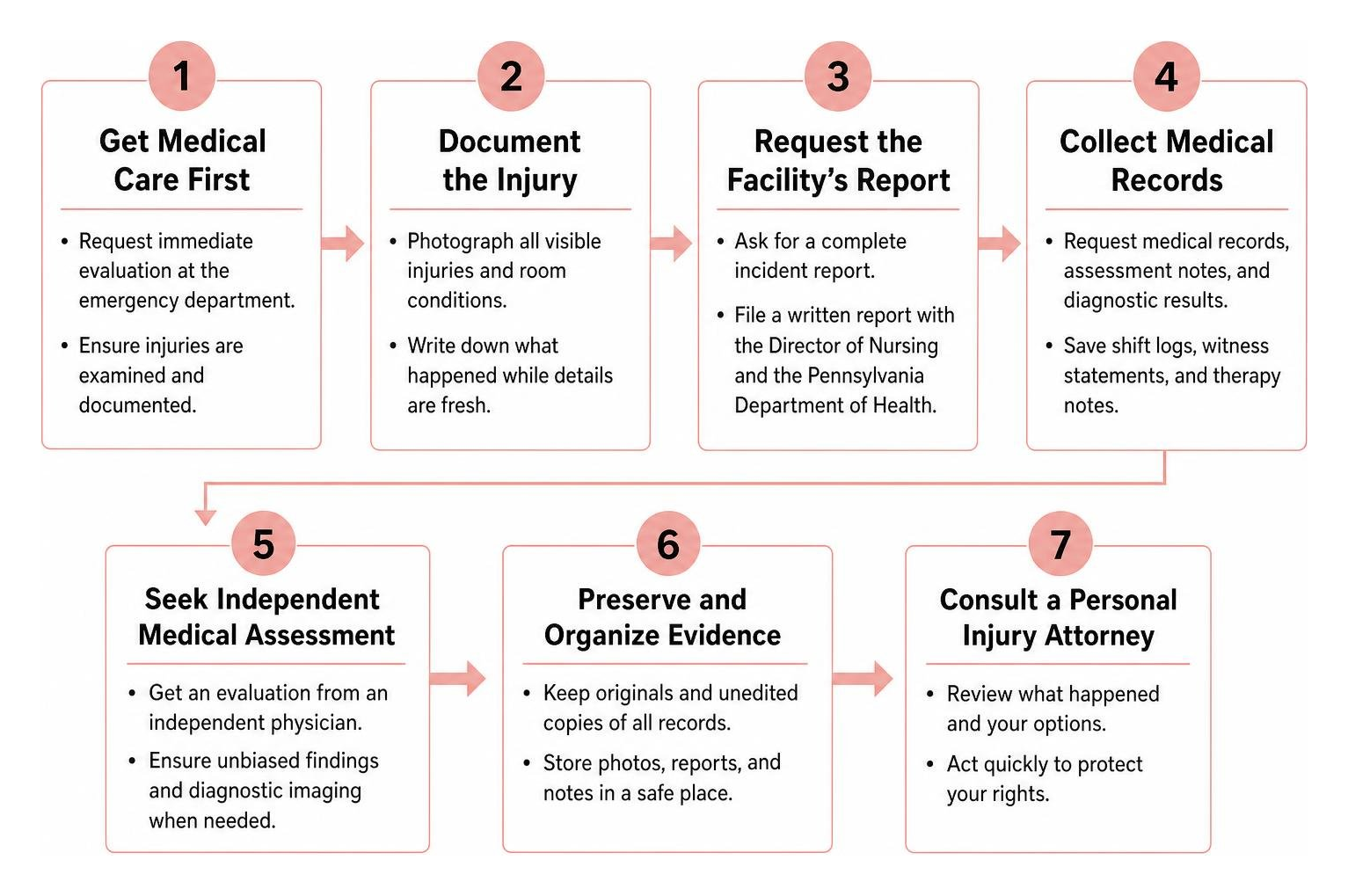
- Request immediate transport to an emergency department, such as Penn Presbyterian Medical Center or Temple University Hospital, for thorough diagnostic evaluation.
- Demand complete baseline vital signs, skin assessments, and post-fall clinical monitoring logs from the charge nurse.
- Photograph bruising, skin tears, pressure ulcers, burns, or improper room conditions from multiple angles.
- File a formal, written incident report with the Director of Nursing and the Pennsylvania Department of Health.
How to Document Evidence of a Nursing Home Injury
Take high-resolution, dated photographs of every bruise, cut, swelling, or bed sore. Request unedited copies of shift logs, witness statements, and physical therapy notes. These items show exactly who was on duty when the harm occurred.
Look closely at transfer equipment if a drop or fracture occurred. Mechanical devices like Hoyer lifts require routine inspections and proper handling. Regulatory investigations often reveal failures to provide required assistance during Hoyer lift transfers, leading to severe bone fractures when a single worker bypasses mandatory two-person safety rules.
When Should You Request an Independent Medical Assessment?
Request an outside physician whenever an unwitnessed fall occurs or when a resident cannot explain what happened. Facilities often delay diagnostic imaging, mistaking fractures for minor soreness. Outside emergency doctors provide unbiased radiology reports and physical assessments that protect resident safety.
Delayed medical intervention can have severe, lasting consequences. Past investigations into elder care injuries show how unaddressed fractures can cause permanent decline. If a loved one displays sudden pain, confusion, or inability to bear weight along Broad Street or Chestnut Hill facilities, insist on emergency hospital transport immediately.
What Are the Most Common Types of Preventable Facility Injuries?
Preventable injuries commonly include traumatic falls, mechanical lift drops, bed rail entrapment, severe burns from unattended heaters, and deep pressure sores. These incidents typically stem from chronic understaffing, inadequate staff training, and willful violations of individualized care plans. Systemic facility cutbacks often turn routine daily transfers into life-threatening emergencies.
Understaffing creates hazardous shortcuts in everyday care. When workers are rushed, they may ignore safety equipment or leave residents unattended in dangerous positions. Bedbound residents left near heating units can suffer severe burns and infections, demonstrating the catastrophic dangers of nursing home neglect.
Why Do Transfer Protocol Violations Cause Severe Harm?
Care plans frequently mandate two-person assists or specialized mechanical lifts for residents with mobility limitations. When a single caregiver attempts a solo transfer to save time, the risk of dropping the resident multiplies. Solo transfers frequently cause severe humerus fractures, broken femurs, and head trauma.
Courts take internal safety protocols very seriously when establishing legal fault. In Giandana v Providence Rest Nursing Home, the court affirmed that violating internal transfer guidelines provides strong evidence of liability. A facility’s written safety policies define the baseline standard of care owed to every resident.
How Do Falls Predict Long-Term Health Decline?
Falls among older adults are not isolated accidents; they are powerful clinical indicators of rapid physical decline. Even a single noninjurious fall substantially increases the probability of permanent loss of independence. For older adults living in the community, experiencing a serious fall dramatically elevates the chance of long-term institutionalization.
| Fall Event Severity | Relative Risk of Long-Term Admission | Population Attributable Risk (%) |
|---|---|---|
| Single Noninjurious Fall | 4.9 | 13% |
| Multiple Noninjurious Falls | 8.5 | 3% |
| Fall with Serious Injury | 19.9 | 10% |
When nursing facilities fail to prevent repeat falls, residents face elevated mortality rates and permanent functional loss. Proper physical therapy and mobility assistance are mandatory under state and federal care standards.
Why Do Facilities Underreport Serious Falls and Injuries?
Nursing homes routinely underreport major injuries to protect their commercial reputations, maintain high Care Compare star ratings, and avoid regulatory fines. Government audits reveal that for-profit chains frequently omit serious hospitalizations from Minimum Data Set (MDS) submissions. This deceptive practice distorts public safety metrics and hides widespread operational neglect.
A federal Office of Inspector General (OIG) investigation revealed that nursing homes failed to report 43 percent of falls involving major injury and hospitalization among Medicare residents. Underreporting occurred most frequently in large, for-profit chain facilities. Omission rates were particularly high for younger residents, male residents, and short-stay Medicare beneficiaries.
This widespread underreporting tricks families searching for safe facilities in Philadelphia neighborhoods like Center City, Northeast Philly, and South Philadelphia. When homes conceal emergency room transfers, their published safety metrics appear artificially clean. Independent investigations and legal reviews are often the only way to expose the truth.
What Legal and Regulatory Consequences Do Negligent Facilities Face?
Negligent facilities face official CMS Form 2567 citations, state license revocations, civil lawsuits, and severe financial penalties. When administrators intentionally ignore known safety hazards, individual managers can face criminal charges for occupational negligence. Regulatory sanctions force facilities to submit plans of correction and submit to independent state monitoring.
Regulatory agencies enforce strict requirements under both the Pennsylvania Health Care Facilities Act (35 P.S. §§ 448.101 et seq.) and 28 Pa. Code § 201.29. Official court rulings establish that administrators who fail to enforce fall-prevention guidelines can face direct criminal liability. If a facility harms your loved one, reviewing your legal options helps clarify your rights under state law.
How Does Civil Liability Apply to a Facility-Related Nursing Home Injury?
Under civil law, nursing homes are legally responsible for the wrongful actions and omissions of their employees through the doctrine of respondeat superior. When a caregiver fails to follow a care plan, the entire corporate entity bears financial liability for the resulting damages. Families can seek compensation for emergency medical bills, surgical expenses, physical pain, and emotional trauma.
An experienced attorney uses internal facility manuals, shift logs, and electronic medical records to demonstrate negligence. Violating established transfer protocols or ignoring pressure ulcer prevention constitutes a direct breach of duty. Holding negligent facilities accountable prevents future harm to other residents.
Frequently Asked Questions About Nursing Home Injury Claims in Philadelphia
Why is underreporting of falls so common in long-term care facilities?
Facilities underreport serious injuries to protect their public ratings on CMS Care Compare and avoid financial penalties. High reported fall numbers can lower Medicare reimbursement rates and discourage new family admissions. For-profit corporate operators often prioritize business revenue over transparent safety reporting.
Who is held legally responsible when a nurse violates a transfer protocol?
Both the individual caregiver and the operating nursing home facility share legal responsibility. Under vicarious liability principles, long-term care corporations are liable for injuries caused by staff acting within their employment duties. Facility managers can also be held liable for negligent training and inadequate staffing.
How quickly must a nursing home report an injury in Pennsylvania?
Under Pennsylvania Department of Health regulations (28 Pa. Code § 201.14), nursing facilities must report serious incidents resulting in resident injury immediately, and no later than 24 hours after the occurrence. Facilities must also document the incident in the resident’s medical chart and alert family representatives promptly.
{ “@context”: “https://schema.org”, “@type”: “FAQPage”, “mainEntity”: [ { “@type”: “Question”, “name”: “Why is underreporting of falls so common in long-term care facilities?”, “acceptedAnswer”: { “@type”: “Answer”, “text”: “Facilities underreport serious injuries to protect their public ratings on CMS Care Compare and avoid financial penalties. High reported fall numbers can lower Medicare reimbursement rates and discourage new family admissions. For-profit corporate operators often prioritize business revenue over transparent safety reporting.” } }, { “@type”: “Question”, “name”: “Who is held legally responsible when a nurse violates a transfer protocol?”, “acceptedAnswer”: { “@type”: “Answer”, “text”: “Both the individual caregiver and the operating nursing home facility share legal responsibility. Under vicarious liability principles, long-term care corporations are liable for injuries caused by staff acting within their employment duties. Facility managers can also be held liable for negligent training and inadequate staffing.” } }, { “@type”: “Question”, “name”: “How quickly must a nursing home report an injury in Pennsylvania?”, “acceptedAnswer”: { “@type”: “Answer”, “text”: “Under Pennsylvania Department of Health regulations (28 Pa. Code § 201.14), nursing facilities must report serious incidents resulting in resident injury immediately, and no later than 24 hours after the occurrence. Facilities must also document the incident in the resident’s medical chart and alert family representatives promptly.” } } ] }Protecting Your Loved One’s Rights and Securing Accountability
Elderly residents deserve respectful, safe care in every Philadelphia facility. When care homes cut corners and cause preventable injuries, families must demand accountability. We have recovered over $50 million for injured clients while maintaining a 98% success rate across Pennsylvania.
Our team at J. Fine Law responds rapidly to investigate facility neglect, secure shift records, and protect vulnerable residents. If your family member suffered harm due to neglect or protocol violations, consult a dedicated elder abuse attorney. Explore your legal options for nursing home abuse representation in Pennsylvania and contact Jason Fine today for a dedicated, confidential consultation.
Scientific References
Tinetti ME, Williams CS. “Falls, injuries due to falls, and the risk of admission to a nursing home..” The New England journal of medicine, 1997. PMID 9345078.