 Skip to content
Code Red: Navigating Building Violations with Ease
Why Building Code Violations Matter for Your Safety and Property in Philadelphia
Building code violations in Philadelphia happen when a property fails to meet safety standards set by building codes. These can be minor, like a missing permit, or severe, such as a blocked fire exit or faulty wiring along corridors in Center City high‑rises near Market Street or residential rowhomes off Broad Street.
Quick Facts About Building Code Violations in Philadelphia:
- Most Common Types: Unpermitted construction, unprotected fire barriers, blocked exits, faulty electrical or plumbing work, missing smoke detectors, and substandard housing conditions in neighborhoods like South Philadelphia, Northeast Philadelphia, and West Philadelphia
- Who Enforces Them: The Authority Having Jurisdiction (AHJ), typically your local building department or code enforcement office, such as the Philadelphia Department of Licenses and Inspections (L&I) at the Municipal Services Building near JFK Boulevard
- Potential Consequences: Monetary fines (hundreds to thousands of dollars), stop-work orders, property liens, difficulty selling your home, and in severe cases, criminal charges
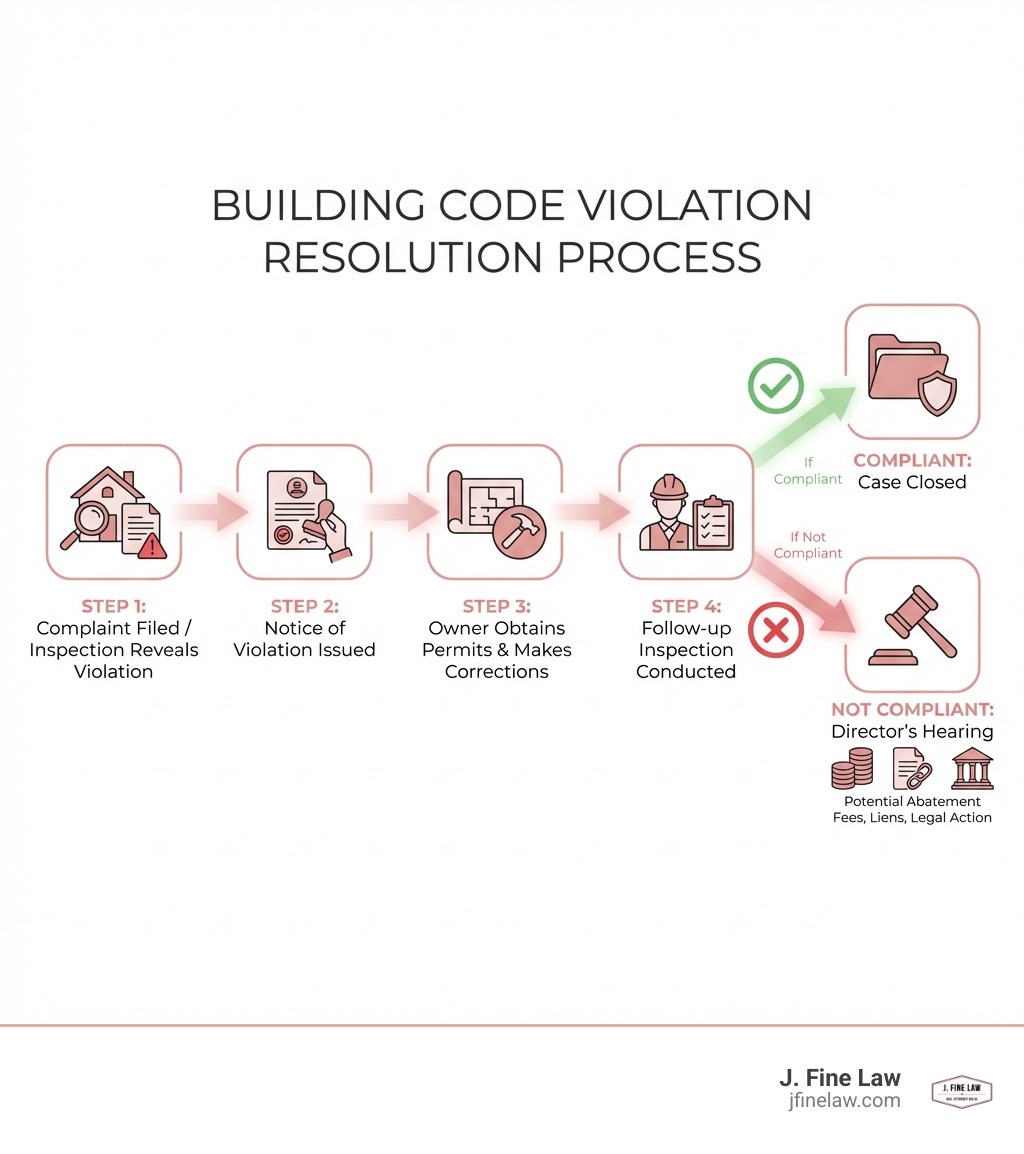
- Resolution Process for Philadelphia Building Code Violations: Receive Notice of Violation → Obtain necessary permits → Make corrections → Pass final inspection → Case closed
- Financial Impact: A single building code violation in Philadelphia can cost hundreds or thousands of dollars in fines, plus additional renovation costs to fix the underlying issue
The primary purpose of building codes is life safety. Ignoring these rules in Philadelphia isn’t just illegal; it puts lives at risk. In Pennsylvania and New Jersey, older buildings and frequent renovations often lead to building code violations in Philadelphia and surrounding areas along I‑95, the Schuylkill Expressway (I‑76), and U.S. Route 1. Whether you’re a homeowner who found an issue, a landlord with property near Temple University Hospital or Jefferson Hospital, or a business owner operating on Walnut Street, understanding this process is crucial.
As Jason Fine, founder of J. Fine Law, I have spent over 25 years representing clients in Pennsylvania and New Jersey injured by unsafe property conditions. I’ve seen how these violations cause serious harm and how negligent property owners can be held accountable.
Terms related to building code violations in Philadelphia:
- Philadelphia premises liability lawyer
- landlord negligence lawyer Philadelphia
- PA slip and fall attorney
Understanding and Identifying Common Building Code Violations in Philadelphia, Cherry Hill, and Feasterville
Navigating building code violations in Philadelphia, Cherry Hill, and Feasterville is crucial for safety and legal compliance. Understanding the rules, common issues, and consequences is the first step for property owners across Pennsylvania and New Jersey.
What Are Building Codes and Who Enforces Them?
Building codes are rules setting minimum safety standards for construction and occupancy. They ensure buildings are structurally sound, fire-resistant, and have proper sanitation. In PA and NJ, these codes are enforced by a local Authority Having Jurisdiction (AHJ).
- In Philadelphia, Pennsylvania, the Department of Licenses and Inspections (L&I) issues permits, conducts inspections, and enforces city building codes. Many building code violations in Philadelphia are handled at the Municipal Services Building on JFK Boulevard, and inspections often occur at properties along major corridors like Broad Street and Chestnut Street. You can find more information on code enforcement in Philadelphia here.
- In Cherry Hill, New Jersey, the Building Inspection & Code Enforcement division handles building code violations in Cherry Hill under the state’s Uniform Construction Code (UCC) and local ordinances. Details are available through the Cherry Hill Building Inspection & Code and Code Enforcement Process pages. Many sites are located near Route 70, Route 73, and the Cherry Hill Mall.
- Across Pennsylvania, you can file a complaint with the state for UCC violations, including building code violations in Feasterville along Bustleton Pike and East Street Road (PA‑132).
Knowing which AHJ covers your property is key to resolving any issues.
The Most Frequent (and Dangerous) Building Code Violations
Some building code violations are more common and hazardous than others. Here are frequent issues found in Philadelphia building code violations, as well as in Cherry Hill and Feasterville properties:
- Unpermitted Construction: Any major work (decks, finished basements, system alterations) done without a permit, meaning no safety inspection occurred. This is a frequent building code violation in Philadelphia rowhomes in South Philadelphia and older mixed‑use buildings along Frankford Avenue.
- Faulty Electrical Work: Incorrect wiring, overloaded circuits, or ungrounded outlets that pose a fire and shock risk in apartments near Temple University Hospital, Jefferson Hospital, or Cooper University Hospital in Camden.
- Plumbing Issues: Leaks, improper drainage, or poor venting that can cause water damage and mold in buildings near I‑95, I‑76, or Route 38.
- Blocked Exits or Fire Doors: Obstructed hallways, stairwells, or propped-open fire doors that trap people during a fire.

- Missing or Broken Fire Safety Equipment: Non-working smoke detectors, fire alarms, or pull stations that fail in an emergency, often cited in building code violations in Philadelphia high‑rise buildings in Center City.
- Unprotected Openings in Fire Barriers: Gaps for pipes or wires in fire-rated walls that are not sealed with proper firestopping, allowing fire to spread quickly.
- Inadequate Exit Capacity: Not enough exits for the number of people in the building, hindering evacuation.
- Unsuitable Storage in Fire Pump/Riser Rooms: Storing items in rooms for fire pump or fire riser systems, blocking access for emergency use.
- Substandard Housing Conditions: Lack of heat, structural instability, severe leaks, or pest infestations that make a property unsafe to live in. These building code violations in Philadelphia are common in older rental units near North Broad Street, Kensington Avenue, and West Philadelphia.
- Blocked Fire Department Connections (FDCs): Obstructions like parked cars or debris that prevent firefighters from connecting hoses to the building’s water supply.
The Consequences of Non-Compliance in Philadelphia, Cherry Hill, and Feasterville
Ignoring building code violations leads to serious consequences for property owners in PA and NJ:
- Financial Implications: This includes heavy fines, daily abatement fees for uncorrected issues, penalty fees for unpermitted work, and expensive renovation costs associated with Philadelphia building code violations along key corridors like Roosevelt Boulevard (U.S. Route 1).
- Stop-Work Orders: An inspector can halt all construction immediately, causing costly delays until the violation is fixed.
- Property Liens: The city can place a legal claim on your property for unpaid fines, making it nearly impossible to sell or refinance.
- Difficulty Selling or Refinancing: Open violations finded during due diligence can scare off buyers and lenders.
- Monetary Penalties and Criminal Charges: Serious or willful violations, especially those causing injury, can lead to massive penalties and even criminal charges.
- Administrative Hearings: Unresolved cases may be escalated to a hearing, resulting in a legally binding Order of Abatement to force compliance.
- Legal Referrals: Severe cases can be referred to the City Attorney or District Attorney for legal action, leading to court orders and more fees.
A Step-by-Step Guide to Resolving Violations and Ensuring Future Compliance in Pennsylvania and New Jersey
Receiving a notice for a building code violation can be stressful, but the resolution process is straightforward. For property owners in Philadelphia building code violation cases, as well as Cherry Hill and Feasterville, following these steps can lead to a swift resolution.
The Official Process for Addressing a Building Code Violation in PA & NJ
When a violation is identified, a formal process begins to ensure compliance. Here’s how it typically works:
- Complaint or Inspection: The process starts with a citizen complaint or a routine inspection by the local AHJ. In Philadelphia, complaints often involve building code violations in Philadelphia rowhomes, duplexes, and commercial spaces along major routes like Broad Street and I‑95.
- Notice of Violation (NOV): An inspector confirms the violation and issues an NOV, which is posted on the property and mailed. It details the violation, the required correction, and a compliance deadline.
- Check for Permit Requirements: Before starting repairs, determine if a permit is needed for the corrective work. Structural, electrical, or plumbing fixes almost always require one.

- File for Permits: If needed, apply for permits with your local AHJ. Be aware that fees for work originally done without a permit can be much higher, especially for Philadelphia building code violations that involve unpermitted work in multifamily dwellings near Temple University Hospital or Penn Presbyterian Medical Center.
- Make Corrections: With permits in hand, complete the required work. Communicating with your inspector can help clarify requirements.
- Final Inspection: Schedule a final inspection once work is done. If the property is compliant, the inspector will sign off, and the case will be closed.
- Escalation for Non-Compliance: If you miss the deadline, you may face accumulating abatement fees and be summoned to an administrative hearing, which can result in a legally binding Order of Abatement.
- Appeals Process: If you disagree with the NOV, you have a limited time (often 15-20 days) to file an appeal with an appeals board, which may require a fee.
Proactive Measures and Resources for Property Owners in Philadelphia, Cherry Hill, and Feasterville
Preventing building code violations is always the best approach. Here are proactive steps for property owners in PA and NJ:
- Educate Yourself: Familiarize yourself with local ordinances in Philadelphia building code violations enforcement (via L&I) and Cherry Hill (via the Building Inspection & Code page).
- Plan Ahead for Renovations: Always ask if a permit is needed before starting a project. Getting one upfront prevents major headaches later.
- Regular Self-Inspections: Periodically check your property for common hazards like blocked exits, frayed wiring, plumbing leaks, and test smoke/CO detectors, especially if your property sits near busy corridors like Roosevelt Boulevard, I‑95, or Route 70.
- Maintain Fire Safety Equipment: Ensure fire alarms, sprinklers, and extinguishers are professionally inspected. Keep fire system rooms and connections clear.
- Keep Good Records: Document all maintenance, permits, and inspection reports.
- Use Online Resources: Take advantage of online portals offered by Philadelphia and Cherry Hill for permits and violation information, like the state’s UCC complaint filing system.
- Consider Professional Help: For large projects, consult a licensed architect or contractor. For proactive safety checks, services like Building Inspection Underwriters of PA can offer guidance.
When a Violation Leads to Injury: Your Rights in Philadelphia, Cherry Hill, and Feasterville
While the financial and legal penalties of building code violations are significant, the most severe consequence is when these violations lead to injury or death. This is where code enforcement intersects with personal injury law.
Building codes exist for safety. When a property owner in Philadelphia building code violation cases, Cherry Hill, or Feasterville neglects these codes, they create unsafe conditions and can be held liable for resulting injuries. This is known as negligence.
Common examples include:
- A fall caused by a broken handrail or step that violates maintenance codes in a walk‑up near South Street or Old City.
- Injuries from a fire where blocked exits or faulty smoke detectors prevented a safe escape in an apartment near Jefferson Hospital or along Market Street.
- Harm from a structural collapse due to unpermitted, shoddy construction in a mixed‑use building along Broad Street or I‑95.
- Carbon monoxide poisoning from an improperly installed heating system in a home near Feasterville’s Bustleton Pike or a Cherry Hill property off Route 73.
In these cases, the building code violation is direct evidence of the owner’s failure to provide a safe environment. Property owners have a legal duty to protect tenants, visitors, and employees. Breaching that duty by ignoring codes can make them responsible for medical bills, lost wages, and other damages.
J. Fine Law has extensive experience representing people in Pennsylvania and New Jersey injured by unsafe property conditions, including cases involving building code violations in Philadelphia and the surrounding suburbs. We know how to investigate whether a building code violation was the cause of an accident and hold negligent owners accountable.
If you or a loved one were injured on someone else’s property and suspect a code violation was involved, we encourage you to seek legal counsel. We can help you understand your rights and pursue the compensation you deserve. Learn more about how we handle premises liability cases here. Codes are meant to protect us, and we fight for those who are harmed when they are ignored.