 Skip to content
Landlord negligence lawyer Philadelphia: 2025 Justice
Injured in Your Rental? You Have Rights
A landlord negligence lawyer Philadelphia can help if you’ve been hurt in your rental property due to unsafe conditions your landlord ignored. When landlords fail to maintain safe living spaces, tenants and guests can suffer serious injuries – and Pennsylvania law protects your right to compensation.
If you need a landlord negligence lawyer in Philadelphia right now, here’s what you should know:
- You have 2 years from the date of injury to file a lawsuit in Pennsylvania
- Landlords must maintain common areas, fix dangerous conditions, and provide a reasonably safe environment
- You can recover medical bills, lost wages, pain and suffering, and future medical costs
- Free consultations are available – most lawyers work on contingency (no fee unless you win)
- Evidence matters – take photos, report hazards in writing, and keep all medical records
I’m Jason Fine, a landlord negligence lawyer in Philadelphia with over 25 years of experience helping injured tenants recover fair compensation from negligent property owners. My firm has secured some of the top verdicts in Pennsylvania for injury cases, and I’ve been nominated ten consecutive times to Pennsylvania Super Lawyers for personal injury representation.
What Constitutes Landlord Negligence in Philadelphia?
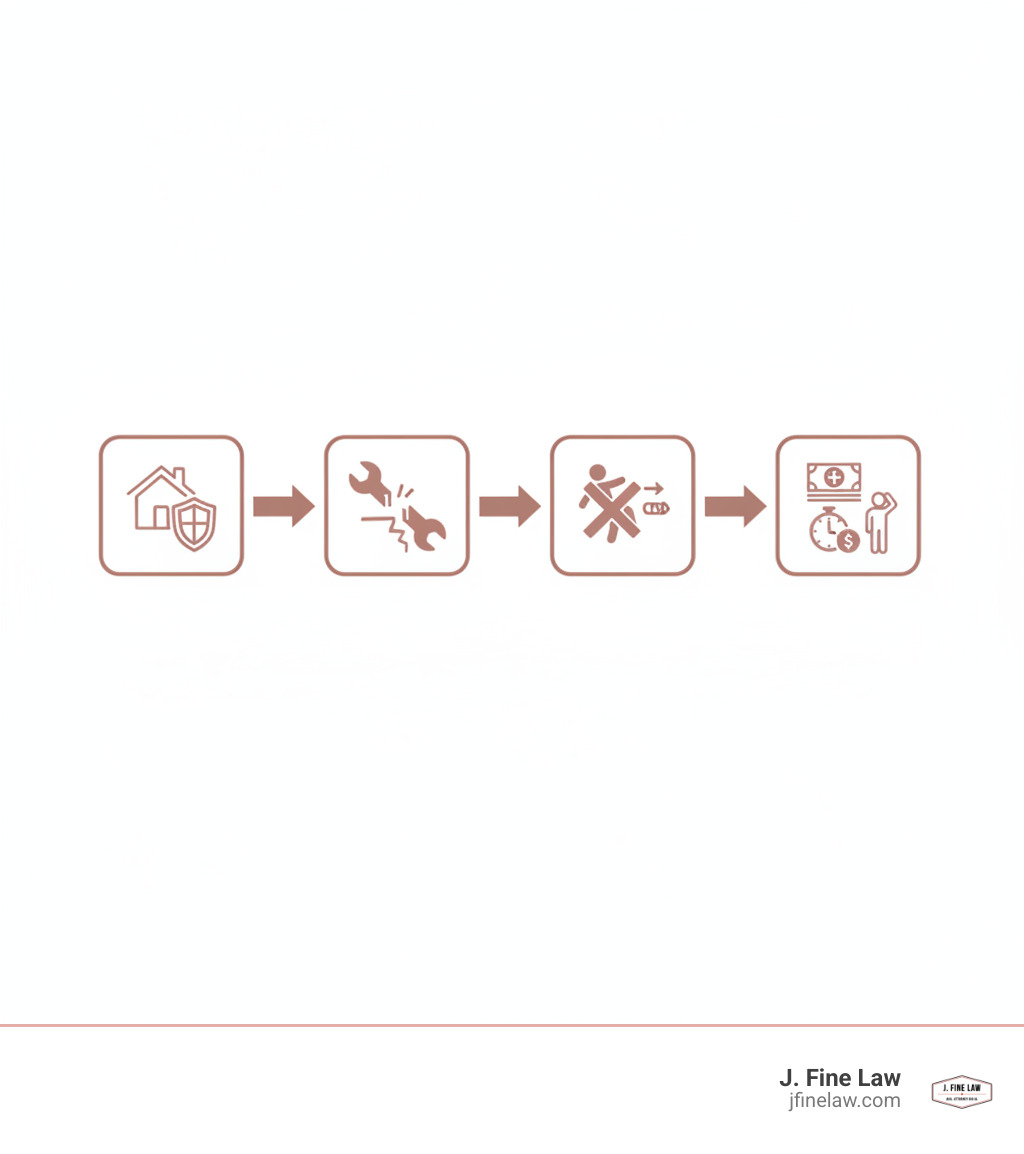
Landlord negligence is the failure to uphold the legal duty to provide a reasonably safe environment for tenants and lawful visitors. In Pennsylvania, this is a legal requirement. To prove negligence, we must establish four elements:
- Duty of Care: The landlord owed you a legal duty to maintain a safe property. This extends to tenants, guests, and service workers.
- Breach of Duty: The landlord knew or should have known about an unsafe condition but failed to take reasonable steps to fix it.
- Causation: The landlord’s failure to act directly caused your injury. For example, you fell and were hurt because of a broken stair the landlord never repaired.
- Damages: You suffered actual harm, such as medical bills, lost income, or pain and suffering.
The legal framework is governed by the Landlord-Tenant Act of 1951 and, in Philadelphia, the Philadelphia Property Maintenance Code. These laws define a landlord’s duty of care. A landlord is liable if they had a duty to keep the property safe, failed to do so, and that failure led to a foreseeable injury.
Common Unsafe Conditions and Landlord Liability
Many rental properties harbor preventable hazards. Landlords can be held liable for injuries resulting from:
- Slip and Falls: Failure to clear snow and ice, clean up spills in common areas, or repair uneven pavement, torn carpeting, and broken handrails.
- Inadequate Security: Negligence like broken locks, gates, or poor lighting that makes criminal activity easier. Landlords may also be liable for failing to warn tenants of known crime in the area.
- Faulty Wiring and Fire Hazards: Defective electrical systems, missing smoke detectors, or non-functioning carbon monoxide alarms.
- Mold and Toxic Substances: Failure to remediate toxic mold, lead paint, asbestos, or carbon monoxide leaks from faulty appliances.
- Structural Defects: Dangers like broken stairs, collapsing ceilings, unstable balconies, or rotting decks that the landlord knew about but did not repair.
Common Areas vs. Individual Units: Landlords have a high duty of care for common areas (hallways, stairs, parking lots) because they control these spaces. For individual units, liability typically arises if the landlord was notified of a hazard and failed to fix it, or if the hazard was caused by the landlord’s own improper installation or repair.
Residential vs. Commercial Properties: While the law applies to both, residential tenants generally have stronger safety protections. Commercial leases are more complex and may shift more responsibility for maintenance onto the tenant, making legal review essential.
The Role of a Landlord Negligence Lawyer in Philadelphia
When you’re injured due to a landlord’s negligence, navigating the legal system alone is a heavy burden. A landlord negligence lawyer Philadelphia acts as your advocate, investigator, and negotiator, fighting to hold the responsible parties accountable while you focus on recovery.

Here’s how we help:
- Investigation: We gather all evidence, including photos, witness statements, and maintenance records. We can subpoena surveillance footage and property inspection reports to prove neglect.
- Identifying All Liable Parties: The landlord may not be the only one at fault. We investigate property management companies, maintenance contractors, and others who may share responsibility.
- Calculating Damages: We carefully document all your losses. This includes current and future medical bills, lost wages, and diminished earning capacity. We also place a value on your pain and suffering.
- Negotiation and Litigation: We handle all communications with insurance companies, countering their lowball offers with strong legal arguments. While we aim to secure a fair settlement, we are always prepared to take your case to court in Philadelphia Municipal Court or Common Pleas Court if necessary.
Landlords have a legal obligation to provide safe housing, and we have the experience to prove when they fail.
What to Do Immediately After Being Injured
What you do in the moments after an injury can significantly impact your case. Follow these critical steps:
- Seek Medical Attention: Your health is the priority. See a doctor immediately, even for seemingly minor injuries. This creates an official medical record linking your injury to the incident.
- Report the Hazard in Writing: Notify your landlord or property manager about the dangerous condition and your injury. Follow up any phone call with an email or certified letter to create a paper trail.
- Document Everything: Use your phone to take photos and videos of the hazard, the surrounding area, and your injuries. Capture the scene before it can be altered or repaired.
- Get Witness Information: If anyone saw the incident, get their name and contact information immediately.
- Do Not Admit Fault: Avoid saying things like “I’m sorry” or “I should have been more careful.” Stick to the facts. These statements can be used against you.
- Don’t Talk to Insurers Alone: The landlord’s insurance adjuster will likely call you. Politely decline to give a recorded statement or sign any documents until you have spoken with a lawyer.
What Damages Can Be Recovered?
Pennsylvania law allows you to seek compensation for all the ways a landlord’s negligence has impacted your life. You can sue for a wide range of damages, which fall into two main categories:
Economic Damages: These are your tangible, financial losses.
- Medical Expenses: All costs for past and future medical care, including hospital stays, surgery, physical therapy, and medication.
- Lost Wages: Income lost from being unable to work.
- Lost Earning Capacity: Compensation if your injury permanently affects your ability to earn a living.
- Out-of-Pocket Costs: Expenses like transportation to doctor’s appointments or home modifications.
Non-Economic Damages: These compensate you for intangible, personal losses.
- Pain and Suffering: For the physical pain and discomfort caused by your injury.
- Emotional Distress: For anxiety, depression, fear, or PTSD resulting from the incident.
- Loss of Enjoyment of Life: For the inability to participate in hobbies and activities you once enjoyed.
There is generally no cap on economic damages in Pennsylvania. Our job is to build a case that documents every loss and fight for the full compensation you deserve.
Taking the Next Step Toward Justice
When your landlord’s negligence causes an injury, you shouldn’t have to face the aftermath alone. You have rights, and taking the first step by seeking legal help is the most important move you can make. A free case evaluation provides an honest, no-obligation assessment of your situation and legal options.

Landlords and their insurance companies have lawyers protecting their interests. You deserve an experienced advocate in your corner, too.
How Our Firm Can Help You
At J. Fine Law, we’ve spent over 25 years helping people hurt by someone else’s negligence. As your landlord negligence lawyer Philadelphia, we’re not just taking on a case; we’re taking on your fight.
Our track record speaks for itself: we have a 98% success rate and have recovered over $50 million in settlements for our clients. These results represent real people who were able to pay their bills and get their lives back on track.
We work on a contingency fee basis, meaning you pay nothing upfront. We only get paid if we win your case. If we don’t recover compensation for you, you owe us nothing. We believe everyone deserves access to top-tier legal representation, regardless of their financial situation.
When you call, you’ll get a rapid attorney response. We handle everything from the investigation to negotiating with insurers and, if needed, taking your case to court. You focus on healing; we’ll focus on holding the negligent landlord accountable.
Don’t wait. In Pennsylvania, you only have two years from the date of your injury to file a lawsuit. The sooner you act, the stronger your case will be.
Get help from our Philadelphia premises liability lawyers today. Let’s talk about what happened and how we can help you get the justice and compensation you deserve.