 Skip to content
Supermarket Accident Attorney Philadelphia 2025: Expert
Your Guide to Supermarket Accident Claims in Philadelphia
If you were injured in a grocery store, a supermarket accident attorney Philadelphia can help you get compensation for the store’s negligence. Here’s what to do immediately:
Quick Answer for Injury Victims:
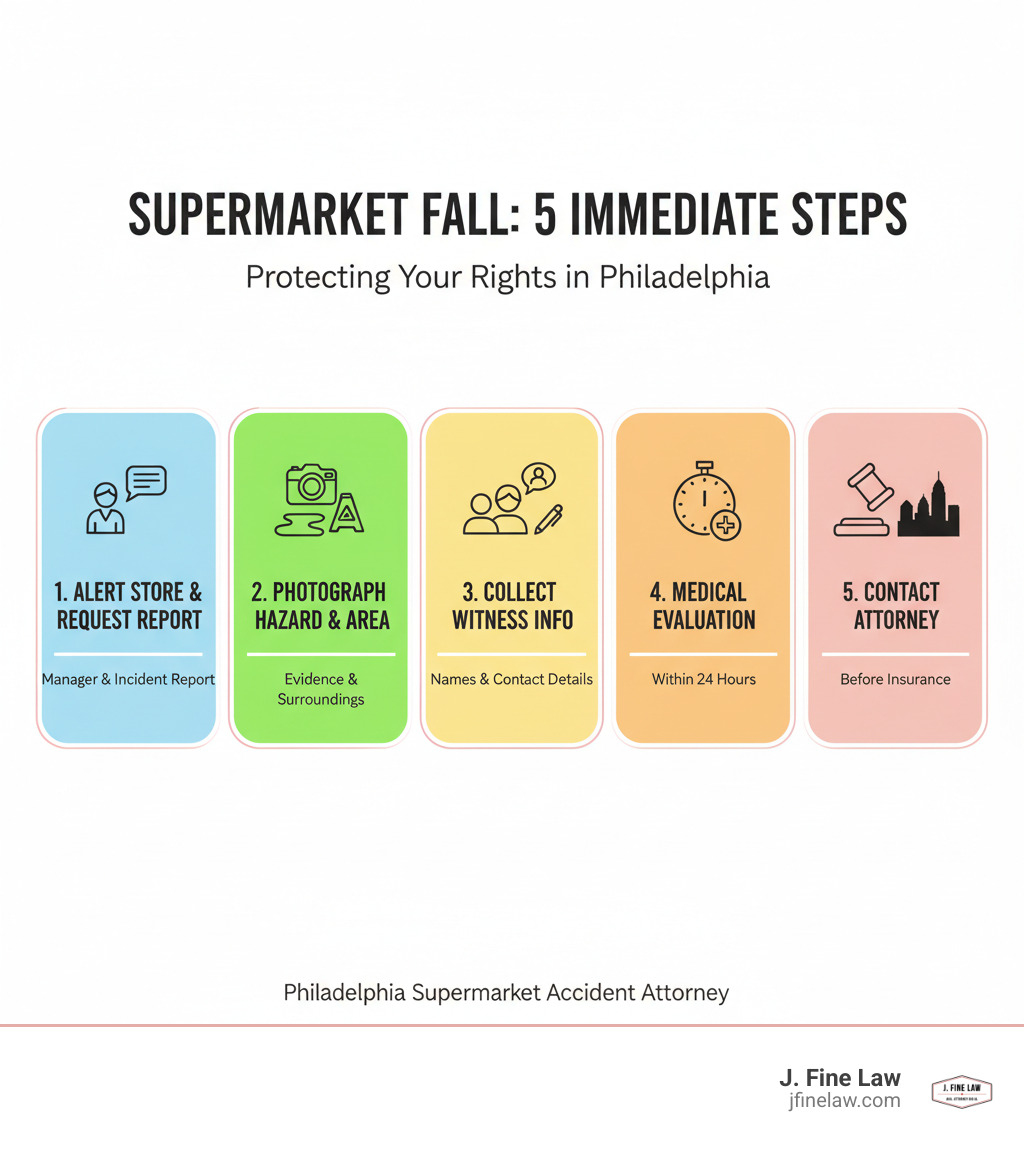
- Report the accident to store management and get an incident report.
- Document the scene with photos of the hazard, your injuries, and witness information.
- Seek medical care and keep all records.
- Don’t give statements to the store’s insurance company.
- Contact an attorney quickly before evidence like security footage is erased.
You may be able to recover compensation for medical bills, lost wages, pain and suffering, and more.
Supermarket accidents are common, but the claims process is complex. Stores and their insurers have legal teams dedicated to denying or minimizing claims. They may argue you were at fault or that they weren’t aware of the hazard. Without legal help, you risk getting far less than you deserve.
I’m Jason Fine, a ten-time Pennsylvania Super Lawyer nominee with over 25 years of experience. As a trusted supermarket accident attorney in Philadelphia, I fight for injury victims against aggressive insurance companies, securing millions for those hurt by preventable hazards.
What This Guide Covers
This guide explains the key steps to take after a supermarket injury in Philadelphia. We’ll cover common accident causes, the legal duties of grocery stores, the evidence needed to prove negligence, and the types of damages you can recover under Pennsylvania law.
Understanding Your Rights: Proving Negligence in a Supermarket Accident Case

When a simple shopping trip ends in injury, understanding your legal rights is crucial. Pennsylvania’s premises liability law protects you when property owners fail to keep their stores safe. Because businesses invite you onto their property to make a profit, they owe you a safe environment. This section explains what that means and how we prove they failed in that duty.
Common Causes of Supermarket Accidents in Philadelphia
While slip and falls are frequent, many types of preventable hazards exist in grocery stores. When management cuts corners on safety, people get hurt. Common causes include:
- Liquid spills: Leaking freezers, produce misters, dropped items, or mopped floors without warning signs create slick, dangerous surfaces.
- Falling merchandise: Improperly stacked items or unstable displays can cause heavy objects to fall on shoppers, leading to serious head and neck injuries.
- Damaged flooring: Cracked tiles, torn mats, and uneven surfaces are common tripping hazards.
- Poor lighting: Dimly lit aisles, stairwells, or parking lots can hide dangers until it’s too late.
- Obstructions: Pallets, boxes, and cleaning equipment left in aisles create obstacles for shoppers.
- Parking lot hazards: Potholes, cracked pavement, and uncleared snow or ice cause many severe injuries. For more on this, see our parking lot slip and fall guide philadelphia.
The five most dangerous hazards in grocery stores are unmarked spills, damaged flooring, falling merchandise, blocked aisles, and hazardous conditions at entrances and in parking lots. All are preventable with proper safety procedures.
The Legal Duty of Care for Philadelphia Grocery Stores
Grocery stores are legally required to keep you safe. Under Pennsylvania law, as a customer, you are an invitee and are owed the highest level of protection. This means the store must use reasonable care to prevent injuries.
This legal duty includes three key responsibilities:
- Duty to Inspect: The store must regularly check its premises for dangerous conditions throughout the day.
- Duty to Warn: They must warn you of hazards they know about but can’t immediately fix, using signs or barriers.
- Duty to Repair: They must promptly fix known dangers.
Furthermore, the principle of vicarious liability holds the store responsible for the negligent actions of its employees. If an employee creates a hazard and you get hurt, the store itself is liable. This is critical, as the company has the insurance and resources to cover your damages. For more details, see our supermarket accident lawyer complete guide.
Proving Negligence: Evidence You Need for Your Claim
To win your case, your supermarket accident attorney Philadelphia must prove the store’s negligence caused your injuries. This requires establishing four elements: the store had a duty to keep you safe, they breached that duty, this breach caused your injury, and you suffered damages as a result.
The strength of your claim depends on evidence. Key pieces of evidence include:
- Photographs and Videos: Immediate photos of the hazard and your injuries are crucial.
- Surveillance Footage: Security camera video can show how long a hazard existed and how the accident happened. This footage is often erased quickly, so act fast.
- Incident Reports: An official report filed with the store manager documents the time and place of the accident.
- Witness Statements: Testimony from other shoppers or employees can verify the dangerous condition.
- Medical Records: These documents prove the extent of your injuries and link them to the accident.
- Store Records: Maintenance logs and cleaning schedules can reveal if the store followed its own safety protocols.
In some cases, we use expert witnesses to testify about industry safety standards and how the store failed to meet them. Building a strong case requires experience with Pennsylvania law and knowing what evidence is most compelling. Learn more at our page on slip and fall lawyer philadelphia.
Taking Action After an Injury: Your Guide to Hiring a Supermarket Accident Attorney Philadelphia

The moments after a supermarket accident are overwhelming and critical. The decisions you make can determine whether you receive fair compensation or if the store’s insurance company successfully denies your claim. Knowing what to do protects your health and your legal rights.
Immediate Steps to Take After a Supermarket Accident
- Seek Medical Attention Immediately: Your health is the priority. Some serious injuries, like concussions or internal damage, aren’t immediately apparent. A doctor’s visit creates a medical record linking your injuries to the accident, which is vital for your claim.
- Report the Accident: Find the manager and file an official incident report. Get a copy. State only the facts (“I slipped on a wet floor in aisle five”) and do not apologize or admit any fault.
- Document Everything: Use your phone to take photos and videos of the hazard, the surrounding area (noting the lack of warning signs), and your injuries.
- Get Witness Information: Collect names and contact details from other shoppers or employees who saw the accident or the dangerous condition.
- Preserve Evidence: Keep the shoes and clothing you were wearing at the time of the accident.
- Do Not Talk to Insurers: The store’s insurance adjuster is not on your side. Their goal is to pay as little as possible. Politely decline to give a recorded statement, sign authorizations, or accept a quick settlement offer. Tell them you will be contacting an attorney.
- Contact an Attorney ASAP: Time is critical. An attorney can send a legal notice to the store, requiring them to preserve crucial evidence like security footage that is often erased within days. Also, be aware of Pennsylvania’s statute of limitations, which generally gives you only two years from the date of the accident to file a lawsuit. Building a strong case takes time, so don’t delay.
For a detailed guide, visit your guide to hiring a lawyer for injuries in the grocery store after a fall.
What Compensation Can You Recover with a Supermarket Accident Attorney in Philadelphia?
As your supermarket accident attorney Philadelphia, my goal is to secure full compensation for all your losses. Damages fall into two main categories:
Economic Damages (calculable financial losses):
- Medical Expenses: All costs for past and future care, including ER visits, surgery, physical therapy, and prescriptions.
- Lost Wages: Income lost while you were unable to work.
- Loss of Earning Capacity: Future income you will lose if your injuries prevent you from returning to your job or limit your ability to work.
- Property Damage: Costs to repair or replace items like broken glasses or a phone.
Non-Economic Damages (for intangible losses):
- Pain and Suffering: Compensation for the physical pain and discomfort from your injuries.
- Emotional Distress: For anxiety, depression, or trauma resulting from the accident.
- Loss of Enjoyment of Life: If your injuries prevent you from participating in hobbies and activities you once enjoyed.
In rare cases of extreme negligence, punitive damages may be awarded to punish the store. At J. Fine Law, we’ve recovered over $50 million in settlements by accurately valuing every aspect of a client’s claim. Learn more from our grocery store injury attorney page.
Why You Need an Experienced Legal Advocate
Don’t assume the store’s insurance will “do the right thing.” Their goal is to protect their profits by minimizing your claim. They use insurance company tactics, like offering a lowball settlement or trying to twist your words to blame you for the accident.
Proving liability is complex. It requires a deep investigation to show the store knew (or should have known) about the hazard and failed to act. An experienced attorney knows how to gather evidence like surveillance footage, maintenance logs, and witness testimony to build a powerful case.
Cost should not be a barrier. We work on a contingency fee basis, meaning you pay nothing unless we win your case. Our fee is a percentage of the compensation we recover for you. Studies show that clients with legal representation typically receive significantly higher settlements, even after attorney fees.
Our firm has a 98% success rate and provides a rapid attorney response to preserve time-sensitive evidence. While you focus on healing, we handle the legal battle—dealing with insurers, gathering evidence, and negotiating on your behalf. If a fair settlement isn’t offered, we are prepared to go to trial.
Our clients, like Kathleen M. and Gloria F., can attest to our dedicated advocacy. If you’ve been injured, don’t face the insurance companies alone. Contact J. Fine Law for a free consultation to protect your rights. Learn more about our services at J. Fine Law.