 Skip to content
Yes, limited tort can apply after an Uber crash in Philadelphia, but it depends on your own personal or household auto insurance policy—not the Uber driver’s. If you or a resident family member chose limited tort, that election generally follows you as a passenger. However, if you do not own a vehicle and no one in your household has auto insurance, you are automatically treated as having full tort rights. Multiple statutory exceptions and Uber’s commercial coverage may also allow full recovery for pain and suffering.
How Do Limited Tort and Full Tort Insurance Differ Under Pennsylvania Law?
Pennsylvania operates under a unique “choice no-fault” system governed by the Pennsylvania Motor Vehicle Financial Responsibility Law (MVFRL). When you purchase auto insurance in Pennsylvania, you must select between two distinct coverage options: Full Tort and Limited Tort.
| Feature | Full Tort Option | Limited Tort Option |
|---|---|---|
| Right to Sue for Economic Damages (Medical bills, lost wages) | Full rights | Full rights |
| Right to Sue for Non-Economic Damages (Pain, suffering, loss of life enjoyment) | Unrestricted rights for any injury | Restricted unless a statutory exception or “serious injury” threshold is met |
| Average Policy Cost | Higher annual premium | Approximately 15% to 40% lower premium |
| Default Passenger Status (If passenger has no auto policy and no insured family member) | Automatically applies | Does not apply |
According to data from the Pennsylvania Department of Transportation (PennDOT), more than 70% of Pennsylvania motorists choose limited tort to save money on their monthly premiums. While both options cover direct out-of-pocket economic losses—such as emergency room care at Jefferson Health or lost income from missed work—limited tort forces you to forfeit your fundamental right to seek financial recovery for non-economic harms.
Non-economic damages compensate you for physical agony, emotional distress, daily physical limitations, and diminished quality of life. Understanding when you can seek pain and suffering compensation under limited tort is vital when navigating a collision in a rideshare vehicle.
Does Your Personal Limited Tort Policy Follow You Into an Uber in Philadelphia?
Under Pennsylvania law, your personal auto insurance election follows you wherever you go within the Commonwealth. If you own an insured vehicle and selected limited tort, that selection attaches to you as a named insured, even when you are riding as a passenger in an Uber heading down Market Street or Broad Street.
The same rule extends to members of your household: if you live with an immediate relative (such as a spouse or parent) who chose limited tort on their personal auto policy, their election binds you by default under 75 Pa.C.S. § 1705.
However, there is a major exception for individuals who do not own a vehicle. If you do not own a car and do not reside with a relative who owns an insured vehicle, Pennsylvania law automatically classifies you under full tort status.
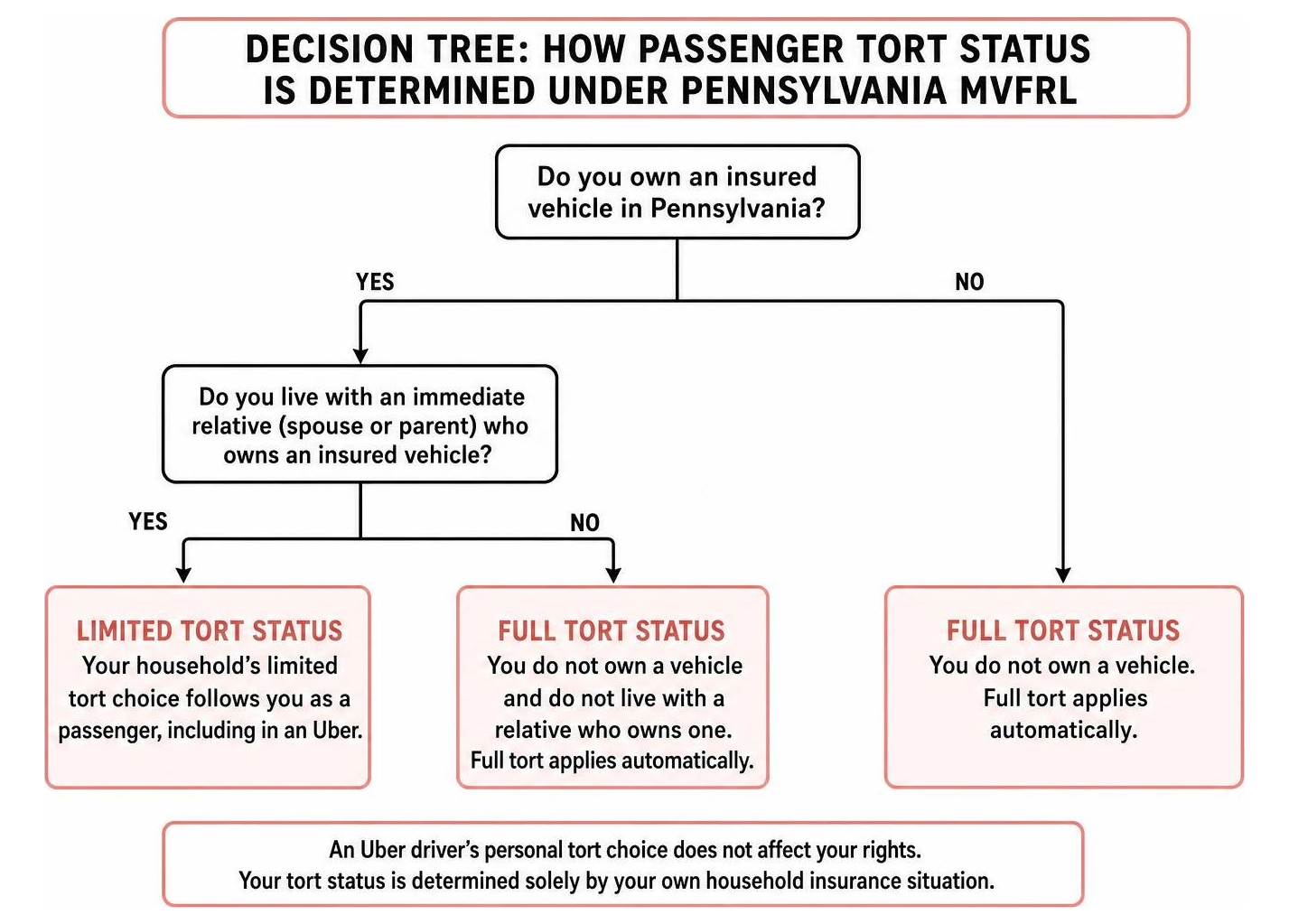
Many rideshare passengers worry that an Uber driver’s personal insurance choice might limit their case. Under Pennsylvania law, an Uber driver’s personal tort selection has zero bearing on your rights as an injured passenger. Your individual tort status is determined solely by your own household insurance situation, not by the person operating the vehicle.
Handling multi-party claims where insurance carriers try to shift responsibility requires a firm grasp of Pennsylvania rideshare accidents and state coverage laws.
What Exceptions Allow an Uber Passenger to Bypass Limited Tort and Sue for Pain and Suffering?
Even if you selected limited tort on your household policy, Pennsylvania statutory law under 75 Pa.C.S. § 1705 provides several critical “gateway exceptions” that immediately grant you full tort rights:
- The Serious Injury Threshold: If the crash causes death, permanent serious disfigurement, or a serious impairment of a body function, your limited tort restriction is automatically lifted.
- Drunk or Impaired Driver: If the at-fault driver is convicted of driving under the influence (DUI) of alcohol or controlled substances, or accepts Accelerated Rehabilitative Disposition (ARD), you recover full tort rights.
- Out-of-State Vehicle Registration: If the at-fault vehicle is registered in another state (such as New Jersey or Delaware), limited tort does not apply to that driver’s liability.
- Uninsured Motorist: If the liable driver failed to maintain valid auto insurance at the time of the crash, the limited tort restriction disappears.
- Commercial and Non-Passenger Vehicles: If you were injured by a commercial truck or while riding in a non-private passenger motor vehicle (such as certain registered commercial carriers), distinct statutory exceptions may apply.
- Intentional Injury: If the at-fault motorist intentionally caused harm or attempted to cause injury with their vehicle.
When any of these exceptions apply, an injured passenger can pursue full financial recovery for pain, suffering, emotional trauma, and loss of life’s pleasures. For an in-depth breakdown of these scenarios, review our rideshare accident lawyer guide.
What Constitutes a “Serious Impairment of Body Function” in Pennsylvania?
The most commonly litigated limited tort exception is the “serious impairment of body function” standard. The Pennsylvania Supreme Court clarified this standard in the landmark decision Washington v. Baxter.
To determine whether an injury qualifies as a serious impairment, courts and juries assess two primary factors:
- What body function was impaired by the injury?
- How substantial and long-lasting was the impairment on your ability to engage in daily life activities, work, and personal care?
Proving this threshold requires objective, clear medical evidence rather than subjective complaints of pain. Examples of injuries that routinely satisfy the threshold in Philadelphia courts include:
- Traumatic brain injuries (TBIs), post-concussion syndromes, and cognitive deficits
- Spinal disc herniations or fractures requiring surgical intervention, epidural steroid injections, or intensive physical therapy
- Complex bone fractures requiring internal hardware or casting
- Torn ligaments, tendons, or rotator cuffs requiring orthopedic repair
- Severe scarring or permanent disfigurement
How Does Uber’s Commercial Insurance Policy Impact Your Philadelphia Injury Claim?
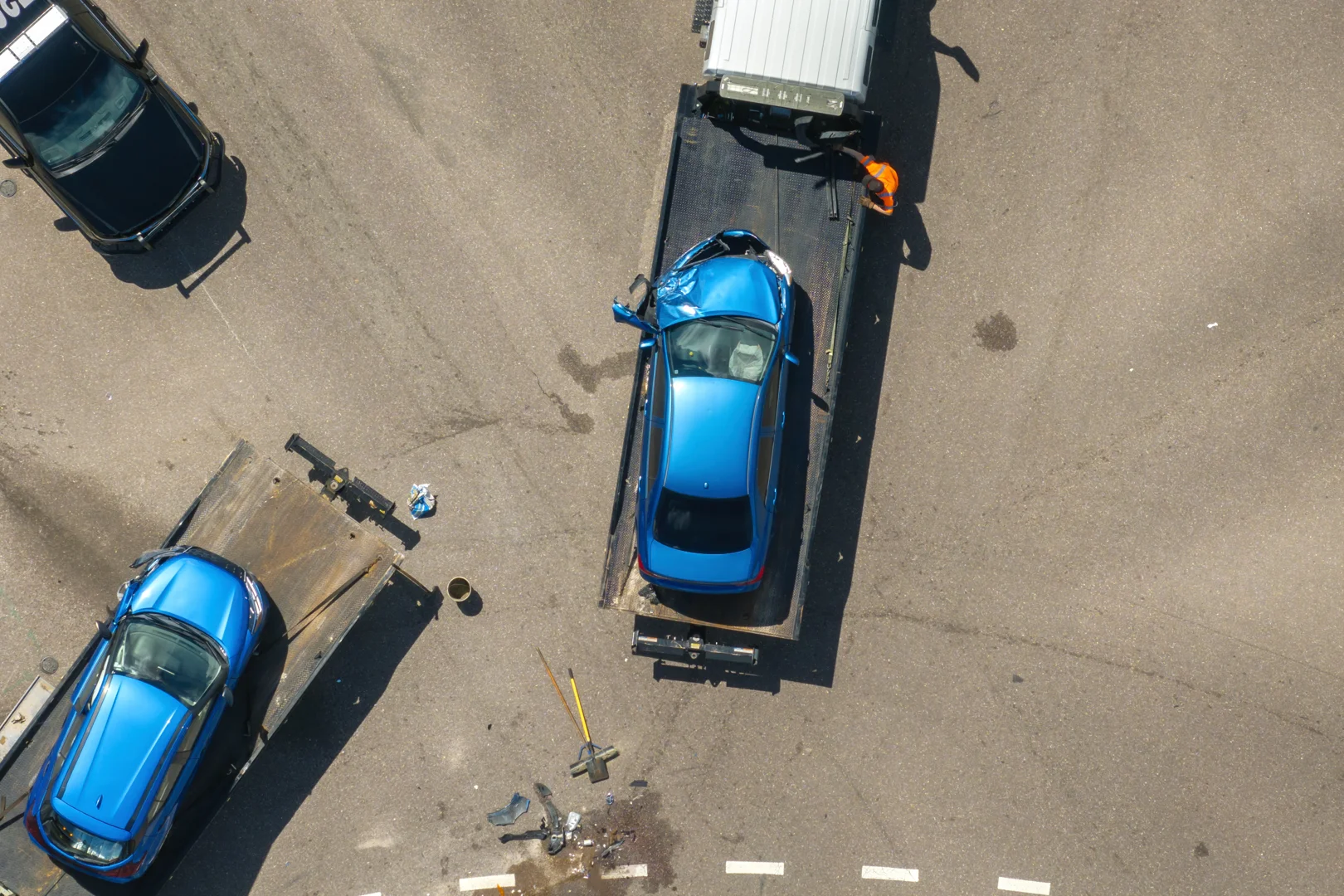
Pennsylvania enacted comprehensive regulations for Transportation Network Companies (TNCs) like Uber and Lyft. Under state law, Uber provides tiered commercial auto insurance coverage depending on the driver’s activity at the exact moment of the collision:
| Uber Driver Status | Commercial Liability Coverage Limit | Collision & Comprehensive |
|---|---|---|
| Period 1: App On, Waiting for Request | $50,000 per person / $100,000 per accident bodily injury, $25,000 property damage | Driver’s personal policy applies; contingent Uber coverage |
| Period 2: Ride Accepted, En Route to Pickup | Up to $1.5 million combined single-limit liability | Up to actual cash value of vehicle (subject to deductible) |
| Period 3: Passenger in Vehicle Until Drop-off | Up to $1.5 million combined single-limit liability plus Underinsured/Uninsured Motorist coverage | Up to actual cash value of vehicle (subject to deductible) |
If you are riding as a passenger inside an Uber during a crash, Period 3 coverage applies. This provides up to $1.5 million in third-party liability and uninsured/underinsured motorist (UM/UIM) coverage.
However, commercial insurers frequently try to use limited tort as an initial defense. Their adjusters often assert that because you carry limited tort on your personal vehicle, they do not have to pay for your pain and suffering.
Our team at J. Fine Law consistently counters these tactics by documenting injury severity, tracking every medical treatment, and establishing applicable statutory exceptions. Working with an established car accident law firm in Philadelphia ensures that corporate claims adjusters are held strictly accountable to the policy limits.
How Do Philadelphia Courts Evaluate Serious Injuries and Limited Tort in Rideshare Cases?
With over 1,200 Uber-related collisions reported in Philadelphia County in recent years, the Philadelphia County Court of Common Pleas has handled a substantial volume of rideshare injury litigation.
Judges in Philadelphia generally hold that whether an injury constitutes a “serious impairment of a body function” is a factual question that belongs before a jury, rather than being dismissed on summary judgment, provided there is credible medical evidence of impairment. Philadelphia juries understand how physical injuries disrupt life in a dense urban environment—from walking city blocks and navigating public transit to managing workplace duties in local healthcare, education, and service industries.
Insurance defense attorneys understand this dynamic. When facing an assertive car accident attorney in Philadelphia who is prepared to bring a compelling case before a Philadelphia jury, insurance companies are far more inclined to offer full settlements that reflect true pain and suffering damages.
What Steps Should You Take After an Uber Crash to Protect Your Right to Full Compensation?
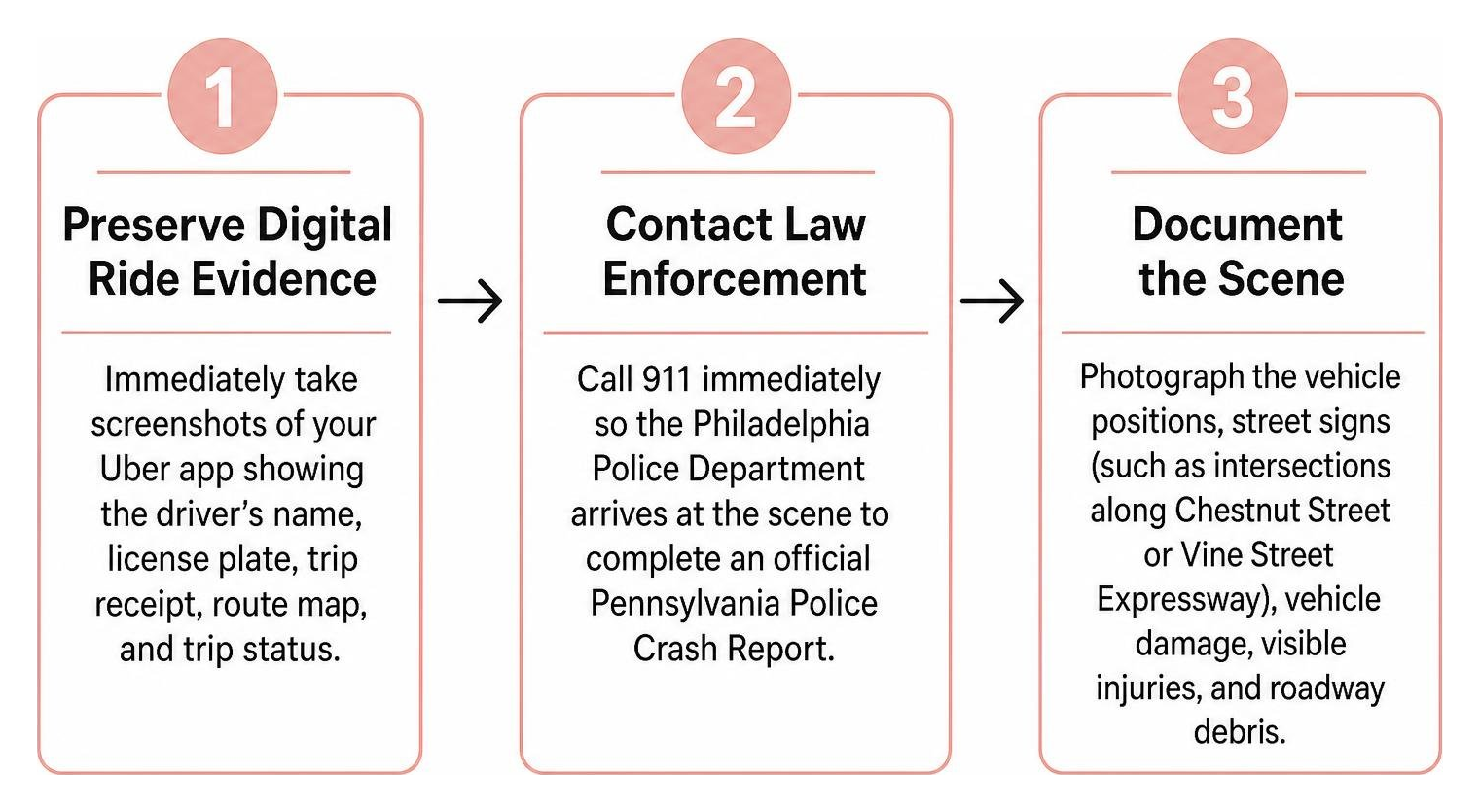
Taking immediate, deliberate steps after an Uber collision protects both your health and your legal rights:
- Preserve Digital Ride Evidence: Immediately take screenshots of your Uber app showing the driver’s name, license plate, trip receipt, route map, and trip status.
- Contact Law Enforcement: Call 911 immediately so the Philadelphia Police Department arrives at the scene to complete an official Pennsylvania Police Crash Report.
- Document the Scene: Photograph the vehicle positions, street signs (such as intersections along Chestnut Street or Vine Street Expressway), vehicle damage, visible injuries, and roadway debris.
- Seek Immediate Medical Evaluation: Go directly to a nearby emergency room or trauma center—such as Penn Presbyterian Medical Center, Temple University Hospital, or Thomas Jefferson University Hospital. Prompt medical documentation links your injuries directly to the crash.
- Decline Recorded Statements to Insurance Adjusters: Insurance adjusters from Uber’s commercial insurer or third-party carriers will contact you quickly to ask questions designed to lock you into limited tort defenses. Do not provide recorded statements or sign medical releases without legal representation.
- Schedule a Case Review: Request a free consultation through our contact page so we can evaluate your insurance policies, review the crash details, and determine every exception available to you.
Frequently Asked Questions About Uber Accidents and Limited Tort in Philadelphia
Does the Uber driver’s limited tort election affect my claim as an injured passenger?
No. An Uber driver’s personal auto insurance election has no impact on an injured passenger. Under Pennsylvania law, your tort status depends entirely on your own auto insurance policy or that of a resident family member. If you do not own a vehicle or live with an insured relative, you are automatically treated as having full tort coverage.
What happens if I do not own a vehicle and no one in my household has auto insurance?
If you are an uninsured non-driver who does not live with an insured family member, you fall under Pennsylvania’s default full tort status. You retain complete legal rights to seek recovery for both economic losses and non-economic pain and suffering from the at-fault parties without needing to satisfy an injury threshold.
How long do I have to file an Uber accident injury lawsuit in Philadelphia?
Under Pennsylvania’s statute of limitations (42 Pa.C.S. § 5524), you generally have two years from the date of the collision to file a personal injury lawsuit. Failing to file within this strict window permanently bars your claim. Reaching out to legal counsel right away ensures critical digital records, dashcam footage, and medical records are preserved.
Protecting Your Rights and Maximizing Your Recovery in Philadelphia
A limited tort election should never prevent you from seeking fair compensation after a serious rideshare crash. Between Pennsylvania’s statutory exceptions, the standard for serious impairment of bodily function, and Uber’s $1.5 million commercial liability insurance policies, multiple avenues exist to secure the full financial recovery you deserve.
At J. Fine Law, our team brings rapid response times, a 98% success rate, and over $50 million recovered in settlements and verdicts for injured victims across Philadelphia. We investigate every angle of your crash, counter insurance delay tactics, and fight for every dollar needed to cover your medical care, lost earnings, and personal suffering.
If you or a loved one suffered injuries in a rideshare crash anywhere in Philadelphia, reach out to our team today to explore your legal options and protect your future.