 Skip to content

When a Fatal Property Accident May Lead to a Claim in Cherry Hill
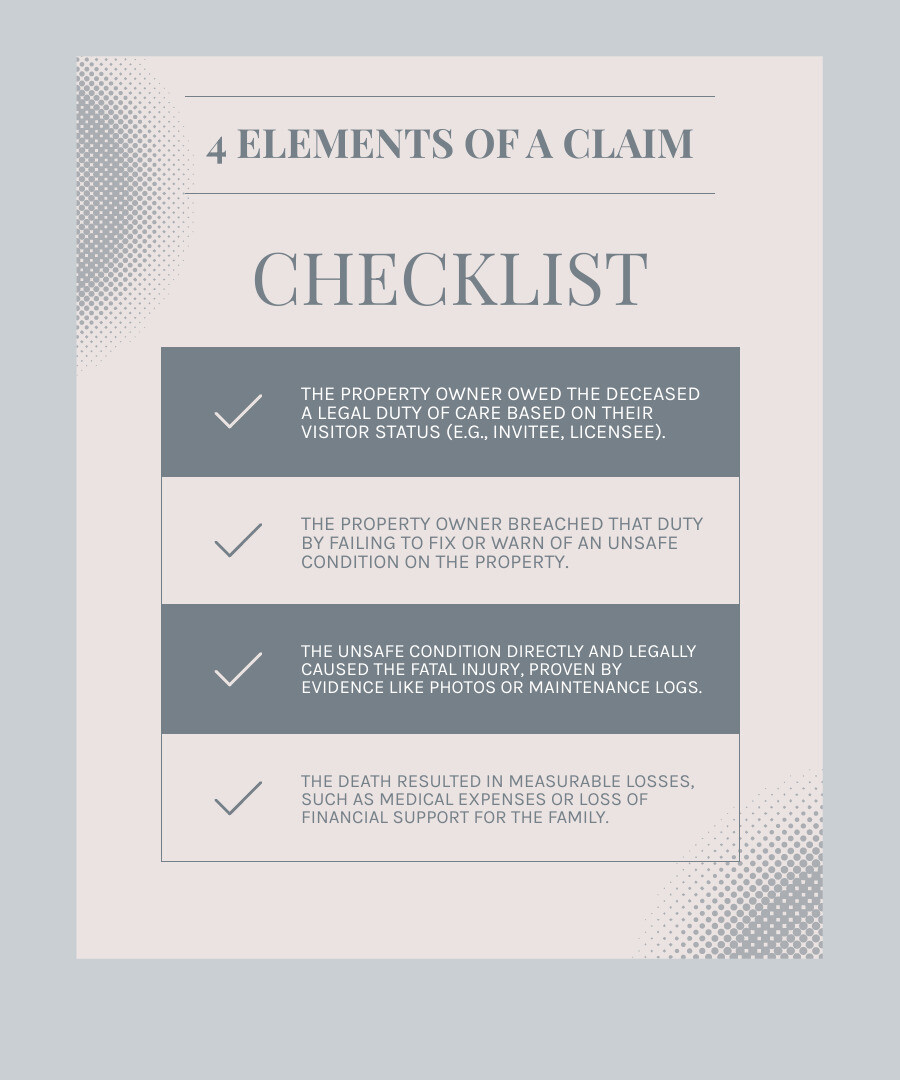
A wrongful death premises liability claim may be possible when an unsafe condition on someone else’s property causes a death in Cherry Hill. Under New Jersey law, the family must show that the property owner or another responsible party owed the person a duty of care, failed to meet it, and that failure caused the fatal injury. A death on the property alone is not enough.
The key questions are what caused the injury, who controlled that part of the property, and what that person knew or should have known about the danger. Photos, video, witness accounts, and maintenance records can help answer them.
I’m Jason Fine, founding attorney of J. Fine Law, and I’ve spent more than 25 years representing people hurt in falls and other negligence cases. For help understanding a wrongful death premises liability claim, contact Jason Fine at J. Fine Law.
What Is Wrongful Death Premises Liability Under New Jersey Law?
Wrongful death premises liability under New Jersey law occurs when a property owner’s negligence causes a fatal injury on their land. Under N.J.S.A. 2A:31-1, surviving family members can pursue compensation when a death results from a wrongful act or neglect that would have entitled the injured person to maintain a civil action.
According to the New Jersey Department of Health, falls remain a leading cause of unintentional injury death among older adults in the state. Property negligence covers hazards like broken stairs, structural defects, toxic exposures, and inadequate maintenance. A fatal fall along commercial corridors like Route 70 or Route 38 often involves serious safety violations.
When property managers ignore safety hazards in Camden County, surviving families have clear legal rights. A dedicated wrongful death lawyer evaluates whether the property owner violated established safety codes. Establishing liability requires proving that the responsible party created the hazard or failed to correct a known danger.
How Does Visitor Status Affect a Property Owner’s Duty of Care in Cherry Hill?
Visitor status determines the legal standard of care a property owner owes to an individual on their premises. New Jersey law classifies visitors as invitees, licensees, or trespassers, with each category receiving different protections. Owners owe the highest duty to business customers, while trespassers receive only protection against intentional harm.
When customers visit retail destinations along Haddonfield Road, property managers must maintain safe walking surfaces and clear walkways. Landlords must inspect common areas regularly to discover hidden hazards that could cause fatal injuries. Property owners who fail to conduct regular safety checks face legal exposure under standard premises liability law.
| Visitor Category | Relationship to Property | Legal Duty Owed |
|---|---|---|
| Invitee | Business customer or public visitor | Highest duty: inspect, repair hazards, and warn of hidden dangers |
| Licensee | Social guest with permission | Moderate duty: warn of known, concealed dangers not readily noticeable |
| Trespasser | Uninvited individual without legal right | Minimal duty: refrain from willful, wanton, or intentional harm |
Invitee vs Licensee Duties in Wrongful Death Premises Liability Cases
Commercial patrons at busy shopping plazas hold invitee status and receive comprehensive safety protections. Business operators must actively search for hazards and repair structural problems promptly. If an unaddressed risk leads to a fatal event, the business faces strict civil liability.
Social guests entering private homes or residential apartment complexes qualify as licensees under the law. Landlords and homeowners do not need to inspect every corner for licensees, but they must warn guests about known hidden dangers. Failing to warn a social visitor about a broken railing or collapsing deck can lead to actionable negligence claims.
Proving Evidentiary Burdens for Wrongful Death Premises Liability Claims
Surviving families cannot rely on speculation to prove that a property defect caused a loved one’s fatal fall. Courts dismiss cases where plaintiffs fail to identify the exact hazard that caused the incident. Direct evidence, such as surveillance video, maintenance logs, and eyewitness statements, proves crucial for building a valid claim.
Obtaining dependable premises liability legal advice ensures evidence is preserved immediately before property managers alter the scene. Maintenance records often show whether management had prior notice of a dangerous leak or structural weakness. Gathering physical proof quickly prevents defendants from claiming the cause of death was purely accidental or speculative.
When Is a Landlord Liable for Third-Party Criminal Acts and Fatal Hazards?
Landlords face liability for third-party criminal acts when violent crimes are foreseeable and security measures are inadequate. If property managers fail to provide sufficient security lighting, functioning gates, or surveillance in high-risk areas, they breach their duty of care. Owners must implement reasonable safeguards to protect visitors from violent offenses.
Parking structures and common areas around major retail centers like the Cherry Hill Mall require adequate security measures. Property management companies must monitor violent crime reports and install physical deterrents. When owners fail to address known criminal patterns, surviving families can seek justice for fatal security failures.
How Do Courts Determine Property Control in Fatal Accident Lawsuits?
Courts determine property control by assessing who exercised actual daily authority over the specific area where the injury occurred. While commercial lease language establishes contractual duties, judges examine whether the landlord or tenant maintained real physical control over the space. Retaining control of common areas creates an active legal duty.
Landlords who lease commercial buildings remain liable for shared stairwells, entryways, and exterior walkways. Tenants generally manage their internal storefronts unless the lease specifically requires landlord maintenance. When disputes arise over control, our team analyzes lease contracts and maintenance practices to pinpoint the responsible parties.
What Defenses Do Commercial Landowners Raise in Fatal Injury Claims?
Commercial landowners frequently assert comparative negligence, open and obvious hazard doctrines, or lack of notice to defeat wrongful death actions. Under N.J.S.A. 2A:15-5.1, New Jersey follows modified comparative negligence, barring recovery if the decedent was more than 50% responsible. Owners use these arguments to deflect responsibility.
Understanding the steps to filing a wrongful death lawsuit helps families prepare for common defense strategies:
- Comparative Negligence: Claiming the decedent failed to watch where they were walking.
- Open and Obvious Hazard: Arguing the danger was plain to see and should have been avoided.
- Lack of Notice: Asserting the property owner had no actual or constructive knowledge of the hazard.
- Lack of Control: Stating that a third-party contractor or tenant controlled the accident area.
Protecting Your Family’s Rights After a Fatal Cherry Hill Property Accident
Fatal property accidents, especially those involving vulnerable seniors in neglected facilities or commercial properties, leave families facing devastating hardships. When hazardous property conditions or severe care neglect cause a senior’s fatal injury, holding negligent operators accountable requires decisive legal representation.
At J. Fine Law, our attorneys maintain a 98% success rate and have recovered over $50 million for injured clients. If hazardous premises or facility mistreatment led to a fatal fall, a dedicated elder abuse attorney can help your family uncover critical safety violations.
Contact Jason Fine at J. Fine Law today to speak with an elder abuse attorney regarding your wrongful death premises liability claim.
Frequently Asked Questions About Fatal Property Accidents in Cherry Hill
Who can file a fatal property accident lawsuit in Camden County?
The personal representative or administrator of the decedent’s estate must file the wrongful death lawsuit in Camden County. Surviving spouses, dependent children, and parents receive the distributed proceeds under New Jersey intestacy succession rules. If no will exists, the Camden County Surrogate’s Court appoints a formal estate representative.
What damages are recoverable in a fatal property accident claim?
Recoverable damages include financial support the decedent would have provided, loss of companionship, and necessary funeral expenses. Families can also recover medical costs incurred at facilities like Jefferson Cherry Hill Hospital prior to death. New Jersey law focuses on direct pecuniary losses suffered by surviving dependents.
What is the statute of limitations for fatal property injury claims in New Jersey?
Under N.J.S.A. 2A:14-2, surviving families have two years from the date of the person’s death to file a lawsuit. Failing to meet this strict two-year deadline permanently bars the estate from recovering compensation. Certain claims involving public property also require formal tort claims notices within 90 days.
{ “@context”: “https://schema.org”, “@type”: “FAQPage”, “mainEntity”: [ { “@type”: “Question”, “name”: “Who can file a fatal property accident lawsuit in Camden County?”, “acceptedAnswer”: { “@type”: “Answer”, “text”: “The personal representative or administrator of the decedent’s estate must file the wrongful death lawsuit in Camden County. Surviving spouses, dependent children, and parents receive the distributed proceeds under New Jersey intestacy succession rules. If no will exists, the Camden County Surrogate’s Court appoints a formal estate representative.” } }, { “@type”: “Question”, “name”: “What damages are recoverable in a fatal property accident claim?”, “acceptedAnswer”: { “@type”: “Answer”, “text”: “Recoverable damages include financial support the decedent would have provided, loss of companionship, and necessary funeral expenses. Families can also recover medical costs incurred at facilities like Jefferson Cherry Hill Hospital prior to death. New Jersey law focuses on direct pecuniary losses suffered by surviving dependents.” } }, { “@type”: “Question”, “name”: “What is the statute of limitations for fatal property injury claims in New Jersey?”, “acceptedAnswer”: { “@type”: “Answer”, “text”: “Under N.J.S.A. 2A:14-2, surviving families have two years from the date of the person’s death to file a lawsuit. Failing to meet this strict two-year deadline permanently bars the estate from recovering compensation. Certain claims involving public property also require formal tort claims notices within 90 days.” } } ] }