 Skip to content
What to Do After a Fatal Car Accident in Cherry Hill
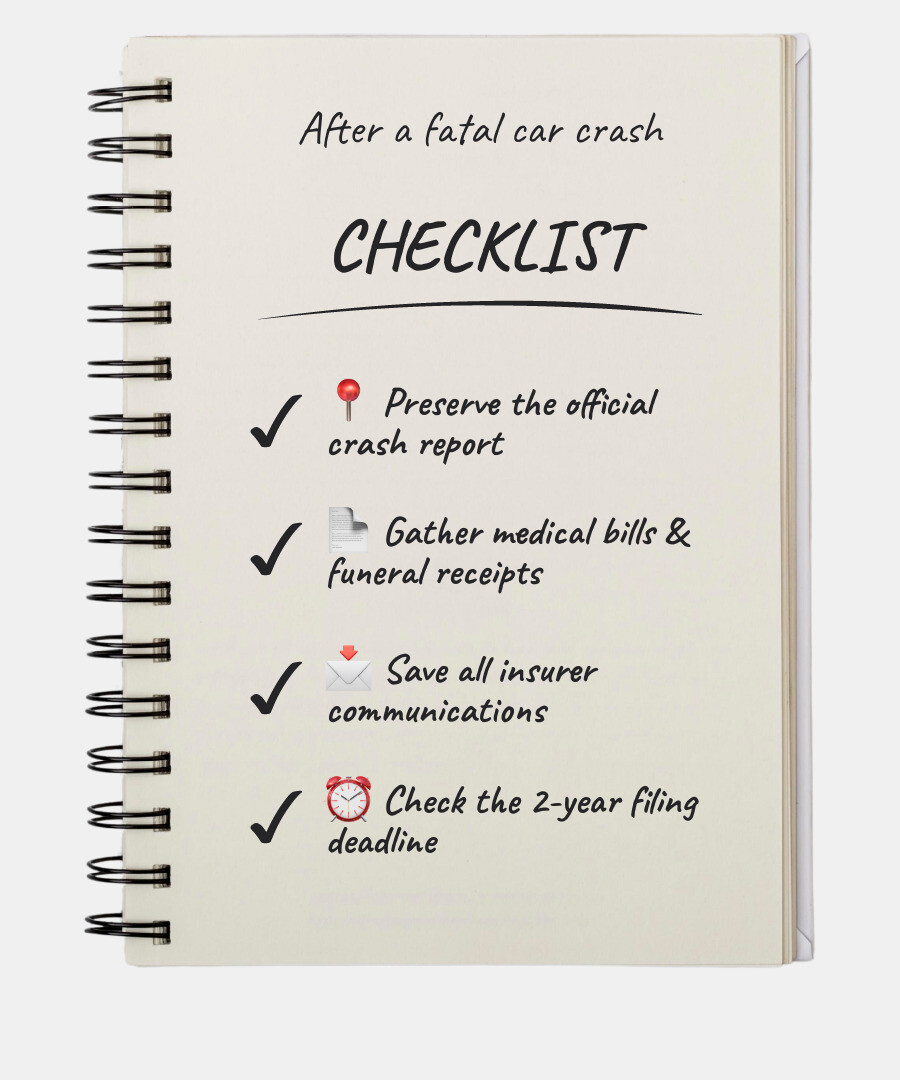
If someone else’s actions caused a fatal car accident, the family may be able to seek compensation through a wrongful death claim. In New Jersey, the estate’s representative files the lawsuit. Start by saving the crash report, medical bills, funeral receipts, and any messages from insurers. Speak with a lawyer promptly: the usual filing deadline is two years from the death, and a claim involving a public entity may require notice much sooner.
A claim can help address lost financial support and other losses, but no payment can replace a loved one. The steps below will help you understand who can file, how wrongful death attorney fees work, the timeline for filing a wrongful death lawsuit in NJ, and what to expect when working with a wrongful death lawyer in New Jersey.
I’m Jason Fine, founding attorney of J. Fine Law, and I’ve spent more than 25 years representing people affected by motor vehicle crashes. I bring that trial experience to families weighing a wrongful death auto accident claim.
Understanding Your Legal Rights After a Fatal Collision
When a fatal collision occurs on busy thoroughfares such as Route 70, Route 38, or near the Cherry Hill Mall along Haddonfield Road, surviving relatives face sudden emotional devastation alongside unexpected financial hardship. Civil law provides a system of legal recourse to hold negligent parties responsible when reckless driving robs a family of their loved one.
To recover damages in a civil action, four legal pillars of negligence must be proven:
- Duty of Care: The at-fault motorist owed a legal duty to operate their vehicle safely.
- Breach of Duty: The driver violated that obligation through speeding, distraction, intoxication, or failure to obey traffic devices.
- Causation: That specific breach directly caused the fatal collision.
- Damages: Surviving dependents or the decedent’s estate suffered measurable financial and emotional losses.
At J. Fine Law, our rapid attorney response and 98% success rate allow grieving households to focus on healing while we establish liability. Having secured over $50 million in settlements for clients, we work to uncover the facts behind every fatal crash.
What Constitutes a Wrongful Death Auto Accident?
A wrongful death auto accident occurs when a person dies due to the reckless, careless, or unlawful conduct of another motorist or corporate entity. In Cherry Hill, fatal crashes frequently involve high-risk behaviors:
- Driving under the influence of drugs or alcohol along Kings Highway.
- Distracted driving, such as texting or checking navigation on Interstate 295.
- Aggressive lane changes and excessive speeding on heavily congested corridors like Route 73.
- Commercial vehicles failing to yield at busy intersections near local business districts.
When reckless driving turns fatal, criminal charges filed by the state handle punishment, but they do not pay funeral costs or replace lost family income. A civil wrongful death claim allows surviving dependents to pursue financial stability directly.
Wrongful Death Claim vs. Survival Action Under New Jersey Law
New Jersey law recognizes two distinct legal claims following a fatal traffic crash: a wrongful death action (N.J.S.A. 2A:31-1) and a survival action (N.J.S.A. 2A:15-3). Understanding how each avenue functions helps families secure complete recovery.
| Feature | Wrongful Death Claim | Survival Action |
|---|---|---|
| Primary Purpose | Compensate surviving family for their losses | Compensate estate for decedent’s pre-death losses |
| Who Files | Executor or Personal Representative | Executor or Administrator of the Estate |
| Key Damages | Lost financial support, companionship, funeral costs | Conscious pain and suffering, pre-death medical bills |
| Distribution | Directly to eligible surviving dependents | Distributed according to the will or intestacy laws |
While a wrongful death claim compensates the family members directly for the future earnings and guidance they lost, a survival action addresses what the deceased experienced from the moment of impact until death. Families seeking clear direction can review wrongful death legal advice to understand which damages apply to their circumstances.
How to Pursue a Wrongful Death Auto Accident Claim Step-by-Step
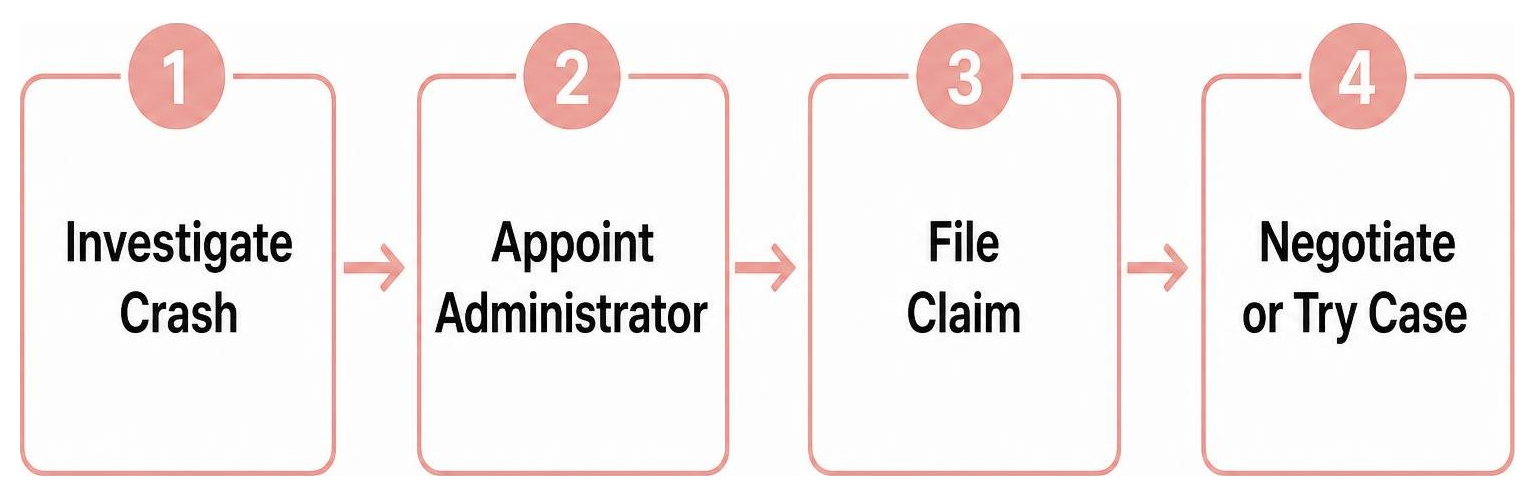
Navigating a civil claim requires immediate preservation of evidence, direct coordination with insurance adjusters, and estate representation. Our guide on how to hire a wrongful death lawyer outlines the procedural path from initial consultation through final resolution.
Identifying Liable Parties from Negligent Drivers to Municipalities
Accountability often extends beyond the immediate motorist who caused the collision. Multiple entities can share legal responsibility:
- Commercial Employers: Companies can be held vicariously liable when their drivers cause fatal crashes during work duties. In commercial shipping cases, pursuing a truck accident wrongful death claim addresses systemic safety and hours-of-service violations.
- Rideshare Platforms: Rideshare companies maintain corporate policies and driver oversight duties. Landmark verdicts demonstrate corporate platform liability in rideshare crashes, such as an order requiring Uber to pay $40 million when a driver forced a passenger onto a freeway.
- Vehicle and Parts Manufacturers: Mechanical defects, airbag failures, or autonomous driving errors can trigger product liability claims, as seen in autonomous vehicle defect lawsuits where families sought accountability after self-driving systems failed on New Jersey highways.
- Government Entities: Road design flaws, unmaintained guardrails, or malfunctioning signals managed by municipal or county agencies can contribute to severe accidents.
Key Stages from Evidence Gathering to Settlement or Trial
A successful wrongful death claim requires methodical preparation:
- Securing Crash Evidence: Obtaining police accident reports from local law enforcement, retrieving traffic camera footage near intersections, and preserving electronic data recorders (“black boxes”).
- Appointing the Estate Representative: Filing necessary paperwork with the Camden County Surrogate’s Court to designate the administrator or executor.
- Medical and Economic Evaluation: Gathering emergency records from trauma centers like Jefferson Cherry Hill Hospital or Cooper University Hospital, while calculating lost future lifetime earnings.
- Filing Insurance Claims and Demands: Submitting formal settlement packages to all involved auto insurance carriers.
- Litigation and Trial Preparation: Less than one in ten car accident cases end up in a trial. However, if insurers refuse fair terms, filing a lawsuit in state court initiates formal discovery. From filing, cases typically take between 12 and 18 months to reach a courtroom.
Calculating Damages and Factors Determining Financial Recovery
Settlement values reflect concrete economic losses alongside the personal impact of a loved one’s absence.
Economic and Non-Economic Damages Available to Families
New Jersey allows families to recover specific economic and pecuniary damages caused by the death:
- Medical expenses incurred between the crash and the passing.
- Funeral and burial expenses.
- Lost wages, employment benefits, pension contributions, and future earning potential.
- The financial value of lost household services, such as child care, home maintenance, and property upkeep.
- Loss of guidance, advice, training, and companionship provided to surviving children and spouses.
Key Variables Affecting Your Wrongful Death Auto Accident Settlement
Several key factors determine the final settlement amount:
- Age and Health of the Deceased: Life expectancy and work-life expectancy directly influence future earnings calculations.
- Number of Dependents: Minor children and non-working spouses who relied entirely on the decedent have substantial financial support claims.
- Available Insurance Coverage: Commercial insurance policies, umbrella policies, and underinsured motorist (UIM) coverage expand available funds beyond minimum statutory auto limits.
- Comparative Negligence: Under New Jersey comparative negligence rules, an award is reduced by the percentage of fault assigned to the decedent. Recovery is barred only if the deceased was more than 50% at fault.
Consulting an experienced wrongful death lawyer ensures all applicable insurance policies and liability angles are thoroughly reviewed.
Critical Filing Deadlines and Statutes of Limitations in New Jersey
In New Jersey, the statute of limitations for filing a wrongful death lawsuit is strictly two years from the date of the person’s death. Missing this statutory deadline generally extinguishes the legal right to recover compensation.
Special deadlines apply when public entities are involved:
- Under the New Jersey Tort Claims Act, if a crash involves a public bus, municipal maintenance vehicle, or state-maintained roadway defect, a formal Title 59 Notice of Claim must be filed within 90 days of the incident.
- Survival claims must also be filed within statutory limits, making immediate evidence preservation essential before physical roadway marks, surveillance footage, and witness memories fade.
Frequently Asked Questions About Fatal Car Crash Claims
Who is legally permitted to file a wrongful death lawsuit in Cherry Hill, NJ?
Under New Jersey law, individual family members cannot file the wrongful death lawsuit directly in their own names. The action must be filed by the personal representative (executor or court-appointed administrator) of the deceased person’s estate. Any financial recovery obtained is then distributed to surviving beneficiaries—such as the surviving spouse, children, or dependent parents—according to state law.
How long do fatal car accident claims usually take to settle?
Most wrongful death cases take at least a year—and sometimes several years—to be fully resolved. The overall timeline depends on the complexity of the accident reconstruction, the number of liable parties, the clarity of insurance coverage limits, and whether the case resolves through settlement negotiations or requires trial proceedings.
Can you file a claim if a road defect or government vehicle caused the crash?
Yes, but claims against public entities in New Jersey must adhere to strict procedural rules. You must file a formal Notice of Claim within 90 days under the New Jersey Tort Claims Act before proceeding with a lawsuit against a municipality, county, or state agency for roadway defects or government vehicle accidents.
Protecting Your Family’s Future with J. Fine Law
Securing accountability after a tragic roadway collision requires prompt investigation and relentless advocacy. At J. Fine Law, we provide compassionate support while aggressively pursuing full compensation for grieving families. For Spanish-speaking clients needing trusted legal guidance across South Jersey, our abogado de muerte injusta en Nueva Jersey team is available 24/7.
Protecting vulnerable family members extends across all areas of personal injury and safety. If your family also requires dedicated representation from an elder abuse attorney to protect an elderly relative in a care facility, our firm provides compassionate legal support to hold negligent caregivers accountable. Contact J. Fine Law today for a free, confidential case review to understand your legal rights and take the first step toward justice.