 Skip to content
Protect Your Rights and Income with a Philadelphia Workplace Injury Lawyer
If you were hurt at work in Philadelphia, PA, speak with a Workplace injury lawyer as soon as you can. A lawyer can help you report the injury, protect important deadlines, gather medical and wage records, challenge a denied claim, and check whether someone other than your employer may also be responsible.
Workers’ compensation can cover medical care and part of your lost income, but it usually does not pay for pain and suffering. If a negligent driver, contractor, property owner, or equipment maker contributed to the accident, you may have a separate personal injury claim for additional damages.
Insurance calls, paperwork, and missed paychecks can quickly become overwhelming. Early legal guidance can help you avoid common mistakes, such as waiting to report the injury, accepting an unfair settlement, or overlooking errors in wage calculations.
I am Jason Fine, founding trial attorney at J. Fine Law, with more than 25 years of experience representing people hurt in work, construction, vehicle, and slip-and-fall accidents. As a Workplace injury lawyer advocate, I help injured workers understand their options and pursue the financial recovery they need.
Quick look at Workplace injury lawyer:
- Feasterville construction accident lawyer
- Slip and fall lawyer Feasterville
- Medical malpractice attorney
Why You Need a Workplace Injury Lawyer After an On-the-Job Accident

Suffering an injury on the job brings sudden physical, emotional, and financial challenges. While you focus on healing, insurance adjusters often begin looking for reasons to reduce wage benefits or dispute necessary medical procedures. Understanding why you need a Philadelphia workplace accident lawyer can mean the difference between financial security and paying out-of-pocket for work-related harm.
At J. Fine Law, our legal team brings rapid response times, a 98% success rate, and a track record of securing over $50 million in settlements for injured clients. Whether your accident occurred at a Center City construction project or a warehouse near the Delaware River, our focus is safeguarding your income and medical rights immediately.
When to Hire a Workplace Injury Lawyer for Maximum Benefits
You should seek legal counsel right away if you suffer severe trauma, encounter disputed treatment, or receive a formal notice of claim denial. Having legal support is particularly important when:
- An insurer denies your claim or terminates temporary total disability payments.
- Your injuries involve complex conditions such as a work injury amputation or traumatic brain injury.
- Your employer claims your condition is a pre-existing health issue.
- The insurer disputes the calculation of your earnings base.
Reviewing practical advice from Philadelphia workers’ compensation legal guides helps you recognize bad-faith insurer tactics before they jeopardize your livelihood.
Critical Deadlines and Mistakes That Threaten Your Claim
Timing is critical under state law. Failing to meet strict statutory deadlines can permanently bar your recovery:
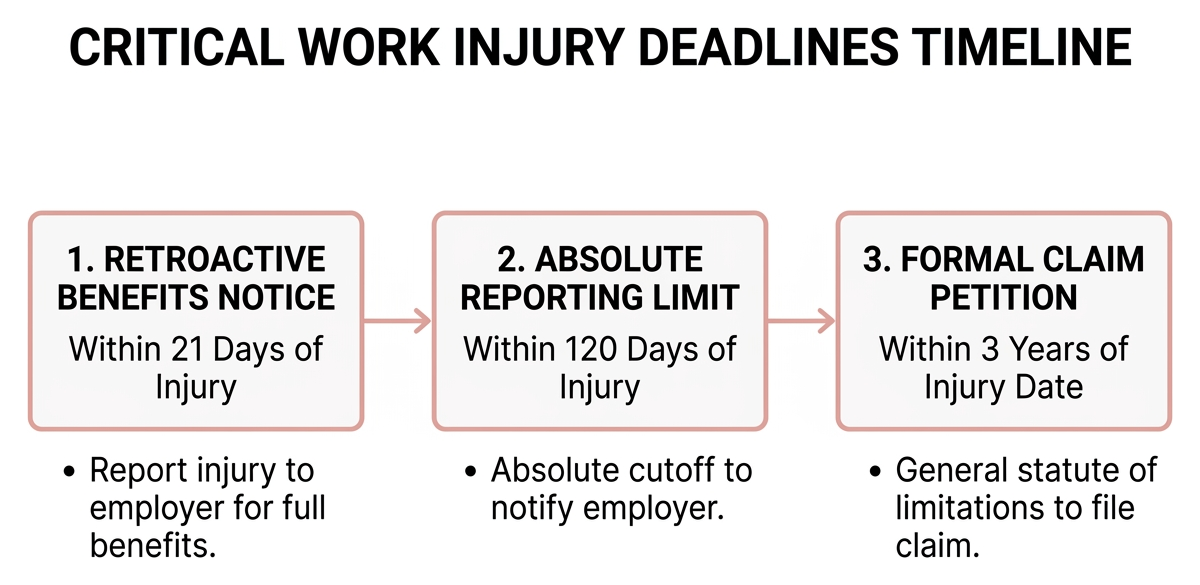
- Immediate Notice: You must report your injury to your employer within 21 days to receive retroactive benefits, with an absolute cutoff at 120 days.
- Claim Petition Filing: Under the work injury statute of limitations, workers generally have three years from the injury date to file a formal petition.
- Appealing Denials: Workers often have short windows, such as a 14-day appeal window or specific Bureau deadlines, to contest adverse determinations.
Common mistakes include failing to report every affected body part during your initial emergency room visit at places like Penn Presbyterian Medical Center or Temple University Hospital, agreeing to recorded statements without representation, or accepting a lowball settlement before reaching maximum healing.
Workers’ Compensation vs. Third-Party Personal Injury Claims
Many injured workers assume workers’ compensation is their sole legal remedy. However, on-the-job accidents often involve third parties whose negligence caused or contributed to the injury. Partnering with a comprehensive workplace accident law firm ensures all potential avenues of compensation are explored.
| Feature | Workers’ Compensation Claim | Third-Party Personal Injury Lawsuit |
|---|---|---|
| Fault Required? | No-fault system | Must prove negligence |
| Who You Claim Against | Employer / Insurance carrier | Negligent third party (subcontractor, driver, manufacturer) |
| Medical Expenses | Covered 100% for reasonable, related care | Recoverable in full |
| Lost Wages | Partial wage replacement (statutory caps apply) | 100% of past and future lost earnings |
| Pain and Suffering | Not covered | Fully recoverable |
| Loss of Life Enjoyment | Not covered | Fully recoverable |
Recovering Medical Expenses and Wage Replacement Benefits
Workers’ compensation provides structured financial relief designed to keep families afloat. Understanding your injury at work rights ensures you receive:
- Medical Coverage: All reasonable surgical, therapeutic, diagnostic, and prescription expenses related to the injury.
- Temporary Total Disability (TTD): Paid when you cannot work at all while recovering.
- Temporary Partial Disability (TPD): Paid if you return to modified duty at lower earnings.
- Specific Loss Benefits: Fixed statutory payouts for the permanent loss of use of a body part, hearing, sight, or serious facial disfigurement.
Third-Party Liability for Equipment Failures and Site Negligence
When outside parties cause workplace hazards, you can seek full personal injury damages. For example, if a delivery driver is hit on Broad Street during their shift, the negligent driver can be sued. Similarly, if a defective scaffold causes a fall from height claim, the equipment manufacturer or scaffolding subcontractor may bear direct liability for your physical pain, emotional distress, and full past and future lost income.
Key Steps to Protect Your Health and Financial Recovery
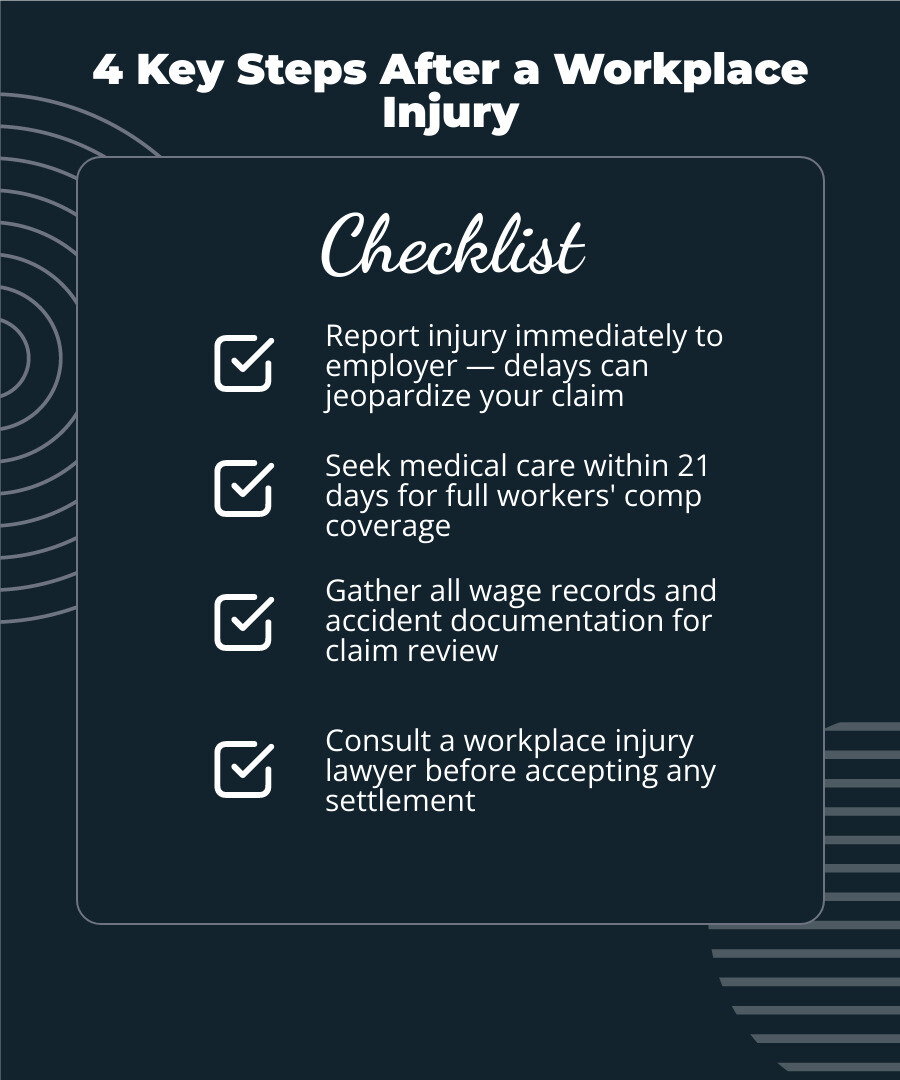
Taking organized steps immediately after an accident helps preserve evidence and secures the compensation you need:
- Seek Immediate Medical Care: Go to an urgent care or emergency department like Thomas Jefferson University Hospital right away. Tell the provider your injury occurred at work.
- Report the Accident in Writing: Inform your supervisor promptly and secure a written copy of the incident report.
- Document Everything: Photograph the scene, capture equipment serial numbers, and gather contact details from coworkers who saw what happened.
- Follow Medical Advice: Attend every physical therapy session and doctor appointment, keeping a detailed log of your symptoms.
- Get Professional Legal Advice: Reach out for immediate work accident help before signing insurance waivers or giving recorded statements.
How a Workplace Injury Lawyer Evaluates Settlement Offers
Settling your claim should only occur after a thorough audit of your future financial needs. An attorney evaluates:
- Maximum Medical Improvement (MMI): Reaching the point where your physical condition has stabilized.
- Future Medical Requirements: Projecting ongoing surgeries, medication, or home healthcare costs.
- Wage Loss Projections: Calculating the total earnings you stand to lose over your lifetime.
- Settlement Structure: Structuring a work injury settlement as a lump-sum Compromise and Release or an ongoing payment structure that protects your long-term stability.
Preparing for Hearings, Mediation, and Appeals
If your employer’s insurance carrier contests your petition, your case proceeds to formal litigation before a Workers’ Compensation Judge. Our attorneys handle every phase, including:
- Conducting depositions of medical doctors and vocational professionals.
- Submitting wage records, safety logs, and accident scene photographs into evidence.
- Representing your interests during mandatory court-ordered mediations.
- Drafting briefs and presenting oral arguments at evidentiary hearings to defend your right to benefits.
Frequently Asked Questions About Workplace Injury Claims
Can I sue my employer directly after a workplace injury?
Under state workers’ compensation laws, workers’ compensation acts as an exclusive remedy, meaning you generally cannot sue your direct employer for standard negligence. However, exceptions exist for intentional physical harm, and you remain entirely free to file personal injury claims against negligent third-party companies, property owners, or equipment manufacturers.
What should I do if my workers’ compensation claim is denied?
If you receive a Notice of Workers’ Compensation Denial, do not panic. You have the legal right to file a formal Claim Petition. We will audit the denial, collect supplemental medical documentation from your treating physicians, and file the appropriate petitions to bring your matter before a judge.
How is my average weekly wage calculated for disability benefits?
Your Average Weekly Wage (AWW) is typically calculated using your gross earnings across the four 13-week calendar quarters preceding your injury. Overtime, bonuses, and wages from a concurrent second job must be included. Insurers frequently miscalculate this figure, which makes an independent wage audit vital.
Take Action to Secure Your Health, Income, and Future
Workplace accidents can disrupt your family’s financial stability, but you do not have to confront insurance companies alone. At J. Fine Law, our trial lawyers bring decades of focused courtroom experience, dedicated personal attention, and a 98% win rate to recover the full benefits and third-party damages you deserve. Contact our Philadelphia workplace accidents legal team today for a free, confidential case review.
Protecting vulnerable individuals also extends beyond the workplace. If you suspect an aging family member is suffering mistreatment, neglect, or financial exploitation in a care facility, speak with a dedicated elder abuse attorney to hold negligent facilities accountable and preserve your loved one’s dignity and safety.